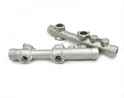

Investment casting, also known as lost-wax casting, is a precise and versatile manufacturing process widely used in various industries to produce high-quality metal parts with intricate designs. As a leading What Is Investment Casting supplier, we understand the critical role that well-trained workers play in ensuring the success of the investment casting process. In this blog post, we will explore the training requirements for investment casting workers, highlighting the skills, knowledge, and certifications necessary to excel in this field.
Understanding the Investment Casting Process
Before delving into the training requirements, it is essential to have a solid understanding of the Investment Casting Process. Investment casting involves creating a wax pattern of the desired part, coating the pattern with a ceramic shell, melting out the wax, and then pouring molten metal into the shell to form the final part. This process requires a high level of precision and attention to detail at every stage to ensure the production of high-quality parts.
Technical Skills
One of the primary training requirements for investment casting workers is the development of technical skills related to the investment casting process. These skills include:
- Pattern Making: Workers must be proficient in creating wax patterns using various techniques such as injection molding, hand carving, or CNC machining. They need to understand the principles of pattern design, including shrinkage allowances, draft angles, and parting lines, to ensure the accurate reproduction of the final part.
- Shell Building: The process of coating the wax pattern with a ceramic shell requires a careful application of multiple layers of ceramic slurry and stucco. Workers must be able to control the thickness and consistency of the shell to ensure its strength and integrity during the casting process. They also need to be familiar with the different types of ceramic materials and their properties.
- Wax Removal and Melting: After the shell is built, the wax pattern must be removed through a process called dewaxing. Workers need to understand the different dewaxing methods, such as autoclaving or flash firing, and be able to operate the equipment safely and efficiently. They also need to be aware of the potential hazards associated with working with molten wax and take appropriate safety precautions.
- Metal Pouring: Pouring molten metal into the ceramic shell is a critical step in the investment casting process. Workers must be trained to handle molten metal safely, including using appropriate protective equipment and following proper pouring techniques. They need to understand the properties of different metals, such as their melting points, fluidity, and solidification characteristics, to ensure the successful filling of the mold and the production of high-quality castings.
- Finishing and Inspection: Once the casting is complete, it may require additional finishing operations such as grinding, sandblasting, or machining to achieve the desired surface finish and dimensional accuracy. Workers must be able to use various finishing tools and equipment and have a good understanding of quality control principles to ensure that the final part meets the required specifications.
Safety Training
Investment casting involves working with hazardous materials and equipment, such as molten metal, wax, and chemicals. Therefore, safety training is an essential part of the training program for investment casting workers. Workers must be trained on the proper use of personal protective equipment (PPE), such as safety glasses, gloves, aprons, and respirators, to protect themselves from potential hazards. They also need to be familiar with the safety procedures and regulations related to working in a foundry environment, including fire safety, electrical safety, and chemical handling.
Quality Control and Inspection
Ensuring the quality of the investment castings is crucial for meeting customer requirements and maintaining the reputation of the company. Workers must be trained in quality control techniques and inspection methods to identify and correct any defects or issues during the production process. They need to understand the principles of statistical process control (SPC) and be able to use inspection tools such as calipers, micrometers, and coordinate measuring machines (CMMs) to measure the dimensions and tolerances of the castings accurately. They also need to be familiar with the different types of defects that can occur in investment castings, such as porosity, cracks, and surface roughness, and know how to prevent or correct them.
Problem-Solving and Troubleshooting
Investment casting is a complex process that can be prone to various problems and challenges. Workers need to have strong problem-solving and troubleshooting skills to identify and resolve issues quickly and effectively. They need to be able to analyze the root cause of the problem, develop appropriate solutions, and implement them in a timely manner. This requires a good understanding of the investment casting process, as well as the ability to think critically and make decisions under pressure.
Continuous Learning and Professional Development
The field of investment casting is constantly evolving, with new technologies, materials, and processes being developed. Workers need to be committed to continuous learning and professional development to stay up-to-date with the latest advancements in the industry. They can participate in training courses, workshops, and conferences to enhance their skills and knowledge. They can also join professional organizations and networks to connect with other industry professionals and share best practices.


Certifications and Qualifications
In addition to on-the-job training, workers in the investment casting industry may benefit from obtaining relevant certifications and qualifications. These certifications can demonstrate their proficiency in specific areas of investment casting and enhance their employability. Some of the common certifications in the industry include:
- Certified Investment Casting Technician (CICT): Offered by the Investment Casting Institute (ICI), this certification recognizes individuals who have demonstrated a comprehensive understanding of the investment casting process, including pattern making, shell building, wax removal, metal pouring, and finishing.
- National Institute for Metalworking Skills (NIMS) Certifications: NIMS offers a range of certifications in metalworking, including investment casting. These certifications cover various aspects of the investment casting process, such as pattern making, shell building, and quality control.
- AWS Welding Certifications: For workers involved in welding operations in the investment casting industry, obtaining AWS welding certifications can demonstrate their proficiency in welding techniques and ensure the quality and integrity of the welded joints.
Conclusion
Investment casting is a highly specialized and technical field that requires well-trained workers to ensure the production of high-quality metal parts. The training requirements for investment casting workers include a combination of technical skills, safety training, quality control knowledge, problem-solving abilities, and continuous learning. By providing comprehensive training programs and opportunities for professional development, companies can attract and retain skilled workers, improve the quality of their products, and stay competitive in the market.
If you are interested in learning more about our investment casting services or have any questions about the training requirements for investment casting workers, please feel free to contact us. We would be happy to discuss your specific needs and provide you with the information you need to make an informed decision.
References
- Investment Casting Institute (ICI). (n.d.). Training and Education. Retrieved from [ICI website]
- National Institute for Metalworking Skills (NIMS). (n.d.). Certification Programs. Retrieved from [NIMS website]
- American Welding Society (AWS). (n.d.). Welding Certifications. Retrieved from [AWS website]