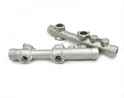

Ventilation is a critical aspect in the process of shell mold casting. As a professional shell mold casting supplier, I understand the significance of proper ventilation requirements in ensuring a safe, efficient, and high - quality casting operation.
Understanding Shell Mold Casting
Shell mold casting is a metal casting process in which a thin - walled shell mold is created around a pattern. This shell, typically made of resin - coated sand, is then used to produce the cast part. To learn more about “What Is Shell Mold Casting”, you can visit this page: What Is Shell Mold Casting.
The Shell Mold Casting Process involves several steps. First, the pattern is heated and then placed in a box filled with resin - coated sand. The sand adheres to the heated pattern, forming a shell. After the shell hardens, it is removed from the pattern. The shells are then assembled, and molten metal is poured into the cavity. Once the metal solidifies, the shell is broken away, and the casting is finished.
Why Ventilation Is Crucial in Shell Mold Casting
1. Fume and Gas Removal
During the shell mold casting process, various fumes and gases are generated. When the molten metal is poured into the shell mold, the heat causes the resin in the sand to decompose, releasing volatile organic compounds (VOCs), carbon monoxide, and other harmful gases. These fumes can be extremely hazardous to the health of workers. Prolonged exposure to VOCs can cause respiratory problems, headaches, and even long - term health issues such as cancer. Carbon monoxide is a colorless and odorless gas that can be fatal if inhaled in high concentrations. Adequate ventilation helps to remove these fumes and gases from the work area, protecting the health and safety of the workers.
2. Mold Quality
Proper ventilation also plays a role in the quality of the castings. When the molten metal is poured, air trapped in the mold can cause defects in the casting, such as porosity or incomplete filling. Ventilation provides a path for the air to escape from the mold cavity. As the molten metal fills the mold, the air is forced out through the ventilation channels. This ensures that the metal can flow freely into all parts of the mold, resulting in a high - quality casting with fewer defects.
3. Cooling
Ventilation aids in the cooling process of the castings. After the molten metal is poured and begins to solidify, it releases a large amount of heat. Good ventilation helps to dissipate this heat more quickly, reducing the cooling time of the castings. Faster cooling can improve the mechanical properties of the castings, such as hardness and strength. It also allows for a more efficient production process, as the molds can be reused more quickly.
Ventilation Requirements in Shell Mold Casting
1. Airflow Rate
The airflow rate in a shell mold casting facility is a key factor. It is determined by the size of the casting area, the number of molds being used, and the type of metal being cast. As a general rule, the ventilation system should be able to provide a sufficient amount of fresh air to dilute the fumes and gases to safe levels. A common guideline is to achieve an air change rate of at least 6 - 10 air changes per hour in the casting area. However, for larger facilities or those casting metals that produce more fumes, a higher air change rate may be required.
2. Ventilation System Design
The design of the ventilation system is crucial. It should include both local and general ventilation. Local ventilation is used to capture fumes and gases at the source. For example, hoods can be placed over the pouring area and the mold - making stations to directly capture the fumes as they are generated. These hoods should be designed to have a proper capture velocity, which is the speed at which the air must move to effectively capture the fumes.
General ventilation, on the other hand, provides a continuous supply of fresh air to the entire casting area. This can be achieved through the use of exhaust fans, ducts, and air intakes. The layout of the ducts should be carefully planned to ensure even distribution of the airflow and efficient removal of the contaminated air.
3. Filtering and Treatment
The ventilation system should also include proper filtering and treatment mechanisms. As the air is exhausted from the casting area, it passes through filters that remove particulate matter, such as sand dust and metal particles. Additionally, the fumes and gases may need to be treated before being released into the environment. This can involve the use of scrubbers or other air treatment devices to remove harmful chemicals, such as VOCs and carbon monoxide.
Monitoring and Maintenance
Regular monitoring is essential to ensure that the ventilation system is operating effectively. Air quality tests should be conducted periodically to check the levels of fumes and gases in the work area. This can help to identify any potential problems with the ventilation system, such as leaks or insufficient airflow.
Maintenance of the ventilation system is also crucial. The filters should be replaced regularly to ensure optimal performance. The ducts and fans should be inspected for damage and cleaned to prevent blockages. Any malfunctions in the ventilation system should be repaired immediately to avoid the accumulation of harmful fumes and gases.


Our Commitment as a Shell Mold Casting Supplier
At our company, we are committed to providing high - quality shell mold casting products while ensuring the safety and well - being of our workers and the environment. We have invested in state - of - the - art ventilation systems that meet the strictest industry standards. Our ventilation systems are designed to effectively remove fumes and gases, improve casting quality, and provide a comfortable working environment.
We also continuously monitor and maintain our ventilation systems to ensure that they are operating at peak efficiency. Our team of experts regularly conducts air quality tests and performs preventive maintenance on the ventilation equipment.
If you are in need of shell mold casting services, we invite you to contact us for a discussion. We have the expertise and the resources to meet your casting needs while adhering to the highest ventilation and safety standards.
References
- “Metal Casting Design and Performance” by John Campbell
- “Industrial Ventilation: A Manual of Recommended Practice” by the American Conference of Governmental Industrial Hygienists