
As a seasoned supplier in the investment casting industry, I've witnessed firsthand the remarkable evolution of this ancient manufacturing technique. Investment casting, also known as the lost-wax process, has been around for thousands of years, but recent technological advancements have propelled it into a new era of precision, efficiency, and innovation. In this blog post, I'll explore some of the latest technologies in investment casting and how they're shaping the future of our industry.
3D Printing in Investment Casting
One of the most significant advancements in investment casting is the integration of 3D printing technology. Traditionally, creating wax patterns for investment casting involved a labor-intensive and time-consuming process of carving, molding, and assembly. With 3D printing, however, wax patterns can be created directly from digital models, eliminating the need for tooling and reducing lead times significantly.
3D printing allows for the creation of highly complex and intricate wax patterns that would be impossible or extremely difficult to produce using traditional methods. This opens up new possibilities for designers and engineers, enabling them to create parts with unique geometries and features that were previously unattainable. Additionally, 3D printing enables rapid prototyping, allowing for quick iterations and design improvements before committing to full-scale production.
The ability to produce wax patterns on-demand also reduces inventory costs and waste. Instead of storing large quantities of pre-made wax patterns, manufacturers can simply print the patterns they need as required, minimizing the risk of overproduction and obsolescence.
Simulation Software
Another key technology in investment casting is simulation software. Simulation software uses computer algorithms to model and analyze the casting process, predicting potential defects and optimizing the casting parameters to ensure high-quality parts.
By simulating the flow of molten metal, heat transfer, and solidification, simulation software can identify areas of potential porosity, shrinkage, and other defects. This allows manufacturers to make adjustments to the casting design, gating system, and pouring parameters before the actual casting process begins, reducing the risk of costly rework and scrap.
Simulation software also enables manufacturers to optimize the casting process for efficiency and productivity. By analyzing the casting cycle time, energy consumption, and material usage, simulation software can identify opportunities for process improvement and cost reduction.
Automated Robotic Systems
Automation is becoming increasingly important in investment casting, as it offers numerous benefits in terms of quality, efficiency, and safety. Automated robotic systems are being used in various stages of the investment casting process, from pattern assembly and shell building to casting and finishing.
In pattern assembly, robotic systems can precisely position and assemble wax patterns, ensuring consistent quality and reducing the risk of human error. In shell building, robotic systems can apply the ceramic shell material evenly and accurately, resulting in a more uniform and defect-free shell.
During the casting process, robotic systems can handle the molten metal safely and efficiently, reducing the risk of accidents and improving the quality of the cast parts. After casting, robotic systems can perform finishing operations such as trimming, grinding, and polishing, further improving the surface finish and dimensional accuracy of the parts.
Advanced Materials
The development of advanced materials is also driving innovation in investment casting. New alloys and materials are being developed that offer improved mechanical properties, corrosion resistance, and heat resistance, making them suitable for a wider range of applications.
For example, superalloys are being used in the aerospace and power generation industries to withstand high temperatures and stresses. These alloys require precise control of the casting process to ensure the desired microstructure and properties. Investment casting is well-suited for producing complex parts from superalloys, as it allows for the creation of thin walls and intricate geometries that are difficult to achieve using other manufacturing methods.
In addition to superalloys, new ceramic materials are being developed for use in the shell building process. These ceramic materials offer improved strength, thermal stability, and chemical resistance, resulting in higher-quality shells and better casting results.
Quality Control and Inspection Technologies
Ensuring the quality of investment cast parts is crucial, especially in industries such as aerospace, automotive, and medical. To meet the strict quality requirements of these industries, advanced quality control and inspection technologies are being used in investment casting.
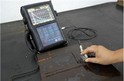
Non-destructive testing (NDT) techniques such as X-ray, ultrasonic, and magnetic particle inspection are used to detect internal and surface defects in the cast parts. These techniques allow for the early detection of defects, enabling manufacturers to take corrective action before the parts are shipped to the customer.


In addition to NDT, coordinate measuring machines (CMMs) and optical scanners are being used to measure the dimensional accuracy of the cast parts. These devices can provide precise measurements of the part's dimensions, shape, and surface finish, ensuring that the parts meet the specified tolerances.
The Future of Investment Casting
The future of investment casting looks bright, as these new technologies continue to evolve and mature. As 3D printing technology becomes more advanced and affordable, it's likely to become even more widely adopted in investment casting, enabling the production of even more complex and customized parts.
Simulation software will also continue to improve, providing more accurate and detailed predictions of the casting process. This will allow manufacturers to optimize the casting process with even greater precision, further reducing the risk of defects and improving the quality of the cast parts.
Automation will also play an increasingly important role in investment casting, as manufacturers seek to improve quality, efficiency, and safety. Robotic systems will become more intelligent and flexible, capable of performing a wider range of tasks with greater precision and reliability.
Finally, the development of advanced materials will continue to drive innovation in investment casting, enabling the production of parts with even better mechanical properties, corrosion resistance, and heat resistance.
Conclusion
In conclusion, the new technologies in investment casting are revolutionizing the industry, offering numerous benefits in terms of quality, efficiency, and innovation. As a supplier in the investment casting industry, I'm excited to see how these technologies will continue to shape the future of our industry.
If you're interested in learning more about investment casting or would like to discuss your specific casting requirements, please don't hesitate to contact me. I'd be happy to provide you with more information and help you find the best solution for your needs.
For more information about the investment casting process, please visit Investment Casting Process. To learn more about what investment casting is, please visit What Is Investment Casting.
References
- Campbell, J. (2003). Castings. Butterworth-Heinemann.
- Davis, J. R. (Ed.). (2008). Investment Casting: Processes, Materials, and Applications. ASM International.
- Whelan, P. F. (2014). Investment Casting Technology. Society of Manufacturing Engineers.