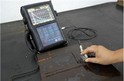

Hey there! I'm a supplier in the Nondestructive Inspection (NDI) game, and today I wanna dive into how neutron radiography works in this field. Nondestructive Inspection is super important as it allows us to check the integrity of materials and components without causing any damage. There are various NDI methods out there, like Dye Penetrant Inspection, X Ray Inspection, and Magnetic Powder Inspection, but neutron radiography has its own unique charm.
Let's start with the basics. Neutron radiography is a technique that uses neutrons to create an image of the internal structure of an object. Just like X - rays, it helps us see what's going on inside without taking the thing apart. But the big difference between neutrons and X - rays lies in how they interact with different materials.
X - rays are great at detecting high - density materials like metals. They're absorbed more by dense stuff, so in an X - ray image, metals show up as dark areas. On the other hand, neutrons interact differently. They're more sensitive to light elements such as hydrogen, lithium, and boron. This means that neutron radiography can reveal things that X - rays might miss. For example, if you're trying to find water or oil inside a component, neutron radiography is the way to go.
So, how does the whole process of neutron radiography work? Well, it all starts with a neutron source. There are a few ways to get neutrons. One common method is using a nuclear reactor. In a reactor, nuclear fission reactions produce a large number of neutrons. Another option is using a particle accelerator. Particle accelerators can generate neutrons by bombarding a target material with high - energy particles.


Once we have our neutron source, the next step is to direct the neutrons towards the object we want to inspect. The neutrons pass through the object, and as they do, they interact with the atoms in the material. Some neutrons are absorbed by the atoms, some are scattered in different directions, and some pass straight through.
After the neutrons have passed through the object, they hit a detector. The detector records the pattern of neutrons that have made it through. This pattern is then used to create an image. There are different types of detectors used in neutron radiography. One type is a film detector. Just like in traditional photography, a special film is exposed to the neutrons. The areas where more neutrons hit the film become darker, and the areas with fewer neutrons are lighter. This creates a negative - like image that can be developed and analyzed.
Another type of detector is a digital detector. Digital detectors are more modern and offer several advantages. They can provide real - time images, which means we can see the results right away. They also have a higher dynamic range, which allows us to see more details in both the light and dark areas of the image.
Now, let's talk about some of the applications of neutron radiography in Nondestructive Inspection. In the aerospace industry, it's used to inspect composite materials. Composites are made up of different materials bonded together, and sometimes there can be defects like delamination (separation of layers) or voids (empty spaces). Neutron radiography can easily detect these issues because it can see the light elements in the composite matrix.
In the automotive industry, neutron radiography can be used to check the fuel injection systems. It can detect the presence of fuel or lubricants inside the components, which helps in ensuring that everything is working properly.
In the art conservation field, neutron radiography is a valuable tool. It can be used to examine paintings and sculptures without causing any damage. By looking at the internal structure of a painting, conservators can find hidden layers, repairs, or signs of deterioration.
One of the challenges of neutron radiography is that it requires a specialized facility. Nuclear reactors and particle accelerators are not something you can set up in your backyard. They need a lot of safety measures and regulatory approvals. Also, the equipment for neutron radiography can be quite expensive. But despite these challenges, the benefits it offers in terms of detecting certain types of defects make it a worthwhile investment in many industries.
As a Nondestructive Inspection supplier, I know how important it is to choose the right inspection method for the job. Sometimes, a combination of different NDI methods is needed to get a complete picture of the component's integrity. That's where our expertise comes in. We can help you decide whether neutron radiography is the best option for your specific inspection needs.
If you're in the market for Nondestructive Inspection services and think neutron radiography might be what you need, or if you're just curious about how it can benefit your business, don't hesitate to reach out. We're here to answer all your questions and provide you with the best inspection solutions. Whether you're dealing with a small - scale project or a large - scale industrial application, we've got the knowledge and experience to get the job done right.
In conclusion, neutron radiography is a powerful tool in the world of Nondestructive Inspection. Its ability to detect light elements and reveal hidden defects makes it unique among other inspection methods. If you're looking for a more in - depth understanding of your materials and components, give us a shout, and let's start a conversation about how neutron radiography can work for you.
References:
- "Neutron Radiography: Principles and Applications" by A. C. Kak and M. Slaney
- "Nondestructive Testing Handbook: Volume 3 - Radiography Testing" by American Society for Nondestructive Testing