
Dye Penetrant Inspection (DPI), also known as liquid penetrant inspection (LPI), is a widely used non - destructive testing (NDT) method for detecting surface - opening defects in materials. As a supplier of Dye Penetrant Inspection products, I am often asked about the different types of penetrants used in this process. In this blog, I will delve into the various kinds of penetrants, their characteristics, and applications.
Types of Penetrants
There are three main types of penetrants used in Dye Penetrant Inspection: fluorescent penetrants, visible penetrants, and dual - purpose penetrants. Each type has its own unique properties and is suitable for different inspection scenarios.
Fluorescent Penetrants
Fluorescent penetrants are perhaps the most sensitive type of penetrants available. They contain fluorescent dyes that emit visible light when exposed to ultraviolet (UV) light, also known as black light. This makes even the smallest surface - opening defects highly visible.
The high sensitivity of fluorescent penetrants is due to the fact that the human eye is more sensitive to the bright fluorescent glow against a dark background than to a colored indication in normal light. Fluorescent penetrants are commonly used in industries where detecting very small defects is crucial, such as aerospace, automotive, and power generation.
For example, in the aerospace industry, components like turbine blades and engine parts are subjected to extreme conditions. Even the tiniest crack can lead to catastrophic failures. Fluorescent penetrants can detect these micro - cracks, ensuring the safety and reliability of the aircraft.
The process of using fluorescent penetrants involves applying the penetrant to the surface of the test object, allowing it to seep into the defects for a specified period (dwell time), removing the excess penetrant, applying a developer, and then inspecting the surface under UV light.
Visible Penetrants
Visible penetrants, on the other hand, are colored with a highly visible dye, usually red. They are inspected under normal white light, which makes them more convenient for on - site inspections where access to UV light may be limited.
Visible penetrants are less sensitive than fluorescent penetrants but are still effective for detecting relatively large surface - opening defects. They are often used in industries such as construction, general manufacturing, and shipbuilding.
In construction, visible penetrants can be used to inspect welds on steel structures. The bright red indication against the metal surface makes it easy for inspectors to identify cracks and other defects without the need for special lighting equipment.
The application process for visible penetrants is similar to that of fluorescent penetrants. The penetrant is applied, allowed to dwell, the excess is removed, and a developer is applied. The inspection is then carried out under normal white light.
Dual - Purpose Penetrants
Dual - purpose penetrants combine the features of both fluorescent and visible penetrants. They contain both fluorescent dyes and visible dyes, allowing for inspection under either UV light or normal white light.
This type of penetrant offers flexibility, especially in situations where the inspection conditions may vary. For example, in a maintenance facility, an inspector may start the inspection under normal light to quickly identify large defects and then use UV light to detect smaller, more subtle defects.
Dual - purpose penetrants are also useful for training purposes, as they allow trainees to compare the indications under different lighting conditions and gain a better understanding of the inspection process.
Factors Affecting Penetrant Selection
When choosing a penetrant for Dye Penetrant Inspection, several factors need to be considered:
Sensitivity Requirements
As mentioned earlier, if the inspection requires detecting very small defects, fluorescent penetrants are the best choice. However, if the defects are expected to be relatively large, visible penetrants may be sufficient.
Inspection Environment
The inspection environment plays a crucial role in penetrant selection. If the inspection is to be carried out in a well - lit indoor facility, visible penetrants can be used. On the other hand, if the inspection is in a dark or confined space, fluorescent penetrants may be more suitable.
Material of the Test Object
The material of the test object can also affect penetrant selection. Some materials may react with certain penetrants, causing false indications or damage to the surface. For example, some penetrants may not be compatible with certain plastics or rubber materials.
Cost
Cost is always a consideration in any inspection process. Fluorescent penetrants are generally more expensive than visible penetrants due to the cost of the fluorescent dyes and the need for UV light equipment. However, in cases where high sensitivity is required, the cost may be justified by the potential savings in preventing costly failures.
Comparison with Other NDT Methods
Dye Penetrant Inspection is just one of many non - destructive testing methods available. It is often compared with Ultrasonic Flaw Detection and X Ray Inspection.


Ultrasonic Flaw Detection
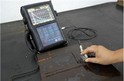
Ultrasonic flaw detection uses high - frequency sound waves to detect internal and surface defects in materials. Unlike Dye Penetrant Inspection, which can only detect surface - opening defects, ultrasonic testing can detect subsurface defects. However, ultrasonic testing requires more specialized equipment and trained operators. Dye Penetrant Inspection, on the other hand, is relatively simple and can be used for quick surface inspections.
X Ray Inspection
X Ray Inspection is used to detect internal defects in materials by passing X - rays through the test object. It is very effective for detecting internal flaws in thick materials. However, X Ray Inspection requires strict safety precautions due to the radiation involved. Dye Penetrant Inspection is a safer option for surface inspections and does not require special safety measures beyond normal personal protective equipment.
Conclusion
In conclusion, the choice of penetrant in Dye Penetrant Inspection depends on several factors, including sensitivity requirements, inspection environment, material of the test object, and cost. Fluorescent penetrants offer high sensitivity but require UV light for inspection, while visible penetrants are more convenient for on - site inspections under normal light. Dual - purpose penetrants provide flexibility in different inspection scenarios.
As a supplier of Dye Penetrant Inspection products, I am committed to providing high - quality penetrants and related equipment to meet the diverse needs of our customers. Whether you are in the aerospace, automotive, construction, or any other industry, we can help you select the right penetrant for your inspection requirements.
If you are interested in learning more about our Dye Penetrant Inspection products or have any questions about penetrant selection, please feel free to contact us for a detailed discussion. Our team of experts is ready to assist you in making the best choice for your quality control needs.
References
- ASNT (American Society for Nondestructive Testing). "Nondestructive Testing Handbook: Volume 1 - Ultrasonic Testing".
- ASTM (American Society for Testing and Materials). "Standard Practices for Liquid Penetrant Testing".
- TWI (The Welding Institute). "Non - Destructive Testing Guide".