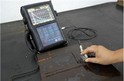

Hey there! As a supplier of Magnetic Powder Inspection (MPI) equipment and services, I often get asked about the types of magnetic fields used in this non - destructive testing method. So, let's dive right in and explore the different magnetic fields employed in MPI.


Understanding the Basics of Magnetic Powder Inspection
Before we get into the magnetic fields, let's have a quick refresher on what MPI is. Magnetic Powder Inspection is a widely used non - destructive testing technique to detect surface and near - surface discontinuities in ferromagnetic materials. The principle behind it is simple: when a magnetic field is applied to a ferromagnetic material, any discontinuities (like cracks) will cause a distortion in the magnetic field, creating a magnetic leakage field. Magnetic particles are then applied to the surface, and they are attracted to these leakage fields, making the discontinuities visible. You can learn more about it Magnetic Powder Inspection.
Types of Magnetic Fields in MPI
1. Direct Current (DC) Magnetic Fields
DC magnetic fields are one of the most common types used in MPI. They are produced by direct current flowing through a conductor, such as a coil or a bar. The main advantage of using DC magnetic fields is their ability to detect subsurface discontinuities. Since DC magnetic fields penetrate deeper into the material compared to alternating current (AC) fields, they can reveal flaws that are hidden beneath the surface.
For example, in the inspection of thick steel components like large shafts or forgings, DC magnetic fields are often the go - to choice. The steady and uniform nature of DC allows for a more accurate detection of internal defects. However, the downside is that DC equipment can be bulkier and more expensive to operate, as it requires a constant power source.
2. Alternating Current (AC) Magnetic Fields
AC magnetic fields are generated by alternating current. These fields are excellent for detecting surface discontinuities. The reason is that the magnetic flux of an AC field is concentrated near the surface of the material due to the skin effect. This means that AC magnetic fields are more sensitive to surface cracks and other surface - level flaws.
AC - based MPI is commonly used in industries where surface integrity is crucial, such as the automotive and aerospace sectors. For instance, when inspecting engine components or aircraft parts, AC magnetic fields can quickly and effectively identify surface cracks that could lead to catastrophic failures. AC equipment is generally more portable and easier to use than DC equipment, making it a popular choice for on - site inspections.
3. Pulsed DC Magnetic Fields
Pulsed DC magnetic fields are a combination of the best of both worlds. They are created by applying short pulses of direct current. This type of magnetic field offers deep penetration like DC fields while also having some of the surface - sensitivity characteristics of AC fields.
Pulsed DC is particularly useful when you need to detect both surface and near - surface discontinuities in a single inspection. In applications where time is of the essence, such as in mass production environments, pulsed DC magnetic fields can speed up the inspection process without sacrificing accuracy.
Comparison of the Magnetic Fields
Let's compare these three types of magnetic fields based on a few key factors:
| Magnetic Field Type | Penetration Depth | Surface Sensitivity | Equipment Cost | Portability |
|---|---|---|---|---|
| DC | Deep | Moderate | High | Low |
| AC | Shallow | High | Low | High |
| Pulsed DC | Moderate - Deep | High | Moderate | Moderate |
Choosing the Right Magnetic Field
Selecting the appropriate magnetic field for MPI depends on several factors. The first is the type of material being inspected. Ferromagnetic materials with different compositions and structures may respond differently to various magnetic fields. For example, a highly alloyed steel may require a stronger magnetic field for effective inspection.
The nature of the discontinuities you are looking for also matters. If you suspect subsurface flaws, DC or pulsed DC magnetic fields would be more suitable. On the other hand, if surface cracks are the main concern, AC magnetic fields are the way to go.
The size and shape of the component being inspected can also influence your choice. Large, thick components may need a more powerful and deeply penetrating magnetic field, while small, intricate parts may benefit from the high surface sensitivity of AC fields.
Other Non - Destructive Testing Methods
MPI is just one of the many non - destructive testing methods available. X Ray Inspection is another popular technique that uses X - rays to detect internal flaws in materials. It is particularly useful for inspecting non - ferromagnetic materials and can provide detailed images of the internal structure.
Dye Penetrant Inspection is also commonly used, especially for detecting surface - open discontinuities in non - porous materials. It involves applying a colored dye to the surface, allowing it to seep into the cracks, and then removing the excess dye before applying a developer to make the cracks visible.
Why Choose Our MPI Services
As a supplier of MPI equipment and services, we have the expertise and experience to help you choose the right magnetic field for your specific inspection needs. Our team of trained technicians can perform accurate and reliable inspections using the latest technology and techniques.
We offer a wide range of MPI equipment, from portable AC units for on - site inspections to large - scale DC systems for industrial applications. Our equipment is regularly maintained and calibrated to ensure the highest level of accuracy.
In addition to equipment sales, we also provide comprehensive training and support services. Whether you are new to MPI or looking to upgrade your skills, our training programs can help you become proficient in using magnetic fields for non - destructive testing.
Contact Us for Your MPI Needs
If you are in the market for Magnetic Powder Inspection equipment or services, we'd love to hear from you. Whether you have questions about the different types of magnetic fields, need advice on choosing the right equipment, or want to schedule an inspection, we're here to help. Just reach out to us, and we'll work with you to find the best solution for your quality control needs.
References
- ASNT (American Society for Nondestructive Testing). "Magnetic Particle Testing Handbook."
- ASTM International. "Standard Practices for Magnetic Particle Testing."