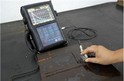

Yo, what's up everyone! I'm part of an X Ray Inspection supplier team, and today I wanna chat about how machine learning is seriously upping the game when it comes to X Ray Inspection accuracy.
Let's start by getting a quick low - down on X Ray Inspection. X Ray Inspection is a crucial non - destructive testing method. It's used in tons of industries, like manufacturing, aerospace, and electronics. The basic idea is to use X - rays to peek inside an object without damaging it. This helps us spot all sorts of issues, such as internal cracks, voids, or foreign objects. But here's the thing, traditional X Ray Inspection has its limitations.
The traditional approach to X Ray Inspection often relies on human operators to analyze the X - ray images. And let's face it, humans can get tired, miss details, or have different levels of expertise. Sometimes, those tiny flaws can be really hard to spot, especially when the image is a bit blurry or complex. That's where machine learning steps in to save the day.
Machine learning is all about teaching computers to learn from data and make decisions. In the context of X Ray Inspection, it means training algorithms to recognize patterns in X - ray images. These algorithms can be fed thousands, even millions, of X - ray images, each labeled with what's actually in the image (like a crack, a void, or nothing at all).
One of the key ways machine learning improves X Ray Inspection accuracy is through image enhancement. X - ray images can be noisy or have low contrast, which makes it tough to see the important stuff. Machine learning algorithms can analyze these images and figure out how to adjust things like brightness, contrast, and sharpness. For example, a convolutional neural network (CNN), a type of machine - learning algorithm, can be trained to identify areas in the image that need enhancement. It can then apply the right adjustments to make the details stand out more clearly. This means that even those hard - to - spot flaws are more likely to be visible.
Another major benefit is the ability to detect defects with high precision. Machine learning algorithms can learn the unique characteristics of different types of defects. For instance, a crack might have a certain shape, size, and texture in an X - ray image. Once the algorithm is trained on a large dataset of crack images, it can quickly and accurately identify cracks in new images. It's way more consistent than human inspection, as it doesn't get distracted or make subjective judgments.
Machine learning also helps with classification. In X Ray Inspection, not all defects are created equal. Some might be minor and not affect the functionality of the object, while others could be critical. Machine learning algorithms can classify defects based on their severity. This is super useful because it allows manufacturers to prioritize which parts need further inspection or repair.
Let's talk about how machine learning compares to other non - destructive testing methods. Magnetic Powder Inspection and Dye Penetrant Inspection are two other well - known non - destructive testing techniques. Magnetic Powder Inspection is great for detecting surface and near - surface defects in ferromagnetic materials. Dye Penetrant Inspection is used to find surface - opening defects. But both of these methods have their limitations. They are mainly focused on surface or near - surface issues and can't see inside the object like X Ray Inspection can. And when it comes to accuracy, machine - learning - enhanced X Ray Inspection can often detect smaller and more complex internal defects that these other methods might miss.
Now, I know what you're thinking. How do we actually implement machine learning in X Ray Inspection? Well, it starts with collecting a high - quality dataset. This dataset should include a wide variety of X - ray images from different types of objects and with different types of defects. The more diverse the dataset, the better the algorithm can learn.
Once we have the dataset, we need to label it. This is a time - consuming process, but it's crucial. Each image needs to be marked with what's in it, whether it's a defect or not, and if so, what kind of defect. After that, we choose the right machine - learning algorithm. As I mentioned earlier, CNNs are very popular for image analysis in X Ray Inspection, but there are other algorithms out there too, depending on the specific requirements.
We then train the algorithm on the labeled dataset. This involves adjusting the algorithm's parameters so that it can make accurate predictions. During the training process, we use a validation set to check how well the algorithm is performing. If it's not doing well, we can go back and tweak the parameters or add more data to the training set.
After the algorithm is trained, it can be integrated into the X Ray Inspection system. This means that every time an X - ray image is taken, the algorithm can quickly analyze it and provide a report on whether there are any defects and what they are.


The accuracy improvements brought by machine learning in X Ray Inspection have a huge impact on industries. In the manufacturing industry, it means fewer defective products reaching the market. This can save companies a ton of money in terms of recalls, repairs, and customer dissatisfaction. In the aerospace industry, where safety is of the utmost importance, machine - learning - enhanced X Ray Inspection can help ensure that aircraft components are free of critical defects, which could potentially lead to catastrophic failures.
If you're in an industry that relies on X Ray Inspection, you're probably wondering how you can take advantage of this technology. Well, that's where we come in. As an X Ray Inspection supplier, we've been at the forefront of integrating machine learning into our inspection systems. We have the expertise and experience to help you set up a machine - learning - based X Ray Inspection solution that meets your specific needs.
Whether you're dealing with small - scale production or large - scale manufacturing, we can customize our systems to fit your requirements. We can also provide training and support to make sure your team knows how to use the system effectively.
So, if you're looking to improve the accuracy of your X Ray Inspection process and stay ahead of the competition, don't hesitate to reach out. We're here to help you make the most of machine - learning technology in X Ray Inspection. Let's start a conversation and see how we can work together to take your quality control to the next level.
References
- Some general literature on machine learning in non - destructive testing
- Industry reports on the use of X Ray Inspection in different sectors