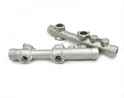

Additives play a crucial role in shell mold casting, a process that we, as a shell mold casting supplier, are deeply involved in. In this blog, we'll explore what additives are used, why they're so important, and how they impact the overall casting quality.
First off, let's quickly cover what shell mold casting is. You can check out more details on the process at Shell Mold Casting Process. Basically, shell mold casting involves creating a shell mold made of resin-coated sand. The shell is strong enough to hold the molten metal during casting. To learn more about the overall concept, visit What Is Shell Mold Casting.
What Are Additives in Shell Mold Casting?
Additives in shell mold casting are substances added to the sand - resin mixture. They're not essential for the basic shell - making process, but they can bring a whole new level of performance and quality to the final castings. These additives come in different types, such as lubricants, strengthening agents, and refractory materials.
Lubricants
Lubricants are one of the most common additives. They do exactly what you'd expect - they reduce friction. When we're making the shell mold, the sand - resin mix needs to flow smoothly into the mold cavity. Without a good lubricant, the mixture might not fill the cavity evenly, leading to incomplete shells or defects in the final casting. Additionally, lubricants can make it easier to remove the shell from the pattern after it's hardened. This is important because any damage to the shell during removal can affect the quality of the casting.
Strengthening Agents
As the name suggests, strengthening agents are used to give the shell mold more strength. During the casting process, the shell has to withstand the high temperature and pressure of the molten metal. If the shell isn't strong enough, it can crack or break, causing the molten metal to leak or the casting to have surface defects. Strengthening agents work by enhancing the bond between the sand grains and the resin, making the whole shell structure more robust. For our customers, this means more reliable castings with fewer rejects.
Refractory Materials
Refractory additives increase the shell's ability to withstand high temperatures. When molten metal is poured into the shell mold, the temperature can be extremely high. If the shell can't handle it, it will start to deform or even melt, ruining the casting. Refractory materials like alumina or zirconia can raise the shell's melting point and thermal stability. This allows us to cast a wider range of metals, including those with very high melting points, which is a big advantage in the market.


Why Are Additives So Important?
The importance of additives really boils down to the quality and efficiency of the casting process.
Improving Quality
Additives directly contribute to the quality of the final castings. By using lubricants, we can achieve a smoother surface finish on the castings. This is important for applications where the appearance of the part matters, or where the part needs to fit precisely with other components. Strengthening agents reduce the risk of cracks and porosity in the castings. These are common defects that can weaken the part and reduce its lifespan. And with refractory materials, we can ensure that the castings are free from thermal - related defects, like warping or distortion.
Increasing Efficiency
In terms of efficiency, additives can speed up the shell - making process. Lubricants make the sand - resin mixture flow better, which means the shell can be formed more quickly. Strengthening agents allow the shell to harden faster, reducing the overall production time. This is crucial for meeting tight deadlines and keeping our production costs down. And since we can produce fewer defective parts with the help of additives, we don't have to spend as much time on rework or scrap disposal.
How Additives Impact Different Stages of Shell Mold Casting
Let's take a closer look at how additives affect each stage of the shell mold casting process.
Shell Formation
During shell formation, additives play a vital role in getting the right consistency of the sand - resin mixture. Lubricants are key here. They ensure that the mixture can be evenly distributed in the mold, creating a uniform shell thickness. If the mixture doesn't flow well, there could be thin spots in the shell, which are more likely to break during casting. Strengthening agents also start to work at this stage by promoting better adhesion between the sand and the resin, setting the foundation for a strong shell.
Curing
Curing is when the shell mold solidifies. Additives can influence the curing time and the final properties of the shell. Strengthening agents can accelerate the curing process by promoting chemical reactions in the resin. This allows us to move on to the next step of the casting process more quickly. Refractory additives can also have an impact on curing. They can help the shell maintain its shape and structure during the heat - up phase of curing, preventing any premature deformation.
Casting
When it comes to the actual casting, all the additive - related benefits really come into play. The high - strength shell provided by strengthening agents can withstand the pressure of the molten metal, ensuring that the casting takes the correct shape. The refractory additives protect the shell from the high - temperature molten metal, preventing any damage to the shell or contamination of the casting. And the smooth finish provided by lubricants helps in the easy flow of the molten metal within the shell, reducing the chances of filling defects.
Challenges in Using Additives
Of course, using additives isn't all smooth sailing. There are some challenges that we, as a shell mold casting supplier, need to deal with.
Cost
Some additives can be quite expensive. For example, high - quality refractory materials often come with a hefty price tag. This can increase the overall cost of production, which we need to balance against the benefits they bring. We have to carefully evaluate which additives are really necessary for a particular casting job and find a cost - effective solution.
Compatibility
Not all additives are compatible with each other or with the resin - sand system. If we mix incompatible additives, it can lead to issues like poor shell strength or a decrease in the flowability of the mixture. This means we have to do a lot of testing to ensure that the additives we use work well together.
Environmental Impact
Some additives may have an environmental impact. For instance, some lubricants or chemicals used in strengthening agents can be harmful if not properly disposed of. As a responsible supplier, we need to follow strict environmental regulations and look for more eco - friendly alternatives whenever possible.
In the End, Are They Worth It?
Despite the challenges, we firmly believe that additives are worth using in shell mold casting. The improved quality and efficiency they offer far outweigh the drawbacks. By using the right additives, we can produce high - quality castings that meet the strictest industry standards. This not only helps us satisfy our customers but also gives us a competitive edge in the market.
If you're in the market for shell mold castings and want to know more about how additives can benefit your specific project, don't hesitate to reach out. We're more than happy to discuss your requirements and provide you with the best casting solutions. Contact us for a free consultation and let's start creating great castings together.
References
- General knowledge on shell mold casting from industry - specific textbooks and research papers.
- Internal research and development records from our company's shell mold casting operations.
- Conversations and knowledge - sharing with industry experts in the field of shell mold casting.