
What is the heat treatment for composite materials?
In the dynamic landscape of modern manufacturing, composite materials have emerged as game - changers, offering a unique blend of properties that traditional materials often struggle to match. As a leading Heat Treatment supplier, we understand the pivotal role heat treatment plays in enhancing the performance and durability of composite materials.
Understanding Composite Materials
Composite materials are engineered combinations of two or more distinct materials with significantly different physical or chemical properties. When combined, they produce a material with characteristics that are superior to those of the individual components. Typically, composites consist of a reinforcement phase (such as fibers) embedded in a matrix phase (such as a polymer, metal, or ceramic).
Common examples of composite materials include carbon - fiber - reinforced polymers (CFRP), glass - fiber - reinforced polymers (GFRP), and metal - matrix composites (MMC). These materials are widely used in industries like aerospace, automotive, marine, and sports equipment due to their high strength - to - weight ratio, corrosion resistance, and design flexibility.
The Purpose of Heat Treatment for Composites
Heat treatment is a controlled process of heating and cooling composite materials to alter their physical and mechanical properties. The primary purposes of heat treating composites are as follows:
1. Stress Relief
During the manufacturing process of composite materials, internal stresses can develop due to factors such as differential shrinkage between the reinforcement and the matrix. These internal stresses can lead to warping, cracking, and reduced dimensional stability. Heat treatment helps to relieve these stresses by allowing the material to relax and reach a more stable state.
2. Improved Matrix Properties
In polymer - matrix composites, heat treatment can improve the properties of the polymer matrix. For example, heating can cause the polymer to cross - link further, increasing its stiffness, strength, and chemical resistance. In metal - matrix composites, heat treatment can modify the microstructure of the metal matrix, enhancing its hardness and toughness.
3. Bond Strength Enhancement
Heat treatment can also improve the bond strength between the reinforcement and the matrix. By carefully controlling the heating and cooling cycles, the interface between the two phases can be optimized, resulting in better load transfer and overall mechanical performance of the composite.
Heat Treatment Processes for Composite Materials
1. Annealing
Annealing is a heat treatment process where the composite material is heated to a specific temperature and held there for a certain period, followed by a slow cooling. This process helps to relieve internal stresses, refine the microstructure, and improve the ductility of the material. In the case of polymer - matrix composites, annealing can reduce the residual stresses introduced during molding and improve the dimensional stability.
2. Curing
Curing is a critical heat treatment process for polymer - matrix composites. It involves the application of heat to initiate a chemical reaction in the polymer resin, which causes it to harden and form a cross - linked structure. The curing process is carefully controlled in terms of temperature, time, and pressure to ensure that the composite reaches its optimal properties. For example, in the production of CFRP, curing can significantly enhance the strength and stiffness of the final product.
3. Pre - aging and Aging
In metal - matrix composites, pre - aging and aging are important heat treatment processes. Pre - aging involves heating the composite to a relatively low temperature to form fine precipitates within the metal matrix. Subsequently, aging at a higher temperature causes these precipitates to grow and coarsen, which can significantly strengthen the material. This process is similar to age - hardening in traditional metals.

Our Role as a Heat Treatment Supplier
As a specialized heat treatment supplier, we offer a wide range of heat treatment solutions to meet the diverse needs of our customers in the composite materials industry. Our state - of - the - art facilities are equipped with advanced heating and cooling systems that allow us to precisely control the heat treatment process.
We have a team of highly skilled engineers and technicians who have in - depth knowledge of composite materials and heat treatment techniques. They work closely with our customers to understand their specific requirements and develop customized heat treatment plans. Whether it is a small - scale project for a sports equipment manufacturer or a large - scale aerospace application, we are committed to delivering high - quality heat treatment services.
Applications of Heat - Treated Composite Materials
1. Aerospace Industry
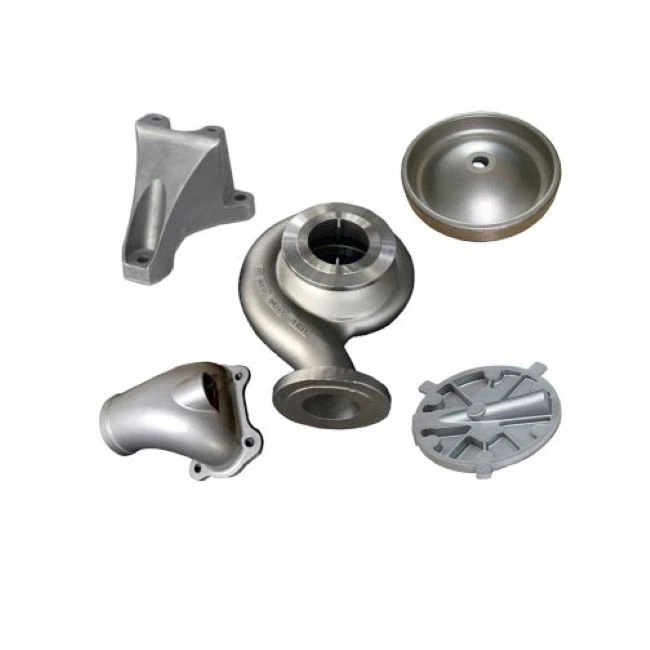
In the aerospace industry, heat - treated composite materials are used extensively in the manufacturing of aircraft components. For example, CFRP components that have undergone proper heat treatment can be found in the wings, fuselage, and tail sections of modern airplanes. These components offer high strength and light weight, which contribute to fuel efficiency and improved performance. Click here to know more about our [Customize Stainless Steel Investment Casting Parts].
2. Automotive Industry
The automotive industry is increasingly turning to heat - treated composite materials to improve the fuel efficiency and safety of vehicles. GFRP and CFRP components, heat - treated to enhance their mechanical properties, are used in body panels, chassis parts, and engine components. Heat treatment ensures that these components can withstand the harsh operating conditions in vehicles. Our [CNC Machining] services detailed here can also be combined with heat treatment for high - precision automotive parts.
3. Marine Industry
In the marine industry, composite materials are used to build boats, yachts, and other marine vessels. Heat - treated composites offer excellent corrosion resistance and strength, making them ideal for hulls, decks, and other structural components. For example, our [Stainless Steel Pump Body] manufacturing and heat treatment services described here are crucial for reliable marine pumping systems.
The Future of Heat Treatment for Composites
As the demand for high - performance composite materials continues to grow, the field of heat treatment for composites is also evolving rapidly. New heat treatment techniques are being developed to further enhance the properties of composite materials, such as using advanced heating methods like laser - assisted heat treatment.
In addition, researchers are exploring the use of smart composite materials that can change their properties in response to heat treatment in a more controlled and adaptive way. This could lead to the development of self - healing composites and other advanced engineering materials.
Contact Us for Purchasing Negotiations
If you are in need of high - quality heat treatment services for your composite materials, we invite you to contact us for purchasing negotiations. Our experienced sales team is ready to discuss your specific requirements, provide detailed quotations, and offer technical support throughout the process. Whether you are a small - business owner or a large - scale manufacturer, we are committed to providing you with the best solutions for your heat treatment needs.
References
- Hull, D., & Clyne, T. W. (1996). An Introduction to Composite Materials. Cambridge University Press.
- Ashby, M. F., & Jones, D. R. H. (2005). Engineering Materials 2: An Introduction to Microstructures, Processing, and Design. Butterworth - Heinemann.
- Callister, W. D. (2007). Materials Science and Engineering: An Introduction. Wiley.