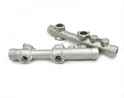

Controlling the magnetic properties of investment castings is a crucial aspect in various industries, especially those where precise magnetic behavior is required for the proper functioning of components. As an investment casting supplier, I have witnessed firsthand the importance of mastering this process to meet the diverse needs of our clients. In this blog, I will delve into the key factors and techniques involved in controlling the magnetic properties of investment castings.
Understanding Investment Casting
Before we explore how to control magnetic properties, it's essential to have a clear understanding of Investment Casting Process. Investment casting, also known as the lost-wax process, is a manufacturing method that involves creating a wax pattern of the desired part, coating it with a ceramic shell, melting out the wax, and then pouring molten metal into the resulting mold. This process allows for the production of complex and high-precision parts with excellent surface finish.
Investment casting offers several advantages, including the ability to produce parts with intricate geometries, tight tolerances, and a wide range of materials. It is commonly used in industries such as aerospace, automotive, medical, and electronics, where high-quality components are required.
Factors Affecting Magnetic Properties
The magnetic properties of investment castings are influenced by several factors, including the choice of material, the casting process, and the heat treatment. Let's take a closer look at each of these factors.
Material Selection
The choice of material is one of the most critical factors in determining the magnetic properties of investment castings. Different materials have different magnetic characteristics, and selecting the right material is essential to achieve the desired magnetic behavior.
Some common materials used in investment casting with magnetic properties include iron, nickel, cobalt, and their alloys. For example, iron-based alloys such as stainless steel can exhibit ferromagnetic properties, making them suitable for applications where strong magnetic fields are required. On the other hand, non-magnetic materials such as aluminum and copper are used in applications where magnetic interference needs to be minimized.
When selecting a material, it's important to consider not only its magnetic properties but also other factors such as mechanical strength, corrosion resistance, and cost. Working closely with a materials expert can help ensure that the chosen material meets all the requirements of the application.
Casting Process
The casting process itself can also have a significant impact on the magnetic properties of investment castings. Factors such as the pouring temperature, the cooling rate, and the presence of impurities can all affect the microstructure of the casting, which in turn influences its magnetic behavior.
For example, a high pouring temperature can lead to a coarser grain structure, which may result in lower magnetic permeability. On the other hand, a rapid cooling rate can cause the formation of a fine-grained microstructure, which can enhance the magnetic properties. Controlling these parameters during the casting process is crucial to achieving consistent and desired magnetic properties.
In addition, the presence of impurities in the casting can also affect its magnetic properties. Impurities such as sulfur, phosphorus, and oxygen can form non-magnetic phases or disrupt the magnetic domain structure, leading to a decrease in magnetic performance. Therefore, it's important to use high-quality raw materials and implement strict quality control measures during the casting process to minimize the presence of impurities.
Heat Treatment
Heat treatment is another important step in controlling the magnetic properties of investment castings. By subjecting the casting to specific heat treatment processes, it's possible to modify its microstructure and improve its magnetic behavior.
One common heat treatment process used for magnetic materials is annealing. Annealing involves heating the casting to a specific temperature and then slowly cooling it to relieve internal stresses and promote the formation of a more uniform microstructure. This can improve the magnetic permeability and reduce the coercivity of the material.
Another heat treatment process that can be used is quenching and tempering. Quenching involves rapidly cooling the casting from a high temperature to a low temperature, which can result in the formation of a hard and brittle microstructure. Tempering is then performed to reduce the brittleness and improve the toughness of the material. This process can also have an impact on the magnetic properties of the casting.


Techniques for Controlling Magnetic Properties
Based on the factors discussed above, there are several techniques that can be used to control the magnetic properties of investment castings. Let's explore some of these techniques in more detail.
Material Optimization
As mentioned earlier, material selection is crucial in determining the magnetic properties of investment castings. By carefully choosing the right material and optimizing its composition, it's possible to achieve the desired magnetic behavior.
For example, alloying elements can be added to the base material to modify its magnetic properties. For instance, adding nickel to iron can increase its magnetic permeability, while adding chromium can improve its corrosion resistance. Working with a materials supplier or a metallurgist can help identify the optimal alloy composition for a specific application.
Process Control
Controlling the casting process parameters is essential to ensure consistent and desired magnetic properties. This includes controlling the pouring temperature, the cooling rate, and the mold design.
By carefully monitoring and adjusting these parameters, it's possible to achieve a fine-grained microstructure and minimize the presence of defects such as porosity and shrinkage. This can improve the magnetic performance of the casting.
Heat Treatment Optimization
Optimizing the heat treatment process is another important technique for controlling the magnetic properties of investment castings. This involves determining the appropriate heat treatment parameters such as the temperature, the time, and the cooling rate.
By conducting experiments and using advanced heat treatment equipment, it's possible to achieve the desired magnetic properties while maintaining the mechanical integrity of the casting. For example, by carefully controlling the annealing temperature and time, it's possible to improve the magnetic permeability without sacrificing the strength and toughness of the material.
Quality Control
Implementing strict quality control measures is essential to ensure that the investment castings meet the required magnetic specifications. This includes conducting non-destructive testing such as magnetic particle inspection and ultrasonic testing to detect any defects or inconsistencies in the casting.
In addition, magnetic testing can be performed to measure the magnetic properties of the casting and ensure that they meet the desired specifications. By regularly monitoring and testing the castings, it's possible to identify any issues early on and take corrective actions to ensure the quality of the final product.
Conclusion
Controlling the magnetic properties of investment castings is a complex but achievable task. By understanding the factors that affect magnetic properties, implementing the appropriate techniques, and maintaining strict quality control, it's possible to produce investment castings with consistent and desired magnetic behavior.
As an investment casting supplier, we are committed to providing our clients with high-quality castings that meet their specific requirements. Whether you need components with strong magnetic fields or non-magnetic properties, we have the expertise and the capabilities to deliver the solutions you need.
If you are interested in learning more about our Investment Casting Supplies or have any questions about controlling the magnetic properties of investment castings, please feel free to contact us. We would be happy to discuss your project and provide you with a customized solution.
References
- "Investment Casting Handbook" by R. D. Pehlke
- "Magnetic Materials and Their Applications" by E. C. Stoner
- "Heat Treatment of Metals" by George E. Totten