
Can ultrasonic flaw detection be used for automotive parts?
In the automotive industry, ensuring the quality and safety of parts is of utmost importance. As a supplier of Ultrasonic Flaw Detection equipment, I often encounter the question: Can ultrasonic flaw detection be used for automotive parts? The answer is a resounding yes, and in this blog, I will delve into the details of how this technology can be effectively applied in the automotive sector.
The Basics of Ultrasonic Flaw Detection
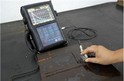
Ultrasonic flaw detection is a non - destructive testing (NDT) method that uses high - frequency sound waves to detect internal flaws in materials. When an ultrasonic wave is introduced into a material, it travels through the medium. If there is a flaw such as a crack, porosity, or inclusion in the material, the ultrasonic wave will be reflected or scattered at the flaw interface. By analyzing the reflected or scattered waves, we can determine the location, size, and nature of the flaw.
This technology has several advantages. It is highly sensitive, capable of detecting very small flaws. It can penetrate relatively thick materials, making it suitable for inspecting large automotive components. Moreover, it is a non - invasive method, which means that the tested parts can still be used after inspection without any damage.


Applications of Ultrasonic Flaw Detection in Automotive Parts
Engine Components
The engine is the heart of a vehicle, and its components need to be extremely reliable. Ultrasonic flaw detection can be used to inspect engine blocks, cylinder heads, and crankshafts. For example, in engine blocks, casting defects such as porosity or cracks can occur during the manufacturing process. These defects can lead to coolant leakage, reduced engine performance, or even engine failure. Ultrasonic testing can quickly and accurately detect these flaws, allowing manufacturers to take corrective actions before the parts are assembled into the engine.
Cylinder heads also require careful inspection. The high - temperature and high - pressure environment in the combustion chamber can cause stress cracks in the cylinder head. Ultrasonic flaw detection can identify these cracks early, preventing potential engine malfunctions. Crankshafts, which are subjected to high - stress loads during engine operation, can develop fatigue cracks. Ultrasonic testing can detect these cracks at an early stage, ensuring the safety and durability of the engine.
Suspension Components
Suspension components, such as control arms, ball joints, and shock absorbers, play a crucial role in vehicle handling and safety. Control arms are responsible for connecting the wheels to the vehicle's frame and guiding the movement of the wheels. Any flaws in the control arms, such as cracks due to impact or fatigue, can affect the vehicle's stability and steering performance. Ultrasonic flaw detection can be used to inspect these components to ensure their integrity.
Ball joints are another critical part of the suspension system. They allow for smooth movement between the control arms and the steering knuckles. A flaw in a ball joint can lead to excessive play, which can cause uneven tire wear, poor steering response, and even loss of control. Ultrasonic testing can detect internal flaws in ball joints, helping to maintain the safety and performance of the suspension system.
Transmission Components
Transmission components, such as gears and shafts, are subjected to high - torque loads and constant friction. Gears need to have precise tooth profiles and be free of internal defects to ensure smooth power transmission. Ultrasonic flaw detection can be used to detect cracks, inclusions, or other defects in gears. Shafts, which transfer power from the engine to the wheels, also need to be inspected for flaws. Any defect in a shaft can lead to vibration, noise, or even breakage, which can cause serious damage to the transmission system.
Comparison with Other Non - Destructive Testing Methods
While ultrasonic flaw detection is a powerful tool for inspecting automotive parts, it is not the only non - destructive testing method available. Magnetic Powder Inspection is another commonly used method, especially for detecting surface and near - surface flaws in ferromagnetic materials. It is relatively simple and cost - effective for detecting surface cracks in parts such as axles and gears. However, it can only be used on ferromagnetic materials, and it is mainly suitable for detecting surface - breaking flaws.
X Ray Inspection is also a widely used non - destructive testing method. It can provide a clear image of the internal structure of a part, making it suitable for detecting flaws in complex - shaped parts or parts with high - density materials. However, X - ray inspection requires special equipment and safety precautions due to the radiation involved. It is also relatively expensive compared to ultrasonic flaw detection.
In contrast, ultrasonic flaw detection is more versatile. It can be used on a wide range of materials, including metals, plastics, and composites. It is suitable for detecting both surface and internal flaws, and it can be easily integrated into the production line for high - volume inspection.
Our Company's Ultrasonic Flaw Detection Solutions
As a supplier of Ultrasonic Flaw Detection equipment, we offer a comprehensive range of solutions for the automotive industry. Our ultrasonic flaw detection systems are designed to be highly accurate, reliable, and easy to use. They are equipped with advanced sensors and signal processing algorithms, which can provide clear and detailed flaw information.
We also provide customized inspection solutions based on the specific needs of our customers. Whether it is a small - scale inspection of a few critical parts or a large - scale production - line inspection, we can tailor our systems to meet the requirements. Our technical support team is always ready to provide training, maintenance, and troubleshooting services to ensure that our customers can get the most out of our equipment.
Conclusion
In conclusion, ultrasonic flaw detection is a valuable tool for the automotive industry. It can be used to inspect a wide range of automotive parts, from engine components to suspension and transmission parts. By detecting flaws early, manufacturers can improve the quality and reliability of their products, reduce the risk of recalls, and enhance customer satisfaction.
If you are in the automotive industry and are looking for a reliable solution for non - destructive testing of your parts, our Ultrasonic Flaw Detection equipment is a great choice. We are committed to providing high - quality products and excellent service. Please feel free to contact us for more information or to discuss your specific requirements. We look forward to working with you to ensure the safety and quality of your automotive parts.
References
- ASNT (American Society for Nondestructive Testing). Nondestructive Testing Handbook, Ultrasonic Testing Volume.
- Automotive Manufacturing and Design Magazine. Various articles on quality control in automotive manufacturing.
- Society of Automotive Engineers (SAE) Technical Papers related to non - destructive testing in automotive applications.