


In the field of precision metal casting, two commonly used processes are Water Glass Investment Casting and Silica Sol Investment Casting. Although both belong to the investment casting family, they differ significantly in materials, process precision, cost, and applications. Understanding these differences helps manufacturers choose the most suitable casting solution for specific product needs.
1. Basic Concept
Water glass investment casting uses sodium silicate (Na₂SiO₃) as a binder for making ceramic molds. It is known for its low cost, fast shell-building, and wide material compatibility. The process is often applied in producing carbon steel, alloy steel, and iron parts for machinery and hardware industries.
Silica sol investment casting, on the other hand, uses silica sol (SiO₂ solution) as the binder. This process allows for high surface smoothness, tighter dimensional tolerances, and better heat resistance. It is widely used in producing stainless steel and high-temperature alloy parts for industries such as aerospace, automotive, and medical equipment.
2. Process and Performance Comparison
| Feature | Water Glass Investment Casting | Silica Sol Investment Casting |
| Binder | Sodium silicate | Silica sol |
| Shell Hardness | Medium, brittle at high temperature | Dense and heat-resistant |
| Dimensional Accuracy | CT7–CT8 (medium precision) | CT5–CT6 (high precision) |
| Surface Roughness | Ra 6.3–12.5 μm | Ra 3.2–6.3 μm |
| Production Cost | Low | High |
| Drying Time | Fast | Slow (multi-layer coating) |
| Applications | Machinery, hardware, structural parts | Aerospace, valves, food-grade and medical components |

3. Technical Differences
The main distinction between the two methods lies in the binder and shell structure.
Water glass molds dry quickly but tend to be more porous and brittle under high temperatures, leading to rougher cast surfaces. Silica sol molds, however, form a fine, compact ceramic shell that offers superior surface finish and dimensional stability.
Moreover, silica sol investment casting requires more complex and time-consuming shell-building steps, but it delivers greater consistency and less post-machining, which is critical for high-value or precision products.
4. Choosing the Right Casting Process
For large-scale, cost-sensitive production, water glass investment casting is ideal due to its low material cost and high efficiency.
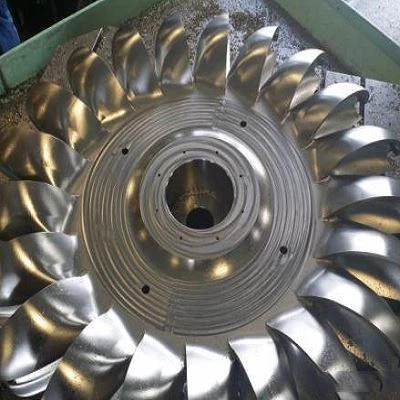
For high-end applications where precision and surface finish matter-such as pump housings, turbine blades, or decorative stainless-steel parts-silica sol investment casting is the better choice.
5. Conclusion
In summary, both processes have unique strengths:
Water glass investment casting offers cost-effectiveness and fast production.
Silica sol investment casting provides superior accuracy and excellent surface quality.
Choosing between them depends on the balance between budget, performance, and application requirements.
