


Introduction
Among the many precision casting methods used in modern metal manufacturing, water glass investment casting stands out as one of the most economical and widely applied techniques. Also known as sodium silicate investment casting, this process uses water glass (Na₂SiO₃) as a binder to create strong ceramic shells around wax patterns. Compared with the silica sol process, water glass casting offers a balance of cost efficiency, production speed, and acceptable accuracy-making it a preferred option for medium-precision metal parts.
1. Understanding the Process of Water Glass Investment Casting
Water glass investment casting begins with the creation of a wax pattern that replicates the final metal component. This wax model is then repeatedly coated with refractory sand and a binder made of sodium silicate, forming multiple shell layers. After the shell dries and hardens, the wax is melted out (dewaxing), leaving a hollow cavity.
The ceramic mold is then fired at high temperatures to improve its strength and remove any residual materials. Finally, molten metal-such as carbon steel, stainless steel, cast iron, or copper alloy-is poured into the mold. After cooling and solidification, the shell is broken away to reveal the finished metal casting.
2. Role of Water Glass in the Process
The key to this method lies in the use of water glass (sodium silicate) as the binder. It provides excellent adhesion between sand particles, forming a rigid shell that can withstand molten metal temperatures.
Key advantages of water glass binders include:
Strong bonding strength and fast drying;
Easy shell construction for mass production;
Low raw material cost;
No organic solvent emissions, offering moderate environmental performance.
Because of these features, water glass investment casting is ideal for medium-complexity components that require good mechanical performance at a reasonable cost.
3. Advantages and Limitations
| Aspect | Advantages | Limitations |
| Cost | Low production cost, simple equipment | Surface quality lower than silica sol casting |
| Accuracy | Suitable for medium precision (CT7–CT8) | Not for high-precision parts |
| Surface Finish | Ra 6.3–12.5 μm, acceptable for general use | Less smooth than silica sol process |
| Efficiency | Fast shell drying, suitable for mass production | Shell refractory strength is moderate |
| Environmental Impact | No organic solvent | Wastewater requires proper treatment |
This makes the process especially attractive for manufacturers needing durable parts without the high expense of silica sol investment casting.
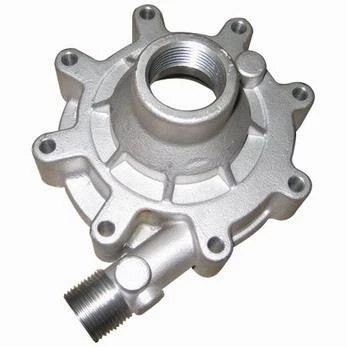
4. Common Applications
Due to its practicality and cost advantages, water glass investment casting is widely used in:
Machinery manufacturing: gears, brackets, housings, and couplings;
Agricultural and mining equipment: wear-resistant and structural components;
Automotive and railway industries: levers, joints, and mounts;
Hardware and pipe fittings: valves, elbows, and connectors.
It is particularly favored in large-volume production where surface finish requirements are moderate, but dimensional consistency is still essential.
5. Conclusion
Water glass investment casting is an efficient, affordable, and versatile precision casting process that uses sodium silicate as a binder to produce strong and reliable metal parts. While it cannot match the ultra-smooth finish and tight tolerances of silica sol investment casting, it remains an ideal choice for many industrial applications requiring balance between cost and quality.
By optimizing shell construction and firing parameters, manufacturers can achieve excellent results-making water glass investment casting a proven solution for a wide range of mechanical and structural components.
