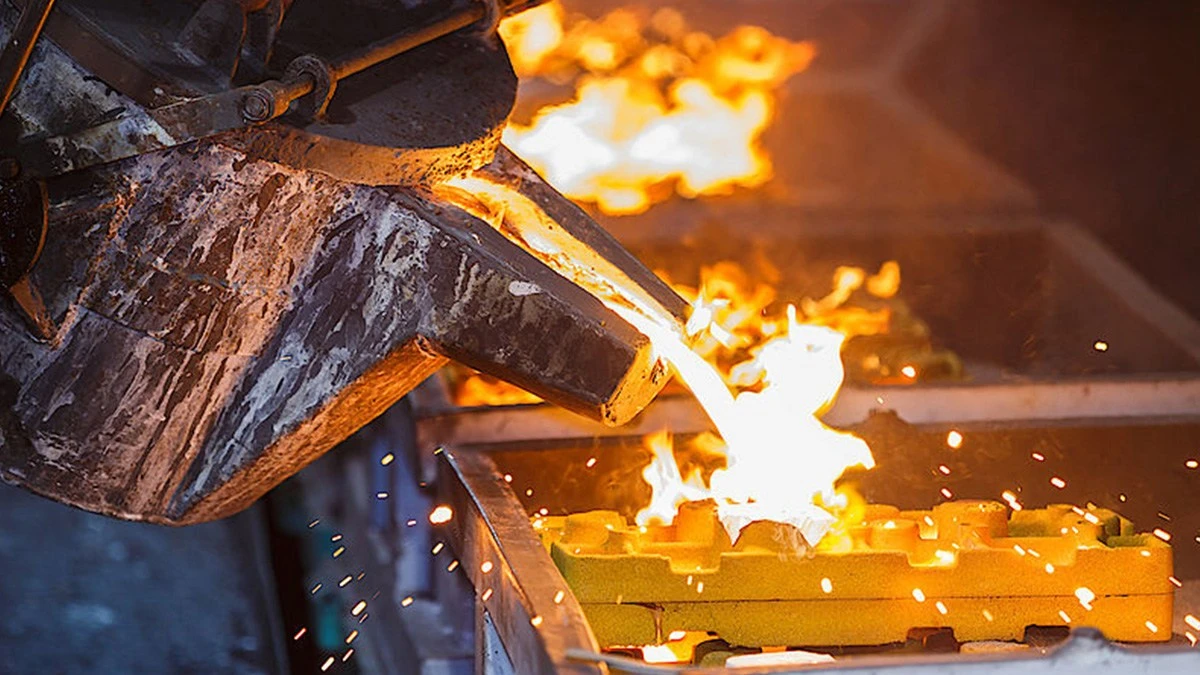
In the process of precision casting, chilling materials-often referred to as chills-are essential for controlling the cooling rate of molten metal. A chill is a cooling insert placed inside the mold cavity or on the working surface to accelerate local solidification. The proper use of chilling material for precision casting can greatly influence the structure, density, and mechanical performance of the final product.
In most precision casting operations, chills work in coordination with the gating and riser systems. Their combined purpose is to guide the solidification process, avoid shrinkage defects, and ensure that castings achieve the desired strength and dimensional accuracy. Therefore, the selection of chilling material for precision casting becomes a critical step in the design and manufacturing process.
A wide variety of materials can be used for chills, but they must have higher thermal conductivity and heat storage capacity than ordinary mold materials. Commonly used materials include cast iron, copper alloys, high-purity graphite, and aluminum alloys. Among these, cast iron chills are particularly popular due to their high heat storage coefficient and strong chilling capability. Cast iron can absorb large amounts of heat quickly, leading to faster local cooling and finer grain structure. It is also easy to manufacture and relatively cost-effective.
In aluminum alloy and magnesium alloy precision castings, cast iron chills are often placed at the bottom or end of the mold to control the solidification sequence, thereby improving the quality and strength of the casting. In addition to cast iron, aluminum chills are also widely used, especially in lightweight casting systems. They provide good heat transfer performance while minimizing reaction with molten metal, making them suitable for non-ferrous metal castings.
Graphite and copper alloy chills are used for more specialized applications where surface finish and dimensional precision are critical. Graphite, for example, offers excellent thermal shock resistance and can be reused multiple times. Copper alloys, on the other hand, have very high thermal conductivity and are ideal for applications requiring rapid heat extraction.
In summary, the proper chilling material for precision casting should be chosen based on the casting metal type, mold structure, and desired solidification characteristics. The correct selection and placement of chills can effectively control the cooling rate, enhance mechanical properties, and ensure the production of defect-free precision castings suitable for demanding industrial applications.