


The performance of stainless steel precision casting is highly dependent on the precise control of core parameters such as pouring temperature. To ensure good fluidity of the molten metal during filling, a sufficiently high pouring temperature needs to be maintained. The setting of the pouring temperature requires comprehensive consideration of key factors such as the length of the gating system, heat loss during filling, and pouring speed.
When used, stainless steel precision casting produces round ingots with low cracking tendency. During application, it is essential to ensure that the alloy possesses excellent venting and feeding capabilities to create conditions for sequential crystallization, thereby effectively improving the density of the product. Under normal circumstances, the forging temperature is relatively high.
Stainless steel precision casting exhibits low cracking tendency in round ingots. During application, it is essential to ensure that the alloy possesses excellent venting and feeding capabilities to create conditions for sequential crystallization, thereby improving the density of the casting. Under normal circumstances, the forging temperature is relatively high.
For small-diameter ingots, the pouring temperature should generally be controlled between 715 and 740℃, prioritizing flowability and preventing the formation of bright crystals. This is because small-diameter ingots have a small crystalline zone and excellent mechanical properties. However, flat ingots have a higher tendency to hot cracking.
The physical properties of stainless steel precision casting parts are generally superior to those of pig iron, but the casting process is relatively more challenging. This is because stainless steel has a high melting point, and the molten steel is more easily oxidized during melting and pouring, significantly increasing the difficulty of process control.
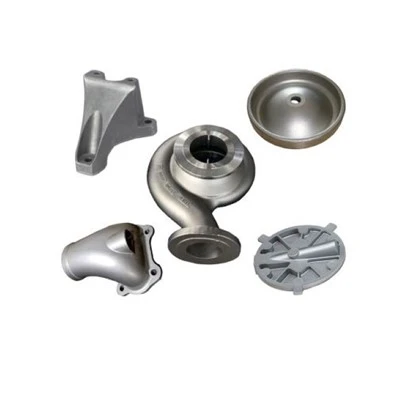
Stainless steel precision casting presents many challenges during production, primarily due to the poor fluidity of the molten steel. Throughout the production process, it is crucial to avoid defects such as incomplete filling or cold shuts, which could result in stainless steel castings with a thickness less than 8 mm, failing to meet specifications.
Furthermore, while the gating system for stainless steel precision casting is relatively simple, the cross-sectional dimensions of each component must be larger than those used in cast iron systems. Specifically, hot-mold casting or dry-mold casting processes can be employed to meet the quality requirements of different products.
