


In investment casting, the strength and stiffness of the shell are crucial for ensuring the quality of the cast part, especially for complex or large castings. The shell needs sufficient strength to withstand the hydrostatic pressure of the molten metal while maintaining good rigidity to prevent deformation. This requires a combination of material science optimization, refined shell-making process control, and firing reinforcement treatment to create a shell structure with both high load-bearing capacity and dimensional stability.
Material selection is fundamental to building a strong and rigid shell. Refractory aggregates must balance strength and thermal stability. The face layer uses high-density zircon sand or 99% pure white alumina to improve erosion resistance; the backing layer uses mullite sand or bauxite sand with a reasonable particle size distribution. Optimizing the packing density through a combination of coarse, medium, and fine particles enhances the overall structural strength of the shell. The binder of choice is a high-strength, nano-grade silica sol, combined with silane coupling agents and other modifiers to improve the bonding interface strength. The solid content of the slurry is adjusted according to working conditions to balance coating properties and the structural rigidity after curing.
A refined shell-making process is a core element in improving strength and rigidity. A multi-layer gradient coating process is used, with a thin and dense face layer and progressively thicker backing layers to enhance load-bearing capacity. The total number of layers is controlled at 4-8 layers depending on the size and complexity of the casting. During coating, ensure uniform slurry coverage, maintaining a stable lifting speed of 5-10 cm/s to avoid coating sagging or localized accumulation; in the sand-spreading stage, use sand particles compatible with the coating material, and employ electrostatic sand spreading to ensure uniform embedding of sand particles in the coating, improving the bonding force between layers. The drying process requires a constant temperature and humidity environment of 20-25℃ and 40%-60% to ensure sufficient drying and curing of each layer, preventing internal stress caused by insufficient drying and reducing the overall strength of the shell.
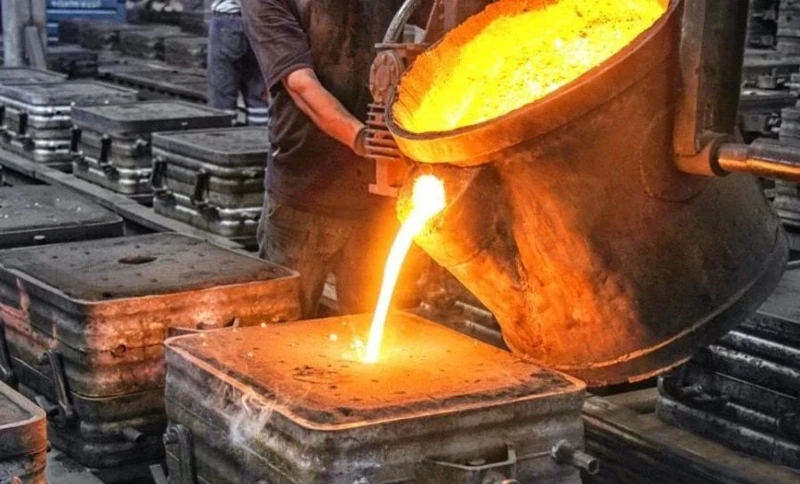
Scientific firing treatment can further strengthen the shell's strength and rigidity. After dewaxing, the mold shell needs to be fired according to a gradual heating curve, gradually increasing the temperature from room temperature to 900-1100℃. The heating rate should be controlled at 50-80℃/h to avoid cracking caused by rapid heating. High-temperature holding for 1-3 hours is necessary to thoroughly remove residual wax and organic matter, promote dehydration and polycondensation of the binder, and improve the density and structural stability of the mold shell. For large and complex castings, low-temperature tempering can be performed after firing to eliminate thermal stress and further improve rigidity. In addition, the porosity of the mold shell must be strictly controlled to avoid excessive permeability leading to reduced strength, thus achieving a balance between strength and permeability.
Through the synergistic effect of material selection, process control, and firing reinforcement, the mold shell can form a uniform, dense, and firmly bonded structure, effectively improving strength and rigidity, ensuring stable molding during molten metal pouring and solidification, and guaranteeing the dimensional accuracy and molding quality of complex and large castings.
