


In investment casting, the dimensional accuracy of the shell-making process directly determines whether the final casting meets design specifications. The core requirement is to maintain the shape and dimensional stability of the shell throughout the entire process, from wax pattern removal to casting solidification. Strict control of thermal expansion and contraction during heating and cooling is crucial to prevent defects such as shrinkage and warping in the casting. Precise dimensional control requires a multi-faceted approach, including source control, material selection, and process management.
Wax pattern accuracy is the fundamental prerequisite for controlling shell dimensions. As the master mold for shell formation, any dimensional deviation in the wax pattern will be directly transferred to the shell. Low-shrinkage wax materials should be selected, and injection molding parameters (temperature, pressure, holding time) must be kept stable to prevent shrinkage and deformation during wax pattern formation. After molding, the wax patterns should undergo constant-temperature aging treatment to eliminate internal stress and stabilize dimensions before entering the shell-making process. Strict inspection of wax pattern dimensions is also necessary to eliminate out-of-tolerance products.
Reasonable selection of shell materials is key to controlling thermal expansion and contraction. Refractory materials with low thermal expansion coefficients and high dimensional stability should be prioritized. The face layer can use materials such as zircon sand and high-purity white corundum, which have low thermal expansion coefficients and reduce dimensional fluctuations at high temperatures; the backing layer can use materials such as mullite to balance strength and dimensional stability. A stable silica sol binder should be used, along with a suitable curing agent, to prevent excessive shrinkage stress during binder curing that could lead to shell deformation.
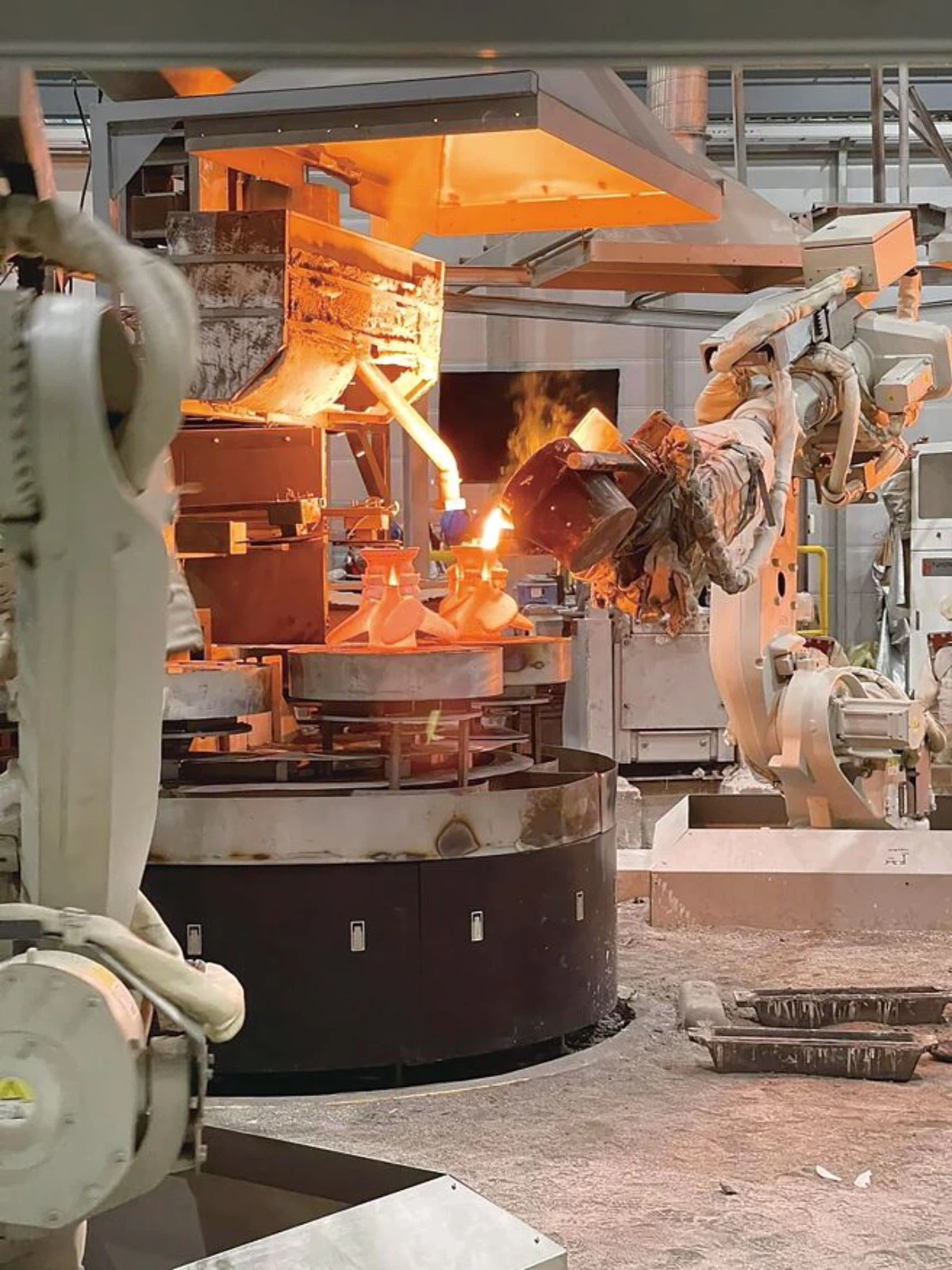
Refined shell-making processes are the core of ensuring accuracy. During coating, the viscosity of each layer of coating material must be uniform, and a constant-speed dipping method should be used to ensure consistent coating thickness and prevent localized accumulation that could lead to dimensional deviations. The sand used for sprinkling should have uniform particle size to ensure even sand adhesion and enhance the structural stability of the shell. The drying process requires a constant temperature and humidity environment to control the drying speed, allowing the shell to dehydrate and solidify slowly, preventing internal stress caused by rapid drying. Each layer must be fully dried before applying the next layer.
Scientific management of the firing and dewaxing processes reduces the impact of thermal deformation. Dewaxing should use a gentle steam dewaxing method, controlling the temperature and pressure rise rate to prevent rapid expansion of the wax from impacting the shell. During firing, a gradual heating curve is followed, slowly increasing the temperature to the target temperature. Sufficient holding time is maintained to eliminate residual organic matter and internal stresses. The cooling phase is also carried out slowly to minimize thermal expansion and contraction differences, ensuring the dimensional stability of the mold shell and guaranteeing accurate casting formation.


