


During investment casting, insufficient shell strength and stiffness can lead to a series of problems affecting casting quality, production safety, and efficiency. Precise reinforcement and control measures need to be developed for different problem scenarios to ensure the stable support of the casting during solidification. The following are specific problems and corresponding control solutions:
I. Core Problems and Corresponding Control Measures
1. Problem: Collapse/Cracking during the pouring stage
Control Measures: In material selection, prioritize high-density, high-strength refractory aggregates (such as 99% white corundum, graded mullite sand), combined with nano-grade silica sol binder, and add silane coupling agents to improve the bonding interface strength; in the shell-making process, increase the number of back layers (increase to 6-8 layers for complex/large castings), ensuring that each layer of coating is uniform and the sand is densely applied, avoiding coating voids; during the firing process, strictly follow a gentle heating curve, controlling the heating rate at 50-80℃/h, and maintaining high temperature for 1-3 hours to thoroughly remove residual organic matter, improve shell density, and avoid thermal stress cracks caused by rapid heating and cooling.
2. Problem: Loss of dimensional accuracy of castings
Control Measures: Control wax mold accuracy at the source, using low-shrinkage wax materials (shrinkage rate ≤0.8%), stabilizing wax injection parameters and performing constant temperature aging treatment; during shell making, use a gradient coating process, with a thin and uniform face layer (thickness 0.2-0.3mm), and gradually increasing the thickness of the back layers while ensuring sufficient drying of each layer (drying in a constant temperature and humidity environment, drying time ≥4 hours for each layer), avoiding internal stress caused by insufficient drying leading to shell deformation; for large castings, glass fiber reinforcement materials can be added to the back layer to improve the overall rigidity of the shell, while controlling the uniformity of the overall shell wall thickness to reduce stress concentration.
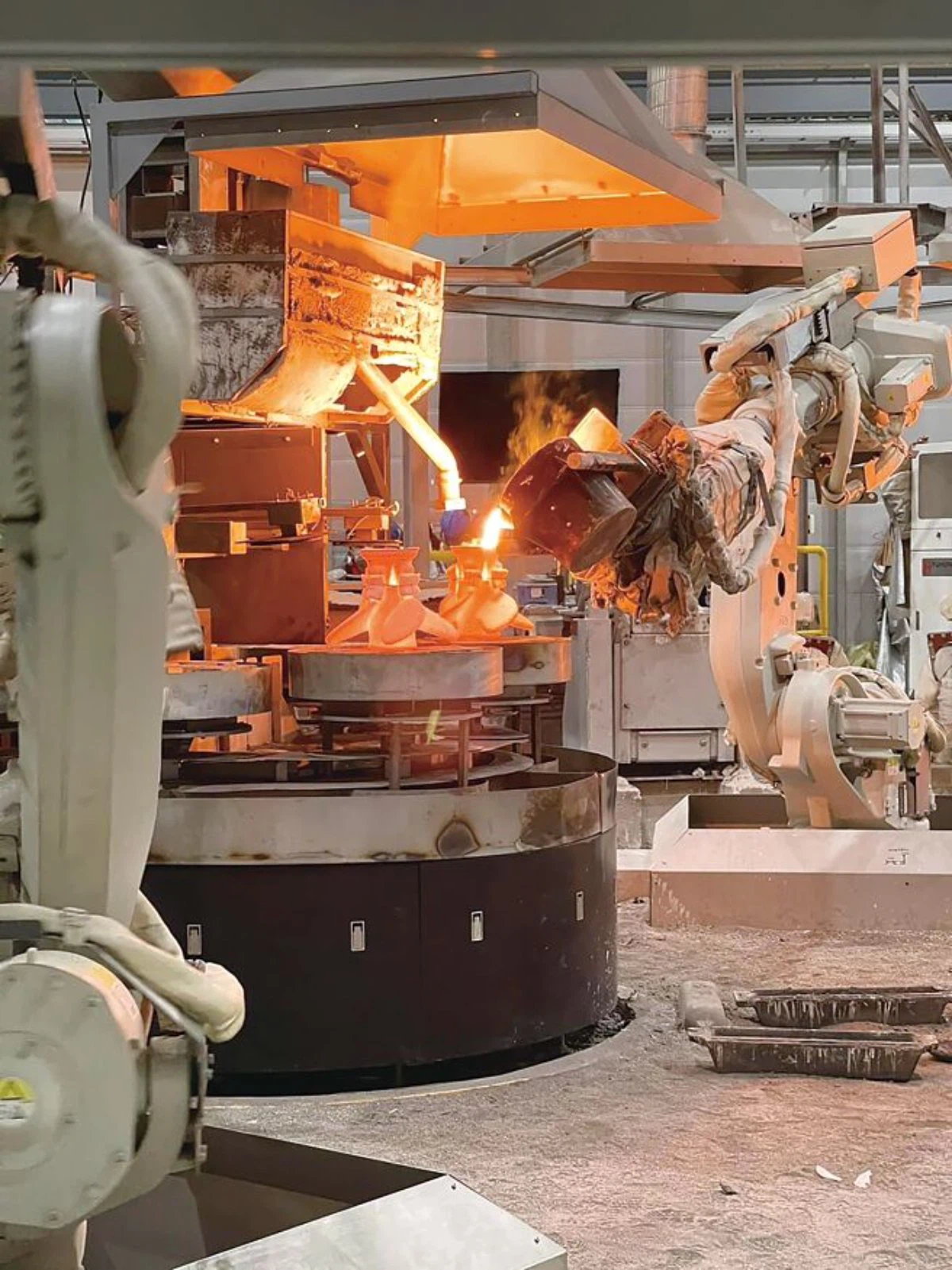
3. Problem: Surface and internal defects in castings (burrs, cold shuts, sand inclusions, slag inclusions, etc.)
Control Measures: For surface defects, use fine-grained refractory aggregate (320-400 mesh zircon powder) for the surface layer, combined with high-purity silica sol slurry. Control the slurry viscosity to 18-22s (using a Ford Cup No. 4), and slowly lift the mold during dipping (speed 5-10 cm/s) to avoid bubble formation; for sand and slag inclusions, strengthen the shell firing and cleaning process to ensure complete removal of residual wax and organic matter. Preheat the mold shell before pouring (600-900℃) to reduce the temperature difference between the molten metal and the mold shell, preventing the surface layer of the mold shell from peeling off and mixing with the molten metal; optimize the sealing system to ensure that the drainage pipes are unobstructed and facing downwards, preventing liquid accumulation and corrosion of the sealing surface, which can lead to localized strength reduction.
4. Problem: Failure in forming complex/large castings
Control Measures: For complex castings (including narrow grooves and thin-walled structures), adopt a "customized shell-making scheme." Use low-viscosity slurry in narrow groove areas to enhance penetration, and increase the number of coating layers in thin-walled areas or use reinforcing ribs for auxiliary support; for large castings, optimize the mold shell structure design, using a segmented shell-making + overall assembly process to reduce overall forming stress. Use high-strength heat-resistant alloy steel sand as the backing aggregate to improve load-bearing capacity; after firing, add low-temperature tempering treatment (500-600℃ for 1 hour) to eliminate thermal stress and further strengthen the mold shell rigidity.
5. Problem: Increased production efficiency and costs
Control Measures: Establish a pre-production mold shell quality testing mechanism. Screen qualified mold shells through compressive strength testing (requiring room temperature compressive strength ≥ 2.5 MPa) and hot rigidity testing, eliminating weak products; develop a standardized shell-making process manual, specifying the coating ratio, number of coating layers, drying and firing parameters for different types of castings, avoiding unstable mold shell quality due to process fluctuations; conduct small-batch trial casting before mass production to optimize the mold shell strengthening plan and reduce the risk of scrap in large-scale production.
II. General Principles of Shell Reinforcement
Regardless of the specific problem, shell reinforcement must adhere to the core principles of "material suitability + precise process control + quality assurance from the outset": material selection must match the casting size, complexity, and pouring temperature; process control focuses on the stability of parameters throughout the entire coating, drying, and firing process; and risks are mitigated in advance through pre-production testing and trial runs, thereby improving shell strength and rigidity from the source and ensuring casting quality and production efficiency.
