


Currently, the four shell-making processes widely used in the domestic precision casting industry are water glass shell casting, composite shell casting, silica sol shell casting, and silica sol shell casting. Next, I will introduce their differences.
1. Water Glass Shell Casting
This process has a production history of nearly 50 years in China. Through the unremitting efforts of colleagues in the precision casting industry for a century and a half, the application and research of water glass shell casting has reached a high level. Over the years, due to the improvement of backing shell refractory materials and the promotion and application of new hardeners, the strength of water glass shell casting has increased exponentially. Its low cost, short production cycle, excellent shell removal performance, and high permeability remain advantages unmatched by any other shell-making process.
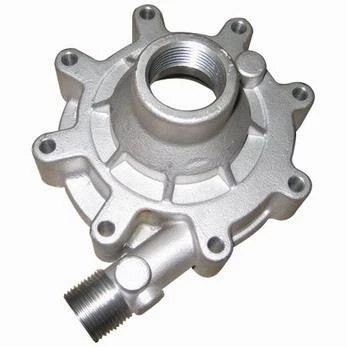
2. Composite Shell Casting
Compared with water glass shell casting, its casting surface quality is greatly improved, with reduced surface roughness, fewer surface defects, and a lower rework rate. It can be applied to stainless steel, heat-resistant steel, and other high-alloy steels. The production cycle is much shorter than that of low-temperature wax-silica sol shell castings, and similar to that of water glass shell castings.
3. Silica Sol (Low-Temperature Wax) Shell Castings
This process is well-suited to national conditions and has greater adaptability and advantages when casting medium to large parts weighing over 1 kg, especially over 5 kg. It offers more stable quality than composite shell castings, particularly in terms of dimensional accuracy. Because it lacks water glass, the shell has excellent high-temperature performance; after firing at 1000-1200℃, it exhibits high permeability and strong creep resistance. It is suitable for thin-walled parts, complex-structured small to medium-sized parts, and can also produce extra-large parts weighing 50-100 kg, such as water pumps, impellers, guide shells, pump bodies, ball valve bodies, and valve plates. For thin-walled small to medium-sized parts or large parts, forked or lifted shell castings can be used for direct pouring in front of the furnace, resulting in a higher yield.
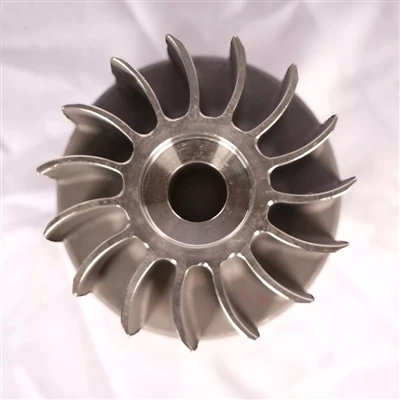
4. Silica Sol (Medium-Temperature Wax) Molding Shell
This is an internationally accepted precision casting process. It offers high casting quality and a low rework rate, making it particularly suitable for small to medium-sized parts (2-1000g) with high surface roughness and dimensional accuracy requirements. However, due to equipment and cost limitations, it is less commonly used for medium to large parts (5-100kg).
