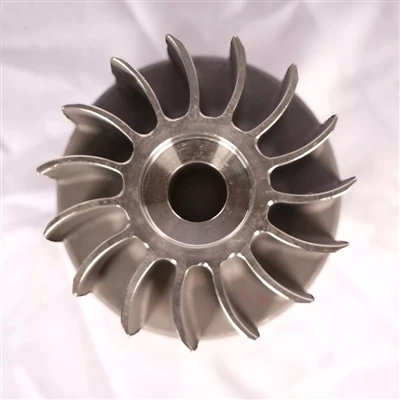
The development of silica sol precision casting in my country started relatively late, and its production process requires extremely strict precision. Both theoretical research and production practice require continuous deepening of the understanding of the process and continuous supplementation of professional knowledge to promote technological advancement.
This process, by systematically streamlining all precision casting production steps, can stably produce high-quality castings. When using silica sol precision casting technology for mold filling, the foam mold undergoes a vaporization and decomposition process.
This process generates a large amount of small molecule gases and foam residues, which pose health hazards to humans. Therefore, operators must strictly adhere to operating procedures and wear protective equipment as required to ensure production safety.
During production, it is necessary to master the operating procedures and complete tasks with a rigorous attitude. The performance of the mold material directly affects the surface quality of the casting-if the mold material has a low softening point, insufficient strength, and a large shrinkage rate (belonging to the category of low-temperature mold materials), it is prone to surface defects. Therefore, the industry is continuously promoting the improvement of mold material formulations and the research and development of new materials. To improve casting quality, the pouring temperature can be appropriately increased, and the distance between the ladle nozzle and the pouring cup can be shortened. Simultaneously, appropriately reducing the pouring speed helps the molten metal fill the mold smoothly, thus avoiding gas entrapment.
Mold shell firing is a critical process and must be ensured to be thorough and complete. The firing temperature for silica sol and ethyl silicate shells should reach 960–1300℃, while for sodium silicate shells it should be 850–900℃. Sufficient firing effectively removes gas-generating substances from the shell, laying the foundation for obtaining high-quality castings.