
Hey there! As a supplier in the Dye Penetrant Inspection business, I've seen firsthand how crucial pre - cleaning is in this inspection method. So, let's dive into the role of pre - cleaning in Dye Penetrant Inspection.
First off, let's talk a bit about what Dye Penetrant Inspection is. It's a widely used non - destructive testing method. You can learn more about it here: Dye Penetrant Inspection. The basic idea is to detect surface - opening defects in materials like metals, ceramics, and plastics. A penetrant liquid, which contains a visible or fluorescent dye, is applied to the surface of the test piece. The penetrant seeps into any surface - opening defects, and after excess penetrant is removed, a developer is applied to draw out the penetrant from the defects and make them visible.
Now, onto the star of the show – pre - cleaning. Pre - cleaning is the first and often the most overlooked step in the Dye Penetrant Inspection process. It sets the stage for all the subsequent steps, and if it's not done right, the entire inspection could be compromised.
One of the main reasons for pre - cleaning is to remove contaminants from the surface of the test piece. These contaminants can include dirt, oil, grease, rust, paint, and scale. If these substances are left on the surface, they can block the penetrant from entering the defects. For example, a thick layer of oil on the surface might create a barrier that prevents the penetrant from seeping into a small crack. As a result, the crack won't show up during the inspection, leading to a false negative result. This can be extremely dangerous, especially in industries where the integrity of the parts is critical, such as aerospace or automotive.
Another important aspect is that pre - cleaning helps to ensure good adhesion between the penetrant and the surface of the test piece. If there are contaminants on the surface, the penetrant might not bond properly, and it could be easily removed during the cleaning and removal steps. This would again lead to inaccurate inspection results.


There are several methods for pre - cleaning, depending on the nature of the contaminants and the material of the test piece. Solvent cleaning is a common method. It involves using a solvent, such as acetone or alcohol, to dissolve and remove oil, grease, and some types of dirt. However, it's important to choose the right solvent, as some solvents might react with the test material or the penetrant.
Mechanical cleaning methods, like sandblasting or wire brushing, can be used to remove rust, scale, and thick layers of paint. But these methods need to be used with care, as they can also damage the surface of the test piece if not done correctly. For example, excessive sandblasting can create small scratches on the surface, which might be mistaken for real defects during the inspection.
Vapor degreasing is another effective pre - cleaning method. In this process, the test piece is exposed to the vapor of a cleaning solvent. The vapor condenses on the surface of the test piece, dissolving and removing contaminants. Vapor degreasing is particularly useful for removing stubborn contaminants and for cleaning complex - shaped parts.
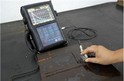
Now, let's compare pre - cleaning in Dye Penetrant Inspection with other non - destructive testing methods. For example, Ultrasonic Flaw Detection and X Ray Inspection. While these methods also require some level of surface preparation, the importance of pre - cleaning is even more pronounced in Dye Penetrant Inspection. In Ultrasonic Flaw Detection, the presence of a small amount of surface dirt might not significantly affect the ultrasonic waves' ability to detect internal defects. Similarly, in X Ray Inspection, the X - rays can penetrate through some surface contaminants. However, in Dye Penetrant Inspection, any surface contamination can directly interfere with the penetrant's ability to enter and highlight surface - opening defects.
As a supplier of Dye Penetrant Inspection products and services, I know that proper pre - cleaning can save a lot of time and money in the long run. If a pre - cleaning step is skipped or done poorly, it might lead to repeated inspections, which are not only time - consuming but also costly. Additionally, inaccurate inspection results can lead to the use of defective parts, which can result in equipment failure and potential safety hazards.
In industries like manufacturing, construction, and maintenance, the reliability of Dye Penetrant Inspection is of utmost importance. By ensuring thorough pre - cleaning, we can improve the accuracy of the inspection and provide reliable results. This is why we, as a supplier, always emphasize the importance of pre - cleaning to our customers.
If you're in need of Dye Penetrant Inspection products or services, don't underestimate the power of pre - cleaning. It's a simple yet critical step that can make all the difference in the success of your inspection. Whether you're a small - scale manufacturer or a large industrial corporation, proper pre - cleaning can help you ensure the quality and safety of your products.
So, if you're looking for high - quality Dye Penetrant Inspection solutions and want to learn more about how to optimize the pre - cleaning process, feel free to reach out. We're here to assist you with all your inspection needs and ensure that your inspection process is as accurate and efficient as possible.
References
- Nondestructive Testing Handbook: Penetrant Testing Volume.
- Standard Practice for Liquid Penetrant Testing. American Society for Testing and Materials.