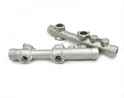

Hey there! As a supplier in the Shell Mold Casting Process biz, I've seen firsthand how shell mold permeability can really shake things up in the casting process. Let's dive right into it and explore what effect shell mold permeability has on the whole deal.
First off, if you're new to shell mold casting, you might be wondering, "What the heck is shell mold casting?" Well, you can check out What Is Shell Mold Casting to get the lowdown. In a nutshell, it's a precision casting method that uses a thin, hard shell mold made from resin-coated sand to create high-quality metal parts.
Now, let's talk about permeability. Permeability in a shell mold refers to how easily gases can pass through the mold during the casting process. This is super important because when molten metal is poured into the mold, it releases a whole bunch of gases. If these gases can't escape properly, it can lead to all sorts of problems.
One of the main effects of low shell mold permeability is gas porosity in the castings. When the gases can't get out of the mold fast enough, they get trapped in the solidifying metal. This creates tiny holes or pores in the casting, which can weaken the part and make it less reliable. No one wants a part that's full of holes, right? It can also affect the surface finish of the casting, making it look rough and uneven.
On the flip side, having too high of a permeability can also be an issue. If the mold is too porous, the molten metal can seep through the mold walls, causing what's called "metal penetration." This can lead to a messy casting with extra bits of metal sticking out where they shouldn't be. It can also waste metal and make the casting process less efficient.
So, finding the right balance of permeability is crucial. As a Shell Mold Casting Process supplier, we spend a lot of time testing and adjusting the mold materials and manufacturing processes to get that perfect permeability. We use different types of sand, resins, and additives to control how porous the shell mold is.
Another factor that affects the impact of shell mold permeability is the type of metal being cast. Different metals have different melting points, viscosities, and gas release rates. For example, aluminum alloys tend to release more hydrogen gas during the casting process compared to steel. So, when casting aluminum, we need to make sure the shell mold has a higher permeability to allow those gases to escape.
The size and shape of the casting also play a role. Larger castings generally require a higher permeability because there's more metal and more gas to get rid of. Complex shapes can also pose challenges because the gases might have a harder time finding their way out of the mold. We have to design the mold carefully to ensure that the gases can flow freely and escape through the right channels.
Now, let's take a look at how shell mold permeability affects the overall casting process efficiency. A mold with the right permeability allows for a faster pouring rate. When the gases can escape easily, we can pour the molten metal into the mold more quickly without worrying about gas entrapment. This means we can produce more castings in less time, which is great for our customers who are looking to get their parts as soon as possible.
It also reduces the need for post-casting treatments. If we can avoid gas porosity and metal penetration during the casting process, we don't have to spend as much time and money on things like machining, grinding, or welding to fix the defects. This saves both time and resources, making the whole process more cost-effective.


As a Shell Mold Casting Process supplier, we understand that every customer's needs are different. That's why we offer customized solutions. We work closely with our clients to understand their specific requirements, such as the type of metal, the size and shape of the casting, and the desired quality standards. Based on that, we can optimize the shell mold permeability to ensure the best possible results.
If you're in the market for high-quality shell mold castings, we'd love to hear from you. Whether you're a small business looking for a few custom parts or a large manufacturer in need of a high-volume production run, we have the expertise and experience to meet your needs. You can learn more about our Shell Mold Casting Process on our website.
Don't hesitate to reach out to us to start a conversation about your casting project. We're here to help you get the best parts at the best price. Let's work together to make your casting dreams a reality!
References
- Various industry research papers on shell mold casting and permeability
- Internal company research and development reports on shell mold optimization