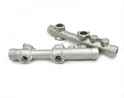

Hey there! I'm a supplier of Gray Iron Casting, and today I wanna talk about the effect of heat treatment on gray iron casting. It's a topic that's super important in our industry, and I'm stoked to share my knowledge with you.
First off, let's understand what gray iron casting is. Gray iron is a type of cast iron that gets its name from the gray color of its fracture surface. It's made up of iron, carbon, and silicon, with graphite flakes dispersed throughout the metal matrix. This gives gray iron some unique properties, like good machinability, high damping capacity, and excellent thermal conductivity.
But here's the thing: the as - cast properties of gray iron might not always meet the specific requirements of different applications. That's where heat treatment comes in. Heat treatment is a process of heating and cooling a metal in a controlled way to change its physical and mechanical properties.
Annealing
One of the most common heat treatment methods for gray iron casting is annealing. Annealing is a slow heating and cooling process. The main purpose of annealing gray iron is to relieve internal stresses that are generated during the casting process. When we pour molten iron into a mold, it cools at different rates in different parts of the casting. This uneven cooling can cause internal stresses, which might lead to cracking or distortion over time.
By annealing, we heat the gray iron casting to a specific temperature (usually around 700 - 900°C) and hold it there for a certain period. This allows the atoms in the metal to rearrange themselves, relieving the internal stresses. After that, we cool the casting slowly. This slow cooling also helps to improve the machinability of the gray iron. The graphite flakes become more uniform, and the hardness of the casting is reduced, making it easier to cut, drill, and shape.
Normalizing
Normalizing is another heat treatment option. It's similar to annealing, but with a faster cooling rate. We heat the gray iron casting to a temperature above the critical point (around 850 - 950°C) and then let it cool in air. This process refines the grain structure of the gray iron. A finer grain structure generally means better mechanical properties, like increased strength and hardness.
For applications where we need a bit more strength from the gray iron casting, normalizing is a great choice. For example, if the casting is going to be used in a machine part that experiences high loads, normalizing can enhance its ability to withstand those loads without deforming.
Hardening
Hardening is a heat treatment process that we use when we really need to boost the hardness of the gray iron casting. We heat the casting to a high temperature (usually above 900°C) and then quench it rapidly in a cooling medium, like oil or water. This rapid cooling causes a phase transformation in the metal, creating a harder and more brittle structure.
However, hardening gray iron isn't without its challenges. Since gray iron has graphite flakes, the rapid cooling can cause cracking in the casting. To minimize this risk, we often use a pre - heating step before hardening and a tempering step after. Tempering is a follow - up heat treatment where we heat the hardened casting to a lower temperature (around 200 - 600°C) and hold it there for a while. This helps to relieve some of the internal stresses created during hardening and makes the casting less brittle.
The Impact on Applications
The heat treatment of gray iron casting has a huge impact on its applications. For instance, in the automotive industry, gray iron castings are used for engine blocks and cylinder heads. By annealing these castings, we can ensure that they are free of internal stresses, which is crucial for their long - term durability. The good machinability resulting from annealing also makes it easier to machine the complex shapes required for these components.
In the manufacturing of machinery, normalizing or hardening gray iron castings can make them suitable for heavy - duty applications. Components like gears and shafts need to have high strength and wear resistance, and heat treatment can provide these properties.
Now, I'd like to mention some of our other products. We also supply High Manganese Steel Casting and Ductile Iron Casting. Each of these has its own unique properties and applications, and heat treatment can also play a significant role in enhancing their performance. If you're interested in Gray Iron Casting, or any of our other products, don't hesitate to reach out for a procurement discussion. We can work together to find the best solutions for your specific needs.
Conclusion
In conclusion, heat treatment is a powerful tool in the world of gray iron casting. It allows us to tailor the properties of the castings to meet a wide range of application requirements. Whether it's relieving internal stresses, improving strength, or increasing hardness, heat treatment can make a big difference.
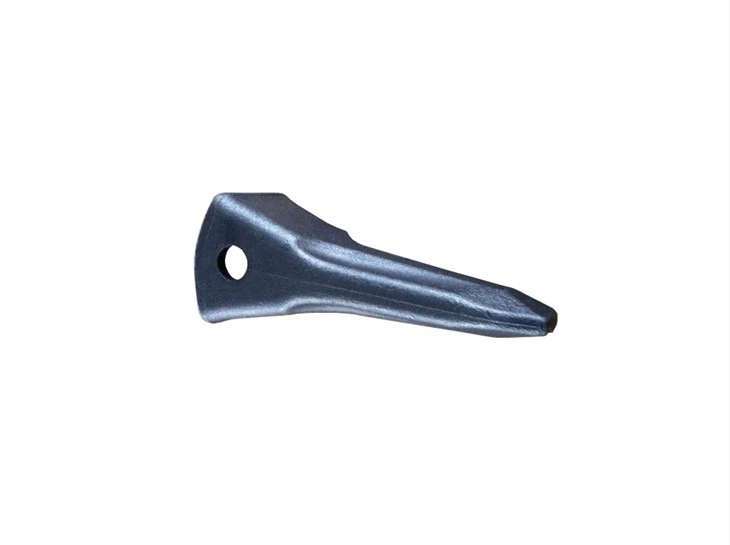

If you're in the market for high - quality gray iron castings or have any questions about heat treatment and its effects, I'd love to hear from you. Let's start a conversation and see how we can collaborate to get you the best products for your projects.
References
- ASM Handbook Volume 4: Heat Treating. ASM International.
- Metals Handbook Desk Edition, 3rd Edition. ASM International.