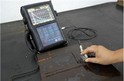

Magnetic Powder Inspection (MPI) is a widely used non-destructive testing (NDT) method for detecting surface and near-surface discontinuities in ferromagnetic materials. In MPI, magnetization plays a crucial role, and there are two primary types of magnetization: circular and longitudinal. As a Magnetic Powder Inspection supplier, I am well - versed in these techniques and their differences. This blog post will delve into the disparities between circular and longitudinal magnetization in Magnetic Powder Inspection.
Basic Principles of Magnetic Powder Inspection
Before discussing the differences between circular and longitudinal magnetization, it's essential to understand the basic principles of MPI. When a ferromagnetic material is magnetized, magnetic fields are generated within the material. If there is a discontinuity (such as a crack) on or near the surface, the magnetic field lines will be disrupted, creating a leakage field at the location of the discontinuity. Magnetic particles, usually in the form of dry powder or suspended in a liquid carrier, are then applied to the surface of the material. These particles are attracted to the leakage field and accumulate at the location of the discontinuity, making it visible to the inspector.
Circular Magnetization
Circular magnetization involves creating a magnetic field that circulates around the axis of a cylindrical or tubular part. This type of magnetization is typically achieved by passing an electric current through the part. When current flows through the part, a circular magnetic field is generated according to Ampere's law.
One of the significant advantages of circular magnetization is its effectiveness in detecting longitudinal discontinuities. Longitudinal discontinuities, such as cracks running parallel to the axis of a shaft or a pipe, are well - detected because the leakage field created by these discontinuities is perpendicular to the circular magnetic field lines. The magnetic particles are then easily attracted to the leakage field, clearly indicating the presence of the discontinuity.
For example, in the inspection of a long steel shaft, circular magnetization can quickly identify any longitudinal cracks that may have developed due to fatigue or other factors. The current is passed through the shaft, and magnetic particles are applied. If there are any longitudinal cracks, the particles will gather at the crack locations, forming a visible indication.
However, circular magnetization has its limitations. It is less effective in detecting circumferential discontinuities (cracks running around the circumference of the part). Since the magnetic field lines are circular, the leakage field from circumferential discontinuities may not be strong enough to attract the magnetic particles effectively.
Longitudinal Magnetization
Longitudinal magnetization, on the other hand, creates a magnetic field that runs parallel to the axis of the part. This can be achieved by using a coil or a yoke to induce a magnetic field in the part. When a part is placed within a coil through which an electric current is flowing, a longitudinal magnetic field is generated inside the part.


The main advantage of longitudinal magnetization is its ability to detect circumferential discontinuities. Circumferential cracks, which are common in pressure vessels and pipes, can be clearly detected using longitudinal magnetization. The leakage field from these circumferential cracks is perpendicular to the longitudinal magnetic field lines, allowing the magnetic particles to be attracted to the crack locations.
For instance, when inspecting a pressure vessel, longitudinal magnetization can be used to identify any circumferential cracks that may pose a risk to the vessel's integrity. By placing the vessel inside a coil and applying the appropriate current, a longitudinal magnetic field is created. After applying magnetic particles, any circumferential cracks will be revealed by the accumulation of particles.
But similar to circular magnetization, longitudinal magnetization also has limitations. It is not as efficient in detecting longitudinal discontinuities. The magnetic field lines are parallel to the longitudinal discontinuities, resulting in a relatively weak leakage field that may not attract the magnetic particles strongly enough to form a clear indication.
Comparison of Circular and Longitudinal Magnetization
- Discontinuity Detection Capability
- As mentioned earlier, circular magnetization is excellent for detecting longitudinal discontinuities but poor at detecting circumferential ones. In contrast, longitudinal magnetization is good for detecting circumferential discontinuities but less effective for longitudinal ones.
- To fully inspect a part for all types of discontinuities, it is often necessary to use both circular and longitudinal magnetization techniques. This is known as multi - directional magnetization, which combines the advantages of both methods to provide a more comprehensive inspection.
- Magnetization Methods
- Circular magnetization usually involves direct current flow through the part. This requires proper electrical connections and current control to ensure a uniform magnetic field. The current magnitude needs to be carefully selected based on the size and material of the part to avoid over - or under - magnetization.
- Longitudinal magnetization can be achieved using coils or yokes. Coils are suitable for cylindrical or tubular parts, while yokes are more flexible and can be used for various shapes and sizes of parts. Yokes can be hand - held, making them convenient for on - site inspections.
- Equipment Requirements
- For circular magnetization, a power supply capable of providing the required current is essential. Additionally, fixtures may be needed to ensure proper electrical contact with the part.
- Longitudinal magnetization requires a coil or a yoke, along with a power source. Coils need to be sized appropriately for the part being inspected, and yokes need to have sufficient magnetic strength.
Applications in Different Industries
Both circular and longitudinal magnetization have their specific applications in various industries.
In the automotive industry, circular magnetization is commonly used to inspect engine shafts and axles for longitudinal cracks. These components are subject to high - stress conditions during operation, and any longitudinal cracks can lead to catastrophic failures. Longitudinal magnetization, on the other hand, can be used to inspect wheel hubs for circumferential cracks.
In the oil and gas industry, circular magnetization is used to inspect pipelines for longitudinal weld defects. Longitudinal magnetization is employed to detect circumferential cracks in pressure vessels and storage tanks.
Other Non - Destructive Testing Methods in Comparison
While Magnetic Powder Inspection is a powerful NDT method, it is not the only one available. Dye Penetrant Inspection is another popular method. Dye Penetrant Inspection is suitable for detecting surface - open discontinuities in non - ferromagnetic materials as well as ferromagnetic materials. However, it can only detect surface - breaking defects, while MPI can detect both surface and near - surface discontinuities.
X Ray Inspection is capable of detecting internal defects in materials. It can provide detailed images of the internal structure of a part. But X Ray Inspection is more expensive and requires strict safety precautions due to the use of radiation. In comparison, MPI is relatively inexpensive and easy to perform, making it a popular choice for many applications.
Conclusion
In conclusion, circular and longitudinal magnetization are two essential techniques in Magnetic Powder Inspection, each with its own unique advantages and limitations. Circular magnetization is effective for detecting longitudinal discontinuities, while longitudinal magnetization is better for detecting circumferential discontinuities. By understanding the differences between these two types of magnetization, inspectors can choose the most appropriate method or combination of methods for a particular inspection task.
As a Magnetic Powder Inspection supplier, we are committed to providing high - quality MPI equipment and services. Our team of experts can help you determine the best magnetization method for your specific inspection needs. Whether you are in the automotive, oil and gas, or any other industry that requires non - destructive testing, we can offer customized solutions.
If you are interested in our Magnetic Powder Inspection products and services, or if you have any questions about circular and longitudinal magnetization, please feel free to contact us for further discussions. We look forward to working with you to ensure the quality and safety of your products.
References
- ASNT (American Society for Nondestructive Testing). "Magnetic Particle Testing Handbook".
- ASTM International. "Standards related to Magnetic Particle Inspection".
- Nondestructive Testing Handbook, Volume 4: Magnetic Particle Testing, edited by R. K. Geitner.