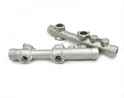

In the dynamic landscape of industrial manufacturing, casting stainless steel stands as a cornerstone material, renowned for its exceptional properties and wide - ranging applications. As a dedicated supplier of casting stainless steel, I am well - versed in the market's availability, which is influenced by multiple factors including technological advancements, market demand, and global economic trends.
1. Technological Advancements and Their Impact on Availability
The field of casting stainless steel has witnessed remarkable technological progress over the years. Modern casting techniques such as Alloy Steel Investment Casting and Stainless Steel Lost Wax Casting have significantly enhanced the precision and quality of stainless steel castings. These advanced methods allow for the production of complex shapes with high dimensional accuracy, which was previously difficult or impossible to achieve.
Investment casting, for instance, uses a wax pattern that is coated with a ceramic shell. Once the wax is melted out, molten stainless steel is poured into the shell, creating a detailed casting. This process not only reduces the need for extensive machining but also minimizes material waste. As a result, more manufacturers are adopting these technologies, leading to an increase in the overall availability of high - quality casting stainless steel products in the market.
Another important advancement is Silicon Sol Investment Casting. Silicon sol is used as a binder in the ceramic shell, which provides better surface finish and dimensional stability. This technique is particularly suitable for producing small and intricate parts, expanding the range of applications for casting stainless steel and further contributing to its market availability.
2. Market Demand and Its Influence on Supply
The demand for casting stainless steel is driven by various industries. In the automotive sector, stainless steel castings are used for engine components, exhaust systems, and suspension parts due to their corrosion resistance, high strength, and heat resistance. The growth of the automotive industry, especially the trend towards electric vehicles, has increased the need for lightweight and durable materials, and casting stainless steel fits the bill perfectly.
The aerospace industry also relies heavily on casting stainless steel. Components such as turbine blades, brackets, and engine casings require materials that can withstand extreme temperatures and pressures. Stainless steel castings offer the necessary mechanical properties and can be customized to meet the strict specifications of aerospace applications.
In the construction industry, casting stainless steel is used for architectural features, structural elements, and plumbing fixtures. Its aesthetic appeal, combined with its durability, makes it a popular choice for both interior and exterior applications.
As these industries continue to grow, the demand for casting stainless steel has been on the rise. To meet this demand, suppliers like us are constantly expanding our production capacity. We invest in new equipment, hire skilled workers, and optimize our production processes to ensure a steady supply of casting stainless steel products in the market.
3. Global Economic Trends and Their Effect on Availability
Global economic trends play a crucial role in the availability of casting stainless steel. During periods of economic growth, industries tend to expand their production, leading to an increased demand for raw materials, including stainless steel. This can sometimes lead to shortages if the supply chain is unable to keep up with the sudden surge in demand.
On the other hand, during economic downturns, industries may cut back on production, resulting in a decrease in demand for casting stainless steel. This can lead to an oversupply in the market, causing prices to drop. However, it also presents an opportunity for suppliers to stockpile materials and invest in research and development to improve their products and processes.
Trade policies and tariffs also have a significant impact on the availability of casting stainless steel. Changes in import and export regulations can disrupt the global supply chain, affecting the flow of raw materials and finished products. For example, tariffs on stainless steel imports can increase the cost of production for domestic manufacturers, leading to a reduction in supply or an increase in prices.


4. Quality Control and Certification
In the market for casting stainless steel, quality control is of utmost importance. As a supplier, we adhere to strict quality control measures at every stage of the production process. From the selection of raw materials to the final inspection of finished products, we ensure that our casting stainless steel meets the highest industry standards.
We also obtain various certifications to demonstrate the quality and reliability of our products. Certifications such as ISO 9001:2015 for quality management systems and ASTM standards for stainless steel materials give our customers confidence in our products. These certifications are recognized globally and are often a requirement for many industries, especially those in the aerospace and medical sectors.
5. Customization and Flexibility
One of the key advantages of casting stainless steel is its ability to be customized. Different industries have different requirements in terms of size, shape, and mechanical properties. As a supplier, we have the expertise and capabilities to produce casting stainless steel products according to our customers' specific needs.
Whether it's a small, intricate part for a medical device or a large, structural component for a building, we can use advanced casting techniques to create the desired product. Our flexibility in production allows us to serve a wide range of customers and meet the diverse demands of the market.
6. Environmental Considerations
In recent years, environmental concerns have become a major factor in the manufacturing industry. Casting stainless steel is relatively environmentally friendly compared to other materials. Stainless steel is 100% recyclable, which means that at the end of its life cycle, it can be melted down and reused to produce new products.
As a supplier, we are committed to sustainable manufacturing practices. We optimize our production processes to reduce energy consumption and minimize waste. For example, we use advanced melting technologies that require less energy and produce fewer emissions. By promoting the use of casting stainless steel, we are not only meeting the market demand but also contributing to a more sustainable future.
Conclusion
The availability of casting stainless steel in the market is influenced by a multitude of factors, including technological advancements, market demand, global economic trends, quality control, customization, and environmental considerations. As a supplier, we are constantly adapting to these factors to ensure a steady supply of high - quality casting stainless steel products.
We understand that our customers need reliable partners who can provide them with the right products at the right time. Whether you are in the automotive, aerospace, construction, or any other industry that requires casting stainless steel, we are here to meet your needs. If you are interested in purchasing casting stainless steel products, we invite you to contact us for a detailed discussion about your requirements. We look forward to the opportunity to work with you and contribute to the success of your projects.
References
- ASM Handbook Committee. (2008). ASM Handbook, Volume 5: Surface Engineering. ASM International.
- Campbell, J. (2003). Castings. Butterworth - Heinemann.
- Schweitzer, P. A. (2004). Handbook of Stainless Steels. McGraw - Hill Professional.