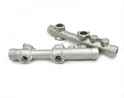

What is nodular iron casting? Well, let me break it down for you. As a supplier of nodular iron casting, I've got a pretty good handle on this stuff, and I'm excited to share it with you.
First off, nodular iron casting, also known as ductile iron casting, is a type of casting process that results in a material with some really cool properties. It's made by adding a small amount of magnesium to molten iron, which causes the graphite in the iron to form into small, spherical nodules instead of the flake-like shape you'd see in regular Gray Iron Casting. This change in the graphite structure gives nodular iron some significant advantages.
One of the biggest benefits of nodular iron is its high strength and ductility. Ductility means it can be stretched and deformed without breaking, which is super important in a lot of applications. For example, in automotive parts, you need materials that can withstand a lot of stress and still hold up over time. Nodular iron can handle that kind of abuse, making it a great choice for things like crankshafts, axles, and suspension components.
Another advantage is its excellent wear resistance. When you've got parts that are constantly rubbing against each other or moving in a high-friction environment, you need a material that can stand up to the wear. Nodular iron has a hard surface that resists abrasion, so it lasts longer and requires less maintenance. This is why it's often used in mining equipment, where the parts are exposed to harsh conditions and need to keep working day in and day out.
In terms of the casting process itself, it's a bit more involved than some other types of casting. But don't worry, it's all worth it for the end result. The process starts with melting iron in a furnace. Once the iron is molten, the magnesium is added. This has to be done carefully because the amount of magnesium affects the formation of the graphite nodules. After the magnesium is added, the molten iron is poured into a mold. The mold can be made from a variety of materials, like sand or metal, depending on the shape and size of the part you're making.
As the iron cools and solidifies in the mold, the graphite nodules form. This is a critical step because the size and distribution of the nodules determine the properties of the final part. Once the iron has completely cooled, the part is removed from the mold. It might need some finishing work, like machining or grinding, to get it to the exact specifications required.
Now, let's compare nodular iron casting with some other types of casting. Gray Iron Casting is a more common and less expensive option. It's got good castability, which means it can be easily poured into complex molds. But it's not as strong or ductile as nodular iron. Gray iron has graphite flakes, which act as stress concentrators, making it more brittle. So, if you need a part that can handle a lot of stress, gray iron might not be the best choice.
On the other hand, High Manganese Steel Casting is known for its extreme toughness and wear resistance. It's often used in applications where there's a lot of impact, like in crushing and grinding equipment. However, high manganese steel is more expensive to produce than nodular iron, and it can be more difficult to machine.
Nodular iron strikes a good balance between cost, strength, and performance. It's a versatile material that can be used in a wide range of industries. In the construction industry, it's used for pipes, manhole covers, and structural components. In the manufacturing industry, it's used for gears, pulleys, and other mechanical parts. And in the energy industry, it's used for parts in power generation equipment.
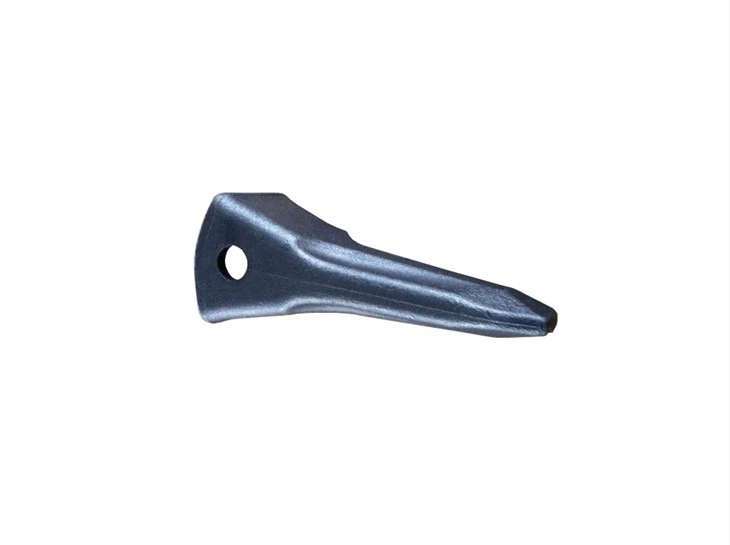
One of the things I love about being a supplier of nodular iron casting is that we can customize the parts to meet our customers' specific needs. Whether you need a small, precision part or a large, heavy-duty component, we can make it. We've got the expertise and the equipment to handle all kinds of projects.

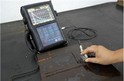
We also focus on quality control. Every part we produce goes through a series of tests to make sure it meets the highest standards. We use non-destructive testing methods, like ultrasonic testing and magnetic particle inspection, to check for any internal defects. And we do mechanical testing to verify the strength and ductility of the parts.
If you're in the market for nodular iron casting, I encourage you to get in touch with us. We'd be happy to discuss your project and see how we can help. Whether you're just starting to design a new product or you need to replace some existing parts, we've got the knowledge and experience to provide you with the best solution.
In conclusion, nodular iron casting is a great choice for a lot of applications. It offers a combination of strength, ductility, wear resistance, and cost-effectiveness that's hard to beat. If you're looking for a reliable material for your next project, give nodular iron a try. And if you need a supplier, we're here to support you every step of the way.
References
- "The Handbook of Casting" by John Campbell
- "Materials Science and Engineering: An Introduction" by William D. Callister, Jr. and David G. Rethwisch