
Hey there! As a supplier of X Ray Inspection systems, I often get asked about the standards for X Ray Inspection in the food industry. It's a super important topic, and I'm stoked to share my knowledge with you.
First off, let's talk about why X Ray Inspection is so crucial in the food industry. You see, consumers expect the food they buy to be safe and free from contaminants. That's where X Ray Inspection comes in. It can detect all sorts of foreign objects like metal, glass, stone, and even some types of plastic that might have found their way into the food during the production process.
One of the main standards for X Ray Inspection in the food industry is the ability to detect small foreign objects. For example, the size of the smallest detectable object can vary depending on the type of food. In some cases, we're talking about objects as small as a few millimeters. This is really important because even a tiny piece of glass or metal in your food can be a serious health hazard.
Another standard is the sensitivity of the X Ray system. A good X Ray Inspection system should be able to pick up on different densities of materials. This means it can distinguish between the food product itself and any foreign objects that might be hiding inside. For instance, metal has a higher density than most food products, so the X Ray system should be able to clearly identify it.
Accuracy is also a key standard. The system needs to be able to accurately locate the foreign object within the food product. This is important for not only removing the contaminated product but also for understanding how the foreign object got into the food in the first place. If the system can't accurately pinpoint the location, it becomes a lot harder to address the root cause of the problem.
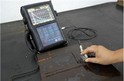
Now, let's compare X Ray Inspection with some other non - destructive inspection methods. There's Ultrasonic Flaw Detection Ultrasonic Flaw Detection. This method uses ultrasonic waves to detect flaws in materials. While it's great for certain applications, it might not be as effective as X Ray Inspection in the food industry. Ultrasonic waves can be affected by the texture and composition of the food, which can make it difficult to detect small foreign objects.
Then there's Magnetic Powder Inspection Magnetic Powder Inspection. This method is mainly used to detect surface and near - surface flaws in ferromagnetic materials. It's not very useful for detecting non - magnetic foreign objects in food, and since a lot of food products are non - ferromagnetic, X Ray Inspection is a much better option.
In the food industry, there are also regulatory standards that X Ray Inspection systems need to meet. Different countries and regions have their own sets of rules and regulations regarding food safety. For example, in the United States, the Food and Drug Administration (FDA) has strict guidelines on what can and can't be in food products. X Ray Inspection systems need to be able to comply with these regulations to ensure that the food being produced is safe for consumption.
When it comes to choosing an X Ray Inspection system for your food production line, there are a few things to consider. First, you need to think about the type of food you're producing. Different foods have different densities and compositions, which can affect the performance of the X Ray system. For example, a system that works well for detecting foreign objects in dry cereals might not be as effective for detecting objects in a wet, viscous sauce.
The speed of your production line is also an important factor. If you have a high - speed production line, you need an X Ray Inspection system that can keep up. It should be able to inspect each product quickly and accurately without causing any bottlenecks in the production process.
Another consideration is the size of the products you're producing. Larger products might require a more powerful X Ray system to ensure that the entire product can be inspected properly. Smaller products, on the other hand, might need a system with a higher resolution to detect tiny foreign objects.
As a supplier of X Ray Inspection systems, I know that finding the right system can be a challenge. But don't worry! We're here to help you every step of the way. Our team of experts can work with you to understand your specific needs and recommend the best X Ray Inspection system for your food production line.
Whether you're a small - scale food producer or a large - scale manufacturer, having a reliable X Ray Inspection system is essential for ensuring the safety and quality of your products. By meeting the standards of X Ray Inspection in the food industry, you can not only protect your consumers but also enhance your brand reputation.
If you're interested in learning more about our X Ray Inspection systems or have any questions about the standards in the food industry, don't hesitate to reach out. We're always happy to have a chat and see how we can help you take your food production to the next level. Contact us today to start the conversation and explore how our X Ray Inspection solutions can benefit your business.


References:
- General knowledge of food safety regulations and non - destructive inspection methods in the food industry.