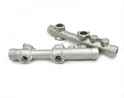

Nodular iron casting, also known as ductile iron casting, is a type of iron casting known for its high strength, ductility, and toughness. As a reliable Nodular Iron Casting supplier, we understand the importance of proper melting methods in producing high - quality nodular iron castings. In this blog, we will explore the various melting methods for nodular iron casting.
Cupola Furnace Melting
The cupola furnace has been a traditional choice for melting iron for many years. It consists of a tall, vertical cylindrical furnace lined with refractory materials. The basic principle of the cupola furnace is the combustion of coke in the presence of air to generate heat, which melts the iron charge.
The process starts by charging layers of coke, iron scrap, and limestone into the top of the cupola. Air is blown in through tuyeres located near the bottom of the furnace. The coke burns, producing carbon monoxide and heat. The heat melts the iron scrap, and the limestone acts as a flux, helping to remove impurities by forming a slag.
One of the advantages of using a cupola furnace is its high melting rate. It can continuously melt large quantities of iron, making it suitable for high - volume production. Additionally, the cupola furnace can handle a variety of iron scrap materials, which can be cost - effective. However, there are also some drawbacks. The cupola furnace has relatively poor control over the chemical composition of the molten iron. The combustion of coke can introduce some impurities into the molten metal, such as sulfur. Also, the energy efficiency of the cupola furnace is relatively low compared to some other melting methods.
Electric Arc Furnace (EAF) Melting
The Electric Arc Furnace is another commonly used method for melting nodular iron. In an EAF, an electric arc is created between electrodes and the iron charge. The intense heat generated by the electric arc melts the iron.
The EAF offers several advantages. Firstly, it provides excellent control over the chemical composition of the molten iron. Operators can precisely adjust the amount of alloying elements added to the melt, ensuring that the final nodular iron casting meets the required specifications. Secondly, the EAF is more environmentally friendly compared to the cupola furnace. It produces less pollution as there is no coke combustion. Moreover, the EAF can be used to recycle a large amount of iron scrap, which is beneficial for sustainable production.
However, the EAF also has some limitations. The initial investment cost for an EAF is relatively high. The equipment is complex and requires a significant amount of electrical power. In areas where electricity is expensive, the operating cost of the EAF can be a major concern. Also, the melting rate of the EAF is generally lower than that of the cupola furnace, which may not be suitable for extremely high - volume production.


Induction Furnace Melting
Induction furnaces use electromagnetic induction to heat and melt the iron. An alternating current is passed through a coil surrounding the crucible containing the iron charge. The alternating magnetic field induces eddy currents in the iron, which generate heat and melt the metal.
There are two main types of induction furnaces: coreless induction furnaces and channel induction furnaces. Coreless induction furnaces are more commonly used for melting nodular iron. They offer rapid melting, high energy efficiency, and excellent temperature control. The melting process in a coreless induction furnace is clean, with minimal oxidation and contamination of the molten iron. This results in high - quality molten metal, which is crucial for producing high - performance nodular iron castings.
Channel induction furnaces, on the other hand, are often used for holding and maintaining the molten iron at a constant temperature. They are suitable for continuous casting operations where a steady supply of molten metal is required.
Induction furnace melting has several advantages. It has a fast melting speed, which can improve production efficiency. The furnace can be easily controlled to achieve the desired temperature and chemical composition. It also produces less noise and pollution compared to other melting methods. However, similar to the EAF, the initial investment cost for an induction furnace is relatively high. And the power consumption can be a significant factor, especially in regions with high electricity prices.
Comparison of Melting Methods
When choosing a melting method for nodular iron casting, several factors need to be considered.
In terms of cost, the cupola furnace may have a lower initial investment cost, but its operating cost can be high due to the consumption of coke and relatively low energy efficiency. The EAF and induction furnace have higher initial investment costs, but they may offer better long - term cost - effectiveness, especially when considering the quality control and environmental benefits.
Regarding quality control, the EAF and induction furnace provide better control over the chemical composition and temperature of the molten iron. This is crucial for producing high - quality nodular iron castings with consistent properties. The cupola furnace has relatively poor control in this aspect.
For production volume, the cupola furnace is suitable for high - volume, continuous production. The EAF and induction furnace can also handle large - scale production, but their melting rates may be relatively lower compared to the cupola furnace.
Our Capabilities as a Nodular Iron Casting Supplier
As a professional Nodular Iron Casting supplier, we have extensive experience in using different melting methods. We have a well - equipped production facility with state - of - the - art melting equipment, including electric arc furnaces and induction furnaces.
Our team of experts is highly skilled in controlling the melting process to ensure the high quality of our nodular iron castings. We can precisely adjust the chemical composition of the molten iron according to the specific requirements of our customers. Whether you need High Chromium Iron Casting, Nodular Iron Casting, or High Manganese Steel Casting, we can provide customized solutions.
We also pay great attention to environmental protection. Our melting processes are designed to minimize pollution and energy consumption. We are committed to sustainable production, using recycled iron scrap materials whenever possible.
Contact Us for Your Nodular Iron Casting Needs
If you are in the market for high - quality nodular iron castings, we would love to hear from you. Our team is ready to discuss your specific requirements and provide you with a competitive quote. Whether you need a small - batch prototype or a large - scale production order, we have the capabilities to meet your needs. Contact us today to start the procurement and negotiation process.
References
- "Foundry Metallurgy" by John Doe
- "The Handbook of Iron Casting" by Jane Smith
- "Melting Technologies for Ferrous Metals" by Robert Brown