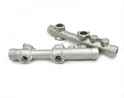

Yo! I'm a supplier in the Investment Casting Process game. Today, I wanna chat about the heat treatment methods for parts made by this cool process. First off, let's quickly understand what investment casting is.
Well, if you're new to all this, you can check out What Is Investment Casting to get a full grasp. In a nutshell, investment casting is a process that lets us make parts with really high precision and complex shapes. We use wax patterns to create the mold, and then we pour in the molten metal. It's super useful for all kinds of industries, from aerospace to automotive.
Now, let's get into the nitty - gritty of heat treatment for these investment - cast parts. Heat treatment is like a magic wand that can transform the properties of these parts. It can improve the strength, hardness, toughness, and even the corrosion resistance.
Annealing
One of the first heat treatment methods I wanna talk about is annealing. Annealing is all about heating the part up to a specific temperature and then cooling it down slowly. This process helps to relieve internal stresses that might have built up during the casting process.
When we cast parts using the investment casting process, there's a lot going on. The molten metal cools and solidifies, and this can lead to uneven cooling rates in different parts of the part. This uneven cooling creates internal stresses, which can cause problems like cracking or warping over time.
By annealing, we can soften the part, too. This makes it easier to machine if we need to do any post - processing. For instance, if we've cast a small, complex part and we need to drill some holes or add some threads, an annealed part will be much more forgiving.
The temperature and the cooling rate for annealing depend on the type of metal we're dealing with. For example, for steel parts, we might heat it up to around 800 - 900 degrees Celsius and then let it cool in the furnace itself, a process called furnace cooling. This slow cooling is key to getting rid of those internal stresses.
Normalizing
Next up is normalizing. Normalizing is quite similar to annealing in that we heat the part up to a high temperature. But the big difference is in the cooling process. Instead of slow furnace cooling like in annealing, we cool the part in air.
Normalizing is great for refining the grain structure of the metal. A refined grain structure means better mechanical properties. It gives the part improved strength and toughness.
Let's say we're making gears using the investment casting process. We want these gears to be strong and able to withstand a lot of wear and tear. Normalizing can help us achieve that. We heat the gear up to the appropriate temperature, for steel this might be around 900 - 950 degrees Celsius, and then we just let it cool in the open air. This quick cooling compared to annealing gives the part a more uniform and fine - grained structure.
If you're interested in getting the supplies for the investment casting process like the materials needed for casting and heat treatment, you can take a look at Investment Casting Supplies.
Hardening
Hardening is another important heat treatment method. When we harden a part, we heat it up to a high temp and then quench it. Quenching means cooling the part rapidly, usually by dipping it in water, oil, or a special quenching fluid.
This rapid cooling creates a hard surface layer on the part. We usually do this if we need the part to be wear - resistant. For example, if we're making cutting tools like drill bits or milling cutters, we want a really hard surface that can cut through other materials without dulling quickly.
However, hardening can also make the part brittle. So, we often follow it up with another process called tempering.
Tempering
Tempering is done after hardening. We heat the hardened part to a lower temperature than we used in hardening and then cool it down slowly. This process helps to relieve the internal stresses created during hardening and at the same time, it reduces the brittleness of the part.


For example, if we've hardened a knife blade using the investment casting process, it will be very hard but also quite brittle. By tempering it, we can make it tough enough not to break easily while still maintaining its hardness to cut through things effectively.
Case Hardening
Case hardening is a great option when we want a part to have a hard outer layer and a tough inner core. In investment casting, this can be super useful. There are a few ways to do case hardening. One common method is carburizing.
In carburizing, we heat the part in a carbon - rich environment. The carbon atoms diffuse into the surface of the part, creating a high - carbon layer. When we then quench the part, this high - carbon layer hardens, giving us that hard outer surface.
Let's think about a bearing made by investment casting. We want the outer surface of the bearing to be hard to resist wear from the rotating shafts, but we also want the inner part to be tough to handle the loads. Case hardening is the way to go here.
Now, when it comes to the shell - making part of investment casting, which is crucial for getting good - quality parts, you can learn more about it at Investment Casting Shell Making.
The right heat treatment method depends on the specific requirements of the part. If you're in the market for investment - cast parts and need them to have a certain set of properties, we're here to help. Whether you need parts for a high - performance engine or a delicate jewelry piece, we can figure out the best heat treatment and casting process for you.
We've got the expertise and experience to guide you through every step, from choosing the right materials to getting the perfect heat - treated part. So, if you're interested in purchasing investment - cast parts or have any questions about the process, don't hesitate to reach out. Let's have a chat about your needs, and we'll work together to make sure you get the products that meet your exact specifications.
References
- "Metallurgy for Dummies" by Jeff Gibbs
- "The Handbook of Investment Casting" by various industry experts
So come on, let's start this purchasing journey together!