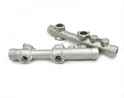

Gray iron casting is a widely used material in various industries due to its excellent mechanical properties, good castability, and relatively low cost. However, one of the key concerns when using gray iron casting is its corrosion resistance. As a supplier of gray iron casting, I understand the importance of providing our customers with high - quality products that can withstand the test of time and environmental factors. In this blog, I will discuss the corrosion resistance properties of gray iron casting, including the factors that affect it, and how we as a supplier ensure the best possible corrosion resistance for our products.
Composition and Structure of Gray Iron Casting
Gray iron gets its name from the gray appearance of its fracture surface, which is due to the presence of graphite flakes in its microstructure. The typical composition of gray iron includes iron (Fe), carbon (C), silicon (Si), manganese (Mn), sulfur (S), and phosphorus (P). The carbon content usually ranges from 2.5% to 4.0%, and the silicon content is around 1.0% to 3.0%.
The graphite flakes in gray iron play a significant role in its corrosion behavior. Graphite is a relatively inert material with high electrical conductivity. In an electrolyte environment, graphite flakes can act as cathodes, while the iron matrix acts as an anode. This creates a galvanic cell within the material, which can accelerate the corrosion of the iron matrix.
Factors Affecting the Corrosion Resistance of Gray Iron Casting
Chemical Composition
- Carbon Content: As mentioned earlier, carbon in the form of graphite flakes can influence corrosion. Higher carbon content generally leads to more graphite flakes, increasing the area of the cathode in the galvanic cell and potentially accelerating corrosion. However, a proper amount of carbon is necessary for the good castability and mechanical properties of gray iron.
- Silicon Content: Silicon is beneficial for corrosion resistance. It forms a passive oxide layer on the surface of the iron matrix, which can protect the material from further corrosion. Silicon also promotes the formation of a more uniform graphite structure, reducing the galvanic corrosion effect.
- Alloying Elements: Adding certain alloying elements can improve the corrosion resistance of gray iron. For example, chromium (Cr) can form a protective chromium oxide layer on the surface, similar to stainless steel. Nickel (Ni) can also enhance the corrosion resistance by improving the stability of the passive layer.
Microstructure
- Graphite Morphology: The shape, size, and distribution of graphite flakes have a direct impact on corrosion. Coarse and interconnected graphite flakes are more likely to cause galvanic corrosion compared to fine and well - dispersed ones. Heat treatment processes can be used to modify the graphite morphology and improve corrosion resistance.
- Matrix Structure: The structure of the iron matrix, such as ferrite, pearlite, or a mixture of both, also affects corrosion. Ferrite is more susceptible to corrosion than pearlite due to its lower carbon content and less stable structure.
Environmental Conditions
- pH Value: The pH value of the surrounding environment is crucial. In acidic environments, gray iron is more likely to corrode as the acid can dissolve the iron matrix. In alkaline environments, a passive layer may form on the surface, providing some protection.
- Temperature: Higher temperatures generally accelerate the corrosion rate. At elevated temperatures, the chemical reactions involved in corrosion occur more rapidly, and the protective oxide layer may be less stable.
- Presence of Corrosive Agents: The presence of substances such as salts, acids, and oxidizing agents in the environment can significantly increase the corrosion rate of gray iron casting. For example, in marine environments, the high salt content can cause severe corrosion.
Corrosion Resistance Testing of Gray Iron Casting
As a gray iron casting supplier, we conduct various corrosion resistance tests to ensure the quality of our products. Some of the common tests include:
Salt Spray Test
This test involves exposing the gray iron casting samples to a salt - fog environment for a certain period. The salt spray simulates the corrosive conditions in marine or coastal areas. After the test, the samples are examined for signs of corrosion, such as rust formation and surface damage.
Immersion Test
In an immersion test, the samples are immersed in a specific corrosive solution, such as an acidic or alkaline solution, for a set time. The weight loss of the samples is measured before and after the test to calculate the corrosion rate.
Electrochemical Testing
Electrochemical methods, such as potentiodynamic polarization and electrochemical impedance spectroscopy, can be used to study the corrosion behavior of gray iron casting. These tests can provide information about the corrosion potential, corrosion current density, and the resistance of the passive layer.
Improving the Corrosion Resistance of Gray Iron Casting
Alloying
As mentioned before, adding alloying elements such as chromium, nickel, and molybdenum can improve the corrosion resistance of gray iron. For example, High Chromium Iron Casting is a type of gray iron casting with a relatively high chromium content, which has better corrosion resistance in certain environments.
Surface Treatment
- Coating: Applying a protective coating on the surface of gray iron casting is a common method to improve corrosion resistance. Coatings can act as a physical barrier between the material and the corrosive environment. Some common coatings include paint, epoxy, and zinc - rich primers.
- Galvanizing: Galvanizing is a process of coating gray iron with a layer of zinc. Zinc is more electrochemically active than iron, so it acts as a sacrificial anode, protecting the iron matrix from corrosion.
Heat Treatment
Heat treatment can modify the microstructure of gray iron casting, improving its corrosion resistance. For example, annealing can reduce the internal stress in the material and promote a more uniform graphite structure, while quenching and tempering can change the matrix structure to enhance corrosion resistance.
Comparison with Other Casting Materials
High Manganese Steel Casting
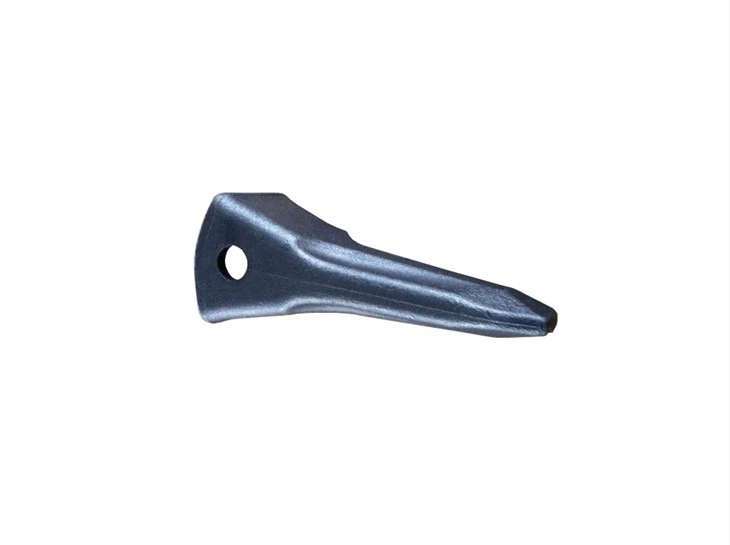
High Manganese Steel Casting and High Manganese Steel Casting are known for their excellent wear resistance. However, in terms of corrosion resistance, gray iron and high - manganese steel have different characteristics. High - manganese steel usually has a higher alloy content, which can provide better corrosion resistance in some cases. But gray iron is more cost - effective and has good castability, making it a popular choice in many applications where corrosion is not the most critical factor.
Our Approach as a Gray Iron Casting Supplier
As a supplier of gray iron casting, we take several steps to ensure the best possible corrosion resistance of our products:
- Precise Composition Control: We carefully control the chemical composition of our gray iron casting to optimize the carbon, silicon, and alloying element content for both mechanical properties and corrosion resistance.
- Advanced Manufacturing Processes: We use advanced casting and heat - treatment processes to obtain a fine and uniform microstructure, which is beneficial for corrosion resistance.
- Quality Assurance: We conduct strict quality control and corrosion resistance testing on all our products before delivery to ensure they meet the customer's requirements.
Conclusion
The corrosion resistance of gray iron casting is a complex issue affected by various factors such as chemical composition, microstructure, and environmental conditions. While gray iron has some limitations in terms of corrosion resistance due to the presence of graphite flakes, proper alloying, surface treatment, and heat treatment can significantly improve its performance. As a gray iron casting supplier, we are committed to providing high - quality products with excellent corrosion resistance. If you are interested in our gray iron casting products or have any questions about corrosion resistance, please feel free to contact us for further discussion and procurement negotiation.

References
- Metals Handbook, Volume 1: Properties and Selection: Irons, Steels, and High - Performance Alloys. ASM International.
- Callister, W. D., & Rethwisch, D. G. (2010). Materials Science and Engineering: An Introduction. Wiley.
- Uhlig, H. H., & Revie, R. W. (1985). Corrosion and Corrosion Control: An Introduction to Corrosion Science and Engineering. Wiley.