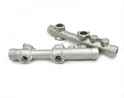

Gray iron casting is a well - established and widely used manufacturing process in the industry. As a supplier of gray iron casting, I am well - versed in its numerous advantages, which make it a preferred choice for various applications. In this blog, I will delve into the key benefits of gray iron casting and why it continues to be a cornerstone in modern manufacturing.
Excellent Castability
One of the most significant advantages of gray iron casting is its exceptional castability. Gray iron has a relatively low melting point compared to other metals, typically around 1150 - 1200°C. This lower melting point means that less energy is required to melt the iron, resulting in cost savings during the casting process.
During the pouring stage, gray iron has good fluidity. It can easily fill complex mold cavities, even those with thin walls and intricate shapes. This property allows for the production of highly detailed and accurate castings. Whether it's a small, delicate component or a large, heavy - duty part, gray iron can be effectively cast to meet the specific design requirements. For example, in the production of engine blocks, gray iron's ability to fill the intricate channels and chambers within the mold is crucial for ensuring proper engine performance.
High Damping Capacity
Gray iron is renowned for its high damping capacity. Damping refers to the ability of a material to absorb and dissipate energy when it vibrates. In machinery and equipment, vibrations can cause noise, wear, and reduced component lifespan. Gray iron's high damping capacity helps to minimize these issues.
When used in machine tool bases, for instance, gray iron can absorb the vibrations generated during machining operations. This results in a more stable working environment, improving the accuracy of the machining process and reducing the wear on cutting tools. In automotive applications, gray iron brake drums and discs can effectively dampen the vibrations caused by braking, leading to a smoother and quieter braking experience.
Good Machinability
Machinability is an important factor in the manufacturing process. Gray iron offers excellent machinability due to its unique microstructure. The graphite flakes present in gray iron act as built - in lubricants during machining. These flakes reduce friction between the cutting tool and the workpiece, resulting in lower cutting forces and less tool wear.
As a result, machining gray iron castings is relatively easy and cost - effective. It can be machined using a variety of methods, including turning, milling, drilling, and grinding. This makes it suitable for a wide range of applications where post - casting machining is required to achieve the desired dimensions and surface finish. For example, in the production of gears, gray iron castings can be easily machined to create the precise tooth profiles necessary for smooth and efficient power transmission.
Wear Resistance
Gray iron has good wear resistance properties, which make it suitable for applications where components are subject to friction and abrasion. The graphite flakes in gray iron not only improve machinability but also act as a solid lubricant, reducing the coefficient of friction between the casting and the mating surface.
In applications such as pump housings and impellers, gray iron's wear resistance helps to ensure long - term performance. The components can withstand the constant flow of fluids and the associated abrasion without significant degradation. Similarly, in mining equipment, where parts are exposed to harsh and abrasive environments, gray iron castings can provide reliable service.
Low Cost
Cost is always a major consideration in manufacturing. Gray iron casting is a cost - effective option for several reasons. First, the raw materials for gray iron, mainly iron ore and scrap iron, are relatively abundant and inexpensive. This keeps the material cost low.
Second, as mentioned earlier, the low melting point of gray iron reduces energy consumption during the casting process. Additionally, the good castability and machinability of gray iron result in fewer production steps and less waste, further reducing the overall manufacturing cost. For large - scale production, the cost savings associated with gray iron casting can be substantial, making it an attractive choice for many industries.
Comparison with Other Casting Materials
When compared to other casting materials such as Ductile Iron Casting, High Chromium Iron Casting, and Casting Steel Precision Parts, gray iron has its own unique advantages.
Ductile iron has higher tensile strength and ductility compared to gray iron. However, gray iron is more cost - effective and has better damping capacity. In applications where vibration control is crucial, such as in machine tool structures, gray iron is often the preferred choice.
High chromium iron casting is known for its excellent corrosion and wear resistance, especially in highly abrasive and corrosive environments. But gray iron offers a good balance between cost and performance for more general - purpose applications. It can provide sufficient wear resistance at a lower cost, making it suitable for a wider range of industries.
Casting steel precision parts have high strength and toughness. However, the cost of steel casting is generally higher than that of gray iron casting. Gray iron can meet the requirements of many applications where high strength is not the primary concern, such as in some architectural and decorative castings.


Applications of Gray Iron Casting
Gray iron casting is used in a wide variety of industries. In the automotive industry, it is used for engine blocks, cylinder heads, brake drums, and manifolds. The excellent castability, machinability, and damping capacity of gray iron make it an ideal material for these critical components.
In the construction industry, gray iron is used for manhole covers, pipes, and fittings. Its wear resistance and low cost make it suitable for these outdoor applications where durability and affordability are important.
The machinery industry also relies heavily on gray iron castings. Machine tool bases, gears, and pulleys are commonly made from gray iron. The high damping capacity and good machinability of gray iron contribute to the smooth operation and long - term reliability of these machines.
Conclusion
In conclusion, gray iron casting offers a multitude of advantages, including excellent castability, high damping capacity, good machinability, wear resistance, and low cost. These benefits make it a versatile and cost - effective choice for a wide range of applications across various industries.
If you are in need of high - quality gray iron castings for your project, I invite you to reach out to discuss your specific requirements. Our team of experts is dedicated to providing you with the best solutions and ensuring the success of your manufacturing endeavors.
References
- "Metals Handbook: Casting", ASM International
- "Foundry Technology", John Campbell
- "Materials Science and Engineering: An Introduction", William D. Callister Jr. and David G. Rethwisch