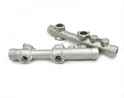

As a seasoned supplier in the gray iron casting industry, I understand the critical importance of cost reduction in maintaining competitiveness and profitability. Gray iron casting is widely used in various industries due to its excellent castability, good machinability, and high damping capacity. However, the cost of production can be a significant challenge. In this blog post, I will share some effective strategies on how to reduce the cost of gray iron casting.
Optimize the Design Process
The design stage is the foundation of cost - effective gray iron casting. A well - designed casting can minimize material usage, reduce machining requirements, and improve production efficiency.
- Simplify the Geometry: Complex geometries often require more material and longer production times. By simplifying the shape of the casting, we can reduce the amount of molten iron needed and the complexity of the mold. For example, eliminating unnecessary protrusions, undercuts, or thin walls can streamline the casting process.
- Consider Casting Tolerances: Specify appropriate casting tolerances. Tighter tolerances usually mean more precise machining and higher costs. By working closely with the engineering team, we can determine the optimal tolerances that meet the functional requirements of the part without over - specifying.
Select the Right Raw Materials
The choice of raw materials has a direct impact on the cost of gray iron casting.
- Scrap Management: Use a proper ratio of scrap iron in the melt. Scrap is a cost - effective alternative to virgin iron. By carefully selecting and preparing scrap materials, we can ensure the quality of the final casting while reducing the overall material cost. However, it is crucial to control the composition of the scrap to avoid introducing impurities that could affect the mechanical properties of the gray iron.
- Alloying Elements: Only add alloying elements when necessary. Some alloying elements can improve the properties of gray iron, such as strength and hardness. But they also increase the cost. We should conduct a cost - benefit analysis to determine if the addition of alloying elements is justified based on the specific application of the casting.
Improve the Melting Process
The melting process is a major cost driver in gray iron casting.
- Energy Efficiency: Upgrade the melting equipment to more energy - efficient models. For example, modern induction furnaces can offer higher energy efficiency compared to traditional cupolas. By reducing energy consumption, we can significantly cut down the production cost. Additionally, optimizing the melting cycle, such as pre - heating the charge materials, can also improve energy utilization.
- Melting Quality Control: Ensure accurate control of the melting process to minimize the number of defective castings. Precise control of temperature, composition, and melting time can improve the quality of the molten iron and reduce the need for re - melting or scrapping of defective parts.
Enhance the Molding and Core - Making Process
The molding and core - making processes are crucial for the quality and cost of gray iron casting.


- Mold Design and Reusability: Design molds that are easy to manufacture and reuse. Reusable molds can reduce the cost of mold production over multiple casting runs. Additionally, using modern mold - making techniques, such as 3D printing for patterns, can speed up the mold - making process and reduce costs, especially for small - batch production.
- Core - Making Optimization: Optimize the core - making process to reduce the amount of core sand used. For example, using hollow cores or cores with internal structures can save sand material. Also, improving the core - bonding process can enhance the strength of the cores, reducing the risk of core breakage during casting.
Implement Quality Control Measures
Effective quality control can prevent the production of defective castings, which ultimately saves costs.
- In - process Inspection: Conduct regular in - process inspections at each stage of the casting process. This includes checking the quality of raw materials, the accuracy of molds and cores, and the properties of the molten iron. By detecting and correcting issues early, we can avoid the production of large numbers of defective parts.
- Final Inspection and Testing: Perform comprehensive final inspections and testing on the finished castings. This can include dimensional checks, non - destructive testing, and mechanical property testing. Only high - quality castings should be shipped to customers, which can enhance customer satisfaction and reduce the cost of returns and rework.
Streamline the Machining Process
Machining is often required after casting to achieve the desired final dimensions and surface finish.
- Reduce Machining Allowance: Minimize the machining allowance by improving the casting accuracy. A smaller machining allowance means less material removal during machining, which reduces machining time and cost.
- Select the Right Machining Tools and Parameters: Use appropriate machining tools and optimize the machining parameters. High - performance cutting tools can increase the machining efficiency, while proper cutting speeds, feeds, and depths of cut can reduce tool wear and improve the surface quality of the castings.
Explore Value - added Services
In addition to the above cost - reduction strategies, we can also offer value - added services to our customers, which can indirectly reduce the overall cost for them.
- Assembly and Integration: Provide assembly and integration services for the castings. By assembling multiple cast parts into a complete sub - assembly, we can save the customer's time and cost on in - house assembly operations.
- Design Support: Offer design support to our customers. Our engineering team can work closely with the customer's design team to optimize the casting design for cost - effectiveness and performance.
Conclusion
Reducing the cost of gray iron casting requires a comprehensive approach that covers every aspect of the production process, from design to machining. By optimizing the design, selecting the right raw materials, improving the melting and molding processes, implementing quality control measures, streamlining machining, and offering value - added services, we can achieve significant cost savings without sacrificing the quality of the castings.
If you are interested in our High Manganese Steel Casting, Casting Steel Precision Parts, or Nodular Iron Casting, or if you have any inquiries about cost - effective gray iron casting solutions, please feel free to contact us for procurement and negotiation. We are committed to providing you with high - quality products and cost - effective solutions.
References
- Campbell, J. (2003). Castings. Butterworth - Heinemann.
- Kalpakjian, S., & Schmid, S. R. (2009). Manufacturing Engineering and Technology. Pearson Prentice Hall.
- Tiryakioglu, M., & Uslu, B. (2012). Gray and Ductile Iron Castings: Fundamentals and Applications. ASM International.