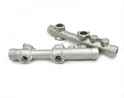

In the investment casting industry, inclusions are a common and troublesome problem that can significantly affect the quality and performance of castings. As a professional supplier of Investment Casting Process, we understand the importance of preventing inclusions to ensure the high - quality production of our customers. In this blog, we will explore various strategies to prevent inclusions in the investment casting process.
Understanding Inclusions in Investment Casting
Before we discuss prevention methods, it is essential to understand what inclusions are. Inclusions are foreign materials that are trapped within the casting during the solidification process. These can be slag, sand, oxides, or other impurities. Inclusions can lead to a variety of issues, such as reduced mechanical properties, surface defects, and even premature failure of the casting in service.
Raw Material Selection
The first step in preventing inclusions starts with the selection of raw materials. High - quality metals and alloys are less likely to contain impurities that can form inclusions. We, as a supplier, ensure that the metals we source meet strict quality standards. For example, when using steel for investment casting, we carefully select steel grades with low sulfur and phosphorus content, as these elements can contribute to the formation of inclusions.
Moreover, the quality of refractory materials used in the investment casting process also matters. Refractory materials line the molds and come into contact with the molten metal. Low - quality refractory materials may break down during the casting process, releasing particles that can become inclusions. We provide Investment Casting Supplies that include high - grade refractory materials to minimize this risk.
Melting and Pouring
The melting and pouring stages are critical in preventing inclusions. During melting, proper degassing and fluxing techniques should be employed. Degassing removes dissolved gases from the molten metal, which can otherwise combine with impurities to form inclusions. Fluxing involves adding a flux material to the molten metal. The flux reacts with impurities, causing them to float to the surface where they can be skimmed off.
When pouring the molten metal into the mold, it is important to do so in a controlled manner. Turbulent pouring can entrain air and slag into the molten metal, leading to inclusions. We recommend using pouring systems that minimize turbulence, such as bottom - pouring ladles or gating systems designed to direct the flow of molten metal smoothly into the mold.
Mold Design and Preparation
The design and preparation of the investment casting mold play a significant role in preventing inclusions. A well - designed mold should have proper gating and riser systems. Gating systems control the flow of molten metal into the mold cavity, while risers provide a reservoir of molten metal to compensate for shrinkage during solidification.
If the gating system is not designed correctly, it can cause uneven filling of the mold, leading to the trapping of air and impurities. Risers should be placed in strategic locations to ensure that any inclusions that rise to the surface during solidification are captured in the riser rather than remaining in the casting.
In addition, the mold preparation process should be meticulous. The mold must be clean and free of any debris before the molten metal is poured. Any sand or other particles left in the mold can become inclusions in the casting. We offer guidance on proper mold cleaning and preparation techniques as part of our Investment Casting Process support.
Quality Control and Inspection
Implementing a strict quality control and inspection regime is crucial for preventing inclusions. At various stages of the investment casting process, inspections should be carried out. For example, before melting, the raw materials should be inspected for any visible impurities. During the melting process, the molten metal can be sampled and analyzed to ensure its purity.
After casting, non - destructive testing methods such as ultrasonic testing, X - ray testing, and magnetic particle testing can be used to detect inclusions within the casting. These tests can identify inclusions that are not visible on the surface, allowing for early detection and correction. We have a team of experienced quality control professionals who use state - of - the - art inspection equipment to ensure the quality of our castings.


Training and Education
Another important aspect of preventing inclusions is the training and education of the workforce. Workers involved in the investment casting process should be well - trained in the proper techniques and procedures. They should understand the causes of inclusions and how to prevent them.
We offer training programs for our customers' employees, covering topics such as raw material handling, melting and pouring techniques, mold design, and quality control. By improving the skills and knowledge of the workforce, we can reduce the occurrence of inclusions and improve the overall quality of the investment casting process.
Conclusion
Preventing inclusions in the investment casting process requires a comprehensive approach that encompasses raw material selection, melting and pouring, mold design and preparation, quality control, and workforce training. As a supplier of Investment Casting Process, we are committed to providing high - quality products and services to help our customers achieve inclusion - free castings.
If you are interested in learning more about our investment casting solutions or have any questions regarding the prevention of inclusions, please feel free to contact us for a detailed discussion. We are eager to work with you to meet your investment casting needs and ensure the production of high - quality castings.
References
- Campbell, J. (2003). Castings. Butterworth - Heinemann.
- ASM Handbook Committee. (2008). ASM Handbook Volume 15: Casting. ASM International.
- Schubert, T., & Arens, E. (2013). Investment Casting: A Practical Guide. Wiley - VCH.