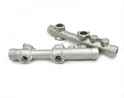

As a long - time supplier of Nodular Iron Casting, I've witnessed firsthand the significance of fluidity in the casting process. Fluidity refers to the ability of molten metal to flow through the mold cavity and fill it completely, which is crucial for producing high - quality nodular iron castings. In this blog, I'll share some effective strategies to improve the fluidity of nodular iron casting.
Understanding the Basics of Nodular Iron Casting Fluidity
Before delving into the improvement methods, it's essential to understand the factors that affect the fluidity of nodular iron. The fluidity is influenced by several aspects, including the chemical composition of the iron, the pouring temperature, the mold design, and the presence of impurities.
The chemical composition of nodular iron plays a vital role. Elements such as carbon, silicon, and magnesium have a significant impact on fluidity. Carbon, for example, increases the fluidity of molten iron because it lowers the melting point. Silicon also enhances fluidity by reducing the surface tension of the molten metal. Magnesium, which is added to promote graphite nodule formation, can sometimes have a negative effect on fluidity if not properly controlled.
Pouring temperature is another critical factor. Generally, a higher pouring temperature increases the fluidity of the molten metal. However, excessively high temperatures can lead to other problems such as increased shrinkage, oxidation, and grain coarsening. Therefore, finding the optimal pouring temperature is a delicate balance.


The mold design also affects fluidity. A well - designed mold with smooth and unobstructed channels allows the molten metal to flow more easily. Factors such as the shape and size of the gating system, the thickness of the walls, and the presence of sharp corners can all influence the flow of the molten iron.
Impurities in the molten iron can significantly reduce fluidity. These impurities can form solid particles that impede the flow of the metal. Therefore, ensuring the purity of the raw materials and proper melting and refining processes are essential.
Strategies to Improve Fluidity
Optimize Chemical Composition
- Carbon and Silicon Content: As mentioned earlier, carbon and silicon can enhance fluidity. By increasing the carbon content within a reasonable range (usually around 3.2 - 3.8%), the melting point of the iron is lowered, and the fluidity is improved. Similarly, a silicon content of about 1.8 - 2.8% can help reduce surface tension and promote better flow. However, it's important to note that excessive amounts of these elements can also cause other problems, such as graphite flotation or reduced mechanical properties.
- Magnesium Control: Magnesium is necessary for nodule formation in nodular iron, but it can reduce fluidity. To mitigate this, the magnesium content should be carefully controlled. A common approach is to use a magnesium - ferrosilicon alloy with a relatively low magnesium content and ensure proper inoculation to promote nodule formation while minimizing the negative impact on fluidity.
Adjust Pouring Temperature
- Determine the Optimal Temperature: The optimal pouring temperature for nodular iron casting typically ranges from 1380 - 1450°C. This temperature range provides sufficient fluidity for the molten metal to fill the mold cavity while avoiding the problems associated with extremely high temperatures. To accurately determine the pouring temperature, factors such as the size and complexity of the casting, the mold material, and the cooling rate need to be considered.
- Temperature Monitoring: During the pouring process, it's crucial to monitor the temperature continuously. This can be achieved using thermocouples or infrared temperature sensors. By closely monitoring the temperature, adjustments can be made in real - time to ensure that the molten metal is poured at the optimal temperature.
Improve Mold Design
- Gating System Design: The gating system is responsible for guiding the molten metal into the mold cavity. A well - designed gating system should have a proper cross - sectional area, smooth flow paths, and appropriate runner and gate sizes. For example, using a tapered runner can help maintain a constant flow velocity and prevent turbulence. Additionally, the location of the gates should be carefully chosen to ensure uniform filling of the mold.
- Mold Wall Thickness: The thickness of the mold walls can affect the cooling rate of the molten metal. A uniform wall thickness helps to ensure a consistent cooling rate, which is beneficial for fluidity. Avoiding sudden changes in wall thickness can prevent the formation of hot spots or cold shuts, which can impede the flow of the molten metal.
- Eliminate Sharp Corners: Sharp corners in the mold can cause the molten metal to stagnate and form defects. By rounding the corners, the flow of the metal is improved, and the risk of casting defects is reduced.
Reduce Impurities
- Raw Material Selection: Choosing high - quality raw materials is the first step in reducing impurities. The iron ore, scrap metal, and alloying elements should be carefully selected to ensure low levels of impurities such as sulfur, phosphorus, and non - metallic inclusions.
- Melting and Refining Processes: Proper melting and refining processes are essential for removing impurities from the molten iron. Techniques such as ladle refining, degassing, and desulfurization can be used to purify the molten metal. For example, adding a desulfurizing agent to the ladle can reduce the sulfur content, which is known to have a negative impact on fluidity.
The Importance of Fluidity in Nodular Iron Casting
Improving the fluidity of nodular iron casting has several significant benefits. Firstly, it helps to ensure complete filling of the mold cavity, which reduces the risk of casting defects such as misruns, cold shuts, and porosity. A well - filled mold results in castings with accurate dimensions and smooth surfaces, which are essential for meeting the required quality standards.
Secondly, better fluidity allows for the production of more complex and intricate castings. This expands the range of applications for nodular iron castings, enabling them to be used in various industries such as automotive, machinery, and construction.
Finally, improving fluidity can also lead to cost savings. By reducing the occurrence of casting defects, the need for rework and scrap is minimized, which increases the overall production efficiency and reduces costs.
Conclusion
As a Nodular Iron Casting supplier, I understand the importance of fluidity in producing high - quality castings. By optimizing the chemical composition, adjusting the pouring temperature, improving the mold design, and reducing impurities, the fluidity of nodular iron casting can be significantly enhanced. These strategies not only improve the quality of the castings but also increase production efficiency and reduce costs.
If you are interested in Nodular Iron Casting or other related products such as High Manganese Steel Casting and Gray Iron Casting, and would like to discuss your specific requirements, I encourage you to reach out for a procurement discussion. We are committed to providing you with the best - quality products and services.
References
- Campbell, J. (2003). Castings. Butterworth - Heinemann.
- Totten, G. E., & MacKenzie, D. S. (2003). Handbook of Aluminum and Aluminum Alloys: Processing, Performance, and Applications. CRC Press.
- Flemings, M. C. (1974). Solidification Processing. McGraw - Hill.