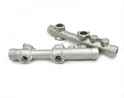

As a Surface Treatment supplier, I often get asked about how to control the thickness of the surface treatment layer. It's a crucial aspect, as the right thickness can significantly impact the performance, durability, and appearance of the treated materials. In this blog, I'll share some practical insights and tips on achieving that perfect thickness.
Understanding the Basics of Surface Treatment
Before diving into thickness control, let's quickly go over what surface treatment is all about. Surface treatment is a process that modifies the surface of a material to enhance its properties or change its appearance. This can include things like coating, plating, anodizing, and more. Each type of surface treatment has its own unique characteristics and requirements when it comes to thickness control.
We offer a wide range of Surface Treatment options at our company. Whether you're looking to protect a metal component from corrosion, improve its wear resistance, or simply give it a more appealing finish, we've got you covered. But getting the thickness just right is key to achieving the desired results.
Factors Affecting Surface Treatment Layer Thickness
There are several factors that can influence the thickness of the surface treatment layer. Understanding these factors is the first step in controlling the thickness effectively.
1. Treatment Method
Different treatment methods will naturally result in different thicknesses. For example, electroplating can create a relatively thin and uniform layer, while some types of thermal spraying can produce much thicker coatings. The choice of treatment method depends on the specific requirements of the application, such as the desired level of protection, the substrate material, and the budget.
2. Treatment Time
The longer the material is subjected to the surface treatment process, the thicker the layer is likely to be. However, this relationship isn't always linear. In some cases, after a certain point, increasing the treatment time may not result in a proportional increase in thickness, or it could even cause other issues like over - coating or degradation of the surface.
3. Treatment Parameters
Parameters like temperature, pressure, and chemical concentrations play a huge role. For instance, in a chemical conversion coating process, a higher concentration of the coating solution may lead to a thicker layer. Similarly, in a heat - based treatment, the temperature can affect how quickly the treatment layer forms and its final thickness.
4. Substrate Material
The type of substrate material also matters. Some materials may react more readily with the treatment agents, resulting in a thicker layer, while others may require more time or specific pre - treatments to achieve the desired thickness. For example, a porous substrate may absorb more of the coating material, leading to a thicker layer compared to a smooth, non - porous one.
Techniques for Controlling Surface Treatment Layer Thickness
Now that we know what factors can affect the thickness, let's look at some techniques to control it.
1. Precise Process Control
One of the most important ways to control thickness is by carefully controlling the treatment process. This means setting and monitoring the treatment parameters accurately. For example, if you're electroplating, you need to control the current density, plating time, and temperature precisely. By using advanced equipment and automated control systems, we can ensure that these parameters stay within the desired range, resulting in a consistent and accurate layer thickness.
2. Testing and Monitoring
Regular testing and monitoring are essential. We use various techniques to measure the thickness of the surface treatment layer during and after the process. Non - destructive testing methods, such as ultrasonic thickness gauges and eddy - current testing, are commonly used. These methods allow us to check the thickness without damaging the treated material. By regularly monitoring the thickness, we can make adjustments to the process if necessary.
3. Pre - treatment and Surface Preparation
Proper pre - treatment of the substrate surface can also help control the thickness. Cleaning, degreasing, and roughening the surface can improve the adhesion of the treatment layer and ensure a more uniform thickness. For example, sandblasting the substrate before applying a coating can create a rough surface that allows the coating to bond better and form a more consistent layer.
4. Process Optimization
Continuous process optimization is key. We're always looking for ways to improve our surface treatment processes to achieve better thickness control. This may involve experimenting with different treatment methods, adjusting the treatment parameters, or using new materials. By constantly fine - tuning the process, we can achieve the most accurate and consistent layer thickness possible.
Importance of Thickness Control in Different Applications
The importance of controlling the thickness of the surface treatment layer varies depending on the application.
1. Corrosion Protection
In applications where corrosion protection is crucial, such as in the automotive and aerospace industries, the thickness of the surface treatment layer can determine the lifespan of the component. A too - thin layer may not provide adequate protection, while a too - thick layer may be costly and may even cause other issues like cracking or peeling.
2. Wear Resistance
For components that are subject to wear and tear, like machine parts, the thickness of the surface treatment layer can affect their durability. A thicker layer can provide better wear resistance, but it also needs to be balanced with other factors like the weight and cost of the component.


3. Aesthetics
In some applications, such as consumer products, the appearance is important. The thickness of the surface treatment layer can affect the color, texture, and overall finish of the product. For example, in a decorative plating application, a precise layer thickness is needed to achieve the desired color and shine.
How Our Company Can Help
As a Surface Treatment supplier, we have the expertise and experience to control the thickness of the surface treatment layer accurately. We use state - of - the - art equipment and advanced techniques to ensure that our customers get the best results.
We also offer Heat Treatment and Mechanical Property Testing services. Heat treatment can be used in combination with surface treatment to further enhance the properties of the material, while mechanical property testing helps us verify that the treated material meets the required specifications.
If you're looking for a reliable Surface Treatment supplier that can provide accurate thickness control, we'd love to hear from you. Whether you're working on a small - scale project or a large - scale industrial application, we have the capabilities to meet your needs. Contact us today to discuss your requirements and let's work together to achieve the perfect surface treatment layer thickness for your project.
References
- ASM Handbook Volume 5: Surface Engineering
- Surface Coatings: Principles, Production and Applications by Peter P. Kucera
- Handbook of Thermal Spray Technology by John R. Davis