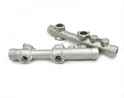

Controlling the holding time of molten metal in the shell mold casting process is a critical aspect that directly impacts the quality and efficiency of the final castings. As a seasoned provider of the Shell Mold Casting Process, I've witnessed firsthand the significance of this parameter and the challenges it presents. In this blog, I'll share insights on how to effectively manage the holding time of molten metal to achieve optimal results.
Understanding the Importance of Holding Time
Before delving into the control strategies, it's essential to understand why the holding time of molten metal matters. The holding time refers to the duration between the melting of the metal and its pouring into the shell mold. This period influences several key factors:
- Solidification Structure: The holding time affects the nucleation and growth of crystals during solidification. A proper holding time can promote a fine-grained structure, which enhances the mechanical properties of the casting, such as strength and ductility.
- Gas and Inclusion Removal: During the holding period, gases and non-metallic inclusions have time to rise to the surface of the molten metal and be removed. This helps to reduce porosity and improve the cleanliness of the casting.
- Temperature Control: Maintaining the molten metal at the right temperature for an appropriate time is crucial for ensuring proper fluidity and filling of the mold. If the holding time is too long, the metal may cool down excessively, leading to incomplete filling or cold shuts. On the other hand, if the holding time is too short, the metal may not have enough time to reach a uniform temperature or for impurities to be removed.
Factors Affecting Holding Time
Several factors influence the optimal holding time of molten metal in shell mold casting:
- Metal Type: Different metals have different melting points, thermal conductivities, and solidification characteristics. For example, aluminum alloys generally have a shorter holding time compared to steel due to their lower melting points and faster solidification rates.
- Mold Design: The complexity of the mold design, including the size, shape, and thickness of the casting, affects the holding time. Larger and more complex castings may require a longer holding time to ensure complete filling and proper solidification.
- Furnace Capacity and Type: The capacity and type of the furnace used for melting the metal play a role in determining the holding time. A larger furnace may require a longer time to reach and maintain the desired temperature, while a more efficient furnace may allow for a shorter holding time.
- Ambient Conditions: The temperature and humidity of the casting environment can also impact the holding time. In colder or more humid conditions, the molten metal may cool down more quickly, requiring adjustments to the holding time.
Strategies for Controlling Holding Time
Based on my experience as a Shell Mold Casting Process provider, here are some effective strategies for controlling the holding time of molten metal:
- Precise Temperature Monitoring: Use accurate temperature sensors to monitor the temperature of the molten metal continuously. This allows you to adjust the holding time based on the actual temperature and ensure that the metal remains within the optimal pouring temperature range.
- Optimize Melting and Holding Equipment: Invest in high-quality melting and holding furnaces that offer precise temperature control and efficient heat transfer. This helps to minimize temperature fluctuations and reduce the overall holding time.
- Implement a Scheduling System: Develop a detailed production schedule that takes into account the melting time, holding time, and pouring time for each casting. This ensures that the molten metal is ready for pouring at the right time and helps to avoid unnecessary delays.
- Conduct Regular Quality Checks: Regularly inspect the castings for defects such as porosity, inclusions, and incomplete filling. Analyze the results to identify any issues related to the holding time and make appropriate adjustments to the process.
- Train and Educate Staff: Provide comprehensive training to your casting operators on the importance of holding time and the proper techniques for controlling it. This helps to ensure that everyone involved in the process understands their role and can contribute to achieving consistent quality.
Case Study: Improving Holding Time Control
To illustrate the effectiveness of these strategies, let's consider a case study of a company that was experiencing issues with porosity and incomplete filling in their shell mold castings. After conducting a detailed analysis of their process, they identified that the holding time of the molten metal was inconsistent, leading to variations in temperature and fluidity.
To address this issue, the company implemented the following measures:


- Upgraded their melting and holding furnaces: They installed new furnaces with advanced temperature control systems, which allowed for more precise regulation of the molten metal temperature.
- Developed a real-time temperature monitoring system: They installed temperature sensors in the furnaces and used a data logging system to track the temperature of the molten metal throughout the holding period. This enabled them to make immediate adjustments to the holding time if the temperature deviated from the desired range.
- Optimized their production schedule: They revised their production schedule to ensure that the molten metal was held for the optimal time before pouring. This involved coordinating the melting, holding, and pouring operations more efficiently to minimize waiting times.
- Provided training to their operators: They trained their casting operators on the importance of holding time and the proper techniques for controlling it. This included teaching them how to read the temperature sensors, make adjustments to the furnace settings, and monitor the quality of the castings.
As a result of these improvements, the company was able to significantly reduce the porosity and incomplete filling defects in their castings. The holding time of the molten metal became more consistent, leading to better control over the solidification process and improved overall quality.
Conclusion
Controlling the holding time of molten metal in shell mold casting is a complex but essential task that requires careful consideration of various factors. By understanding the importance of holding time, identifying the factors that affect it, and implementing effective control strategies, you can improve the quality and efficiency of your casting process. As a Shell Mold Casting Process provider, I'm committed to helping my customers optimize their casting operations and achieve the best possible results. If you're interested in learning more about how we can assist you in controlling the holding time of molten metal or have any other questions about shell mold casting, please don't hesitate to contact us for a procurement discussion.
References
- Campbell, J. (2003). Castings. Butterworth-Heinemann.
- Flemings, M. C. (1974). Solidification Processing. McGraw-Hill.
- Kalpakjian, S., & Schmid, S. R. (2013). Manufacturing Engineering and Technology. Pearson.