


Hey there! As a supplier of gray iron casting, I often get asked about how its thermal conductivity stacks up against other materials. So, I thought I'd take some time to break it down for you in this blog post.
First off, let's talk a bit about what thermal conductivity is. Simply put, it's a measure of how well a material can conduct heat. A material with high thermal conductivity can transfer heat quickly, while one with low thermal conductivity is more of an insulator. This property is super important in a whole bunch of applications, from automotive engines to industrial machinery.
Now, let's dive into gray iron casting. Gray iron is a type of cast iron that gets its name from the gray color of its fracture surface. It's made up of iron, carbon, and silicon, with graphite flakes dispersed throughout the metal matrix. These graphite flakes play a big role in the material's properties, including its thermal conductivity.
Gray iron has a relatively high thermal conductivity compared to some other metals. This is mainly because the graphite flakes act as pathways for heat to travel through the material. The graphite has a high thermal conductivity on its own, and when it's dispersed in the iron matrix, it helps the heat to move more efficiently.
So, how does it compare to other materials? Let's take a look at some common alternatives.
Steel
Steel is one of the most widely used metals in the world. It's known for its strength, durability, and versatility. However, when it comes to thermal conductivity, steel generally has a lower value than gray iron. The carbon content in steel is usually lower than in gray iron, and the absence of graphite flakes means there are fewer easy pathways for heat to travel. This makes steel a bit less efficient at conducting heat.
Aluminum
Aluminum is another popular metal, especially in applications where weight is a concern. It has a much higher thermal conductivity than both gray iron and steel. Aluminum has a very high thermal conductivity due to its atomic structure and the way its electrons can move freely, allowing heat to transfer quickly. So, if you need a material that can dissipate heat rapidly, aluminum might be a better choice than gray iron. But aluminum also has some drawbacks, like lower strength and higher cost in some cases.
High Chromium Iron Casting
High chromium iron casting is a specialized type of cast iron. It contains a significant amount of chromium, which gives it excellent wear resistance and corrosion resistance. In terms of thermal conductivity, high chromium iron casting can vary depending on its exact composition. Generally, it may have a thermal conductivity that's similar to or slightly lower than gray iron. The chromium can affect the heat transfer properties by altering the microstructure of the material.
High Manganese Steel Casting
High manganese steel casting is known for its work-hardening properties. It's often used in applications where impact resistance is crucial, like in mining equipment. When it comes to thermal conductivity, high manganese steel casting usually has a lower value than gray iron. The high manganese content can disrupt the heat transfer pathways in the material, making it less efficient at conducting heat.
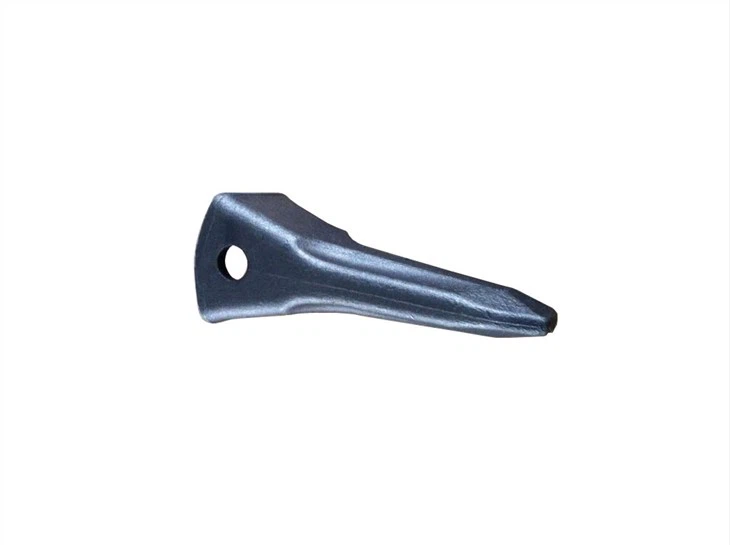
High Manganese Steel Casting
Similar to the previous high manganese steel casting, the version from the factory also has comparable thermal conductivity characteristics. The manufacturing process at the factory can influence the final properties, but overall, it still tends to be less efficient at conducting heat compared to gray iron.
Now, why does all this matter? Well, if you're in the market for a material for a specific application, understanding thermal conductivity is crucial. For example, if you're designing an engine block, you want a material that can transfer heat away from the combustion chambers effectively. Gray iron's relatively high thermal conductivity makes it a good candidate for this type of application. It can help keep the engine cool and prevent overheating, which can lead to damage and reduced performance.
On the other hand, if you're working on a project where you need to insulate heat, you might want to choose a material with lower thermal conductivity, like some types of ceramics or polymers.
As a gray iron casting supplier, I can tell you that gray iron has a lot going for it. It's not only good at conducting heat, but it also has excellent castability, good damping capacity, and is relatively inexpensive compared to some other materials. These factors make it a popular choice in many industries.
If you're considering using gray iron casting for your project, or if you're just curious about how it compares to other materials, I'd be more than happy to have a chat with you. Whether you need help choosing the right material, understanding the properties better, or getting a quote for your casting needs, I'm here to assist. Just reach out, and we can start the conversation about finding the best solution for your requirements.

References
- Callister, W. D., & Rethwisch, D. G. (2011). Materials Science and Engineering: An Introduction. Wiley.
- Askeland, D. R., Phule, P. P., & Wright, W. J. (2017). The Science and Engineering of Materials. Cengage Learning.





