
Hey there! As a supplier of Magnetic Powder Inspection (MPI) Magnetic Powder Inspection equipment and services, I often get asked if MPI can be used on composite materials. It's a super interesting question, and today, I'm gonna dive deep into this topic to give you a clear answer.
First off, let's quickly go over what Magnetic Powder Inspection is. MPI is a non - destructive testing method that's commonly used to detect surface and near - surface defects in ferromagnetic materials. The way it works is pretty cool. You apply a magnetic field to the material. If there's a defect like a crack, it disrupts the magnetic field, creating a leakage field. Then, you sprinkle magnetic powder on the surface, and the powder accumulates at the location of the leakage field, making the defect visible.
Now, let's talk about composite materials. Composites are made by combining two or more different materials to create a new material with enhanced properties. They're used in a wide range of industries, from aerospace to automotive, because they're lightweight, strong, and corrosion - resistant. Common types of composites include carbon fiber reinforced polymers (CFRP), glass fiber reinforced polymers (GFRP), and aramid fiber reinforced polymers.
So, can MPI be used on composite materials? The short answer is generally no, and here's why. MPI relies on the magnetic properties of the material being inspected. Ferromagnetic materials, like iron, nickel, and cobalt, have strong magnetic properties, which is why MPI works so well on them. Composite materials, on the other hand, are typically non - ferromagnetic. They're made up of non - magnetic fibers (like carbon, glass, or aramid) embedded in a non - magnetic polymer matrix. Since they don't have the necessary magnetic properties, there won't be any magnetic field leakage when there's a defect, and the magnetic powder won't be attracted to the defect site.
But hold on, there are some rare cases where MPI might have a limited application on composites. If a composite material has some ferromagnetic components in it, like metal inserts or reinforcements, MPI could potentially be used to inspect those specific parts. For example, in some high - performance composite structures, there might be metal fasteners or brackets. MPI can be used to check for defects in these metal elements while the composite matrix itself remains uninspected by this method.


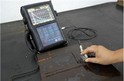
So, if MPI isn't suitable for most composite materials, what are the alternatives? Well, there are several other non - destructive testing methods that work great for composites. One popular option is Ultrasonic Flaw Detection Ultrasonic Flaw Detection. This method uses high - frequency sound waves to detect internal defects in the material. The sound waves are sent into the composite, and when they encounter a defect, some of the waves are reflected back. By analyzing these reflections, inspectors can determine the size, location, and type of the defect.
Another option is X Ray Inspection X Ray Inspection. X - rays can penetrate through the composite material and create an image of the internal structure. Defects like delaminations, voids, or foreign objects show up as distinct areas in the X - ray image. This method is especially useful for detecting internal defects that might not be visible on the surface.
As a MPI supplier, I understand that choosing the right non - destructive testing method is crucial for ensuring the quality and safety of your products. While MPI has its limitations when it comes to composites, we also offer support and advice on other testing methods. If you're working with ferromagnetic materials, MPI is still one of the most efficient and reliable ways to detect surface and near - surface defects.
If you're in the market for non - destructive testing solutions, whether it's MPI for ferromagnetic materials or need guidance on alternative methods for composites, I'd love to have a chat with you. We have a team of experts who can help you figure out the best approach for your specific needs. Don't hesitate to reach out and start a conversation about your inspection requirements.
References
- ASNT (American Society for Nondestructive Testing). Non - Destructive Testing Handbook.
- ASTM International. Standards related to non - destructive testing methods.