


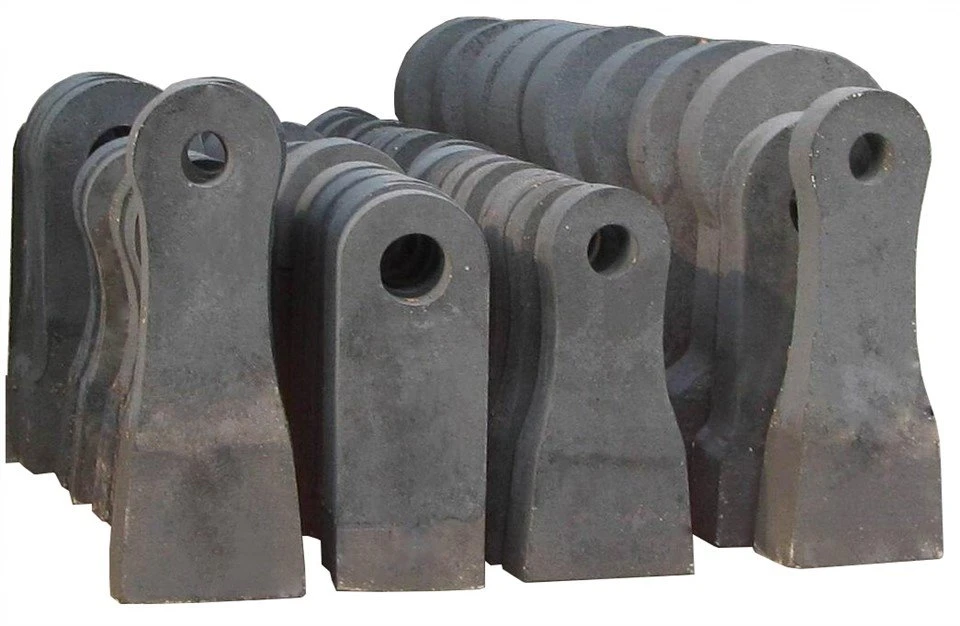
High manganese steel, also known as Hadfield steel, is a highly wear-resistant alloy widely used in heavy-duty applications such as crusher jaws, mill liners, and railway crossings. Due to its high melting temperature (around 1380–1420°C), poor fluidity, and strong tendency to oxidize, choosing the right casting process is crucial for producing defect-free and durable components.
Sand Casting – The Most Common and Reliable Method
In most cases, sand casting is the preferred process for high manganese steel castings. Among its variations, resin sand and sodium silicate sand molding are the most widely used. This method offers several key advantages:
- Excellent heat resistance and permeability, essential for high pouring temperatures (1450–1500°C).
- Suitable for large and heavy components such as crusher liners or jaw plates.
- Lower production cost and flexible mold fabrication.
During sand casting, the molten manganese steel is poured into a sand mold formed around a pattern. After cooling, the casting is removed, cleaned, and heat-treated through rapid water quenching to achieve the ideal austenitic microstructure, which ensures high toughness and wear resistance.
Vacuum Molding (V-Process) – For Large and Complex Shapes
The vacuum process (V-process) is increasingly adopted by modern foundries for high-quality manganese steel castings. This technique forms the mold using vacuum suction to hold the sand in place with a thin plastic film, eliminating binders.
Advantages
- High surface quality and dimensional accuracy.
- Reduced sand consumption and environmental impact.
- Easier mold removal and reuse.
Although equipment investment is higher, this process is ideal for complex or large wear parts that require better precision and finish.
Metal Mold and Investment Casting – Limited Applications
Metal mold casting and investment casting are rarely used in the manganese steel casting process.
The high pouring temperature of manganese steel severely damages metal molds, while investment casting shells cannot easily withstand the thermal shock and oxidation at such high temperatures. These processes are therefore limited to small, simple test components.
Process Summary
| Casting Method | Suitability | Advantages | Limitations |
| Sand Casting | Large and medium parts | Low cost, heat resistant, flexible | Rougher surface finish |
| Vacuum Process (V-Process) | Large/complex parts | High precision, cleaner surface | Higher equipment cost |
| Metal Mold Casting | Small parts only | Good precision | Mold erosion, expensive |
| Investment Casting | Rarely used | High accuracy | Not heat resistant |
Conclusion
In summary, sand casting remains the dominant and most practical method for producing high manganese steel castings.
The process provides the thermal stability and adaptability required for large, heavy components, while post-casting water quenching ensures superior wear resistance. For complex geometries or higher surface requirements, the vacuum molding process serves as a modern and effective alternative.
