


Today, investment casting manufacturer WABON Precision Metal will introduce investment casting to you. Investment casting, also known as lost-wax casting, is a precision casting method that involves coating a wax pattern with refractory material to form a shell, followed by dewaxing and firing, and then pouring molten metal to obtain the casting. Its unique process characteristics give it significant advantages in producing specific types of parts, especially suitable for the following types of parts:
I. Parts with high precision and high surface quality requirements
Investment casting can achieve dimensional accuracy of CT4~CT7 and low surface roughness Ra1.6~6.3um, enabling near-net-shape casting and reducing subsequent machining allowances or even eliminating the need for machining. For example, core components of power machinery such as aero-engine blades and gas turbine impellers, with their complex curved surfaces and microstructures (such as small holes with a diameter of 0.5mm and a wall thickness of 0.3mm), need to be directly formed through investment casting to ensure aerodynamic performance and structural strength. Furthermore, precision mechanical parts such as gears, pump bodies, and instrument components also rely on investment casting for high-precision manufacturing.
II. Parts with Complex Shapes and Difficult Machining
Investment casting can produce complex structural parts with thin walls, deep cavities, and multiple holes, breaking through the limitations of traditional machining methods. For example, the micro-cutting edges of cutting tools for the twisted blade profiles of steam turbine blades and the precision catheters of medical devices all need to be integrally formed by investment casting, avoiding the precision loss and material waste caused by assembly machining. Its shell-less characteristic allows castings to be designed into any complex shape, meeting the needs of lightweight and functional integration in aerospace, energy equipment, and other fields.
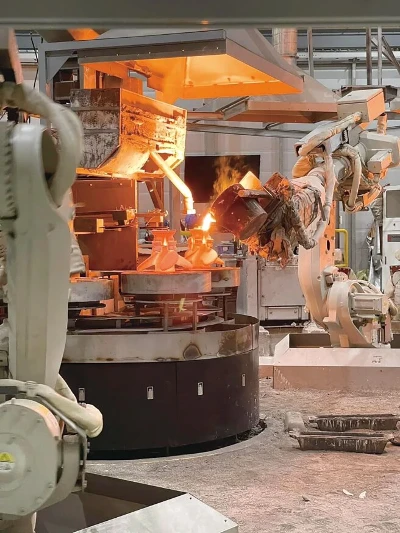
III. Parts Made of High-Melting-Point, Difficult-to-Machinable Alloy Materials
Investment casting is suitable for high-melting-point metals such as carbon steel, alloy steel, stainless steel, heat-resistant alloys, and titanium alloys. It is particularly adept at handling materials that are difficult to form using traditional machining methods, such as magnetic steel and nickel-based high-temperature alloys. For example, aircraft engine turbine disks need to withstand harsh high-temperature environments, and their materials (such as IN718 alloy) require near-net-shape forming through investment casting to avoid heat treatment deformation and machining cracks. Furthermore, automotive wheel turbocharger impellers and industrial gas turbine blades also rely on investment casting to overcome material processing bottlenecks.
IV. Small and Medium-Sized, Lightweight Parts
Typical investment castings weigh from tens of grams to several kilograms. While it can produce castings weighing up to 800 kilograms, it is more suitable for mass production of small and medium-sized parts. For example, automotive engine intake manifolds, motorcycle crankcases, and machine tool precision fixtures achieve structural optimization and lightweighting through investment casting, improving energy efficiency and operational stability. Its process flexibility also supports single-piece customization and large-scale assembly line production, meeting the needs of different scenarios.
