


Today, WABON Precision Metal, an investment casting manufacturer, will introduce investment casting to you. Investment casting simulation technology uses digital means to simulate the entire casting process, playing a crucial role in optimizing process design, predicting defects, and improving casting quality. Its application scenarios widely cover manufacturing fields such as aerospace, automotive, and energy, specifically as follows:
1. Manufacturing of Aero-engine Blades and Turbine Components
Aero-engine blades, turbine disks, and other components have very high requirements for dimensional accuracy, surface finish, and internal microstructure uniformity. Investment casting simulation technology can simulate wax pattern melting, mold shell firing, molten metal filling, and solidification processes, optimizing gating system design (such as riser and runner dimensions) and reducing defects such as shrinkage cavities and porosity. For example, through simulation analysis, the cooling gradient of the blade shell can be accurately controlled, avoiding cracks caused by thermal stress, while reducing trial production costs. GE in the United States optimized the aero-engine blade casting process using simulation technology, increasing the yield by 20% and shortening the R&D cycle by 30%.
2. Development of Complex Automotive Components
Automotive components such as engine blocks and transmission housings have complex structures. Investment casting simulation technology can simulate the flow behavior of molten metal in thin-walled, multi-cavity structures to optimize pouring temperature, velocity, and mold temperature field distribution. For example, in aluminum alloy cylinder block casting, simulation can predict the location of air entrapment defects and reduce porosity by adjusting injection parameters (such as injection speed and switching time), thereby improving casting density. Furthermore, simulation can also simulate residual stress distribution, guiding subsequent heat treatment processes and preventing deformation and cracking.
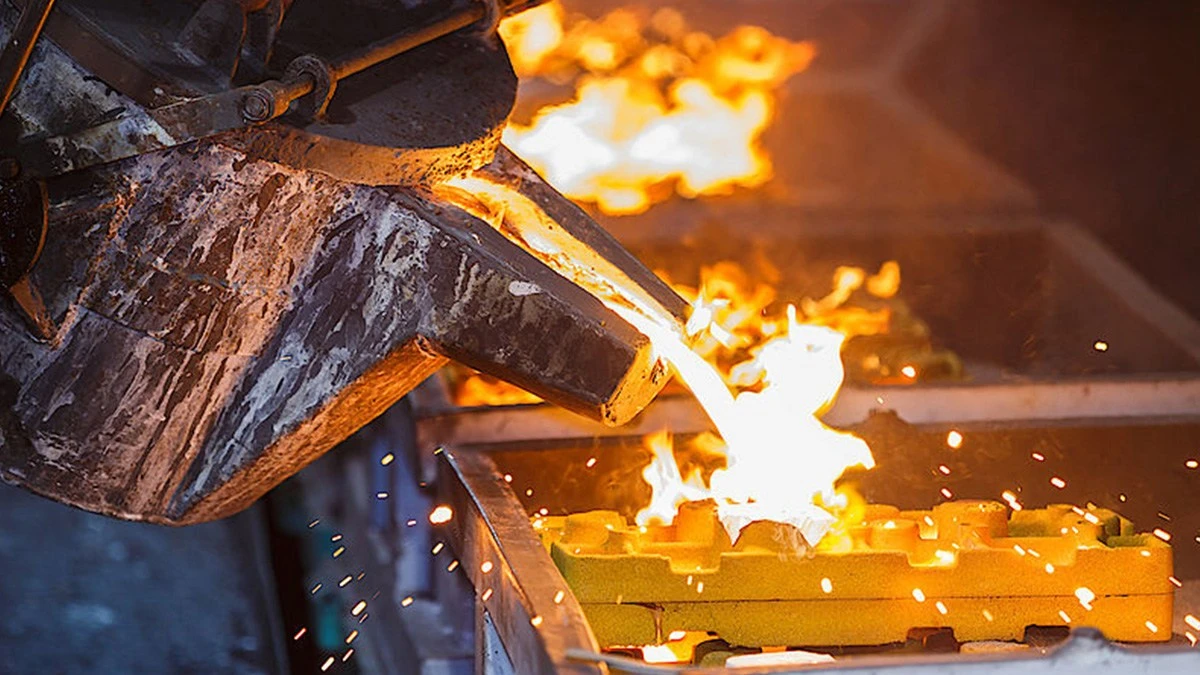
3. Production of Large Castings for Energy Equipment
Large castings (such as valve bodies and casings) in fields such as nuclear power and gas turbines must withstand high temperatures and pressures, with stringent requirements for material properties and internal quality. Investment casting simulation technology can simulate the solidification process of large-tonnage castings, analyze the impact of natural convection of molten metal on the temperature field, and optimize riser feeding design. For example, in nuclear power valve casting, simulation can predict the location of isolated liquid phase regions, accurately arrange risers, reduce shrinkage defects, and ensure the reliability of castings under harsh operating conditions.
4. Medical and Precision Instrument Manufacturing
Medical implants (such as artificial joints) and precision instrument casings must meet biocompatibility and high precision requirements. Investment casting simulation technology can simulate the solidification process of materials such as titanium alloys, control grain size and segregation, and improve the mechanical properties of castings. For example, in artificial joint manufacturing, simulation can optimize the mold temperature field, reduce surface defects in castings, reduce subsequent machining allowances, and improve production efficiency.
