


In the field of precision casting, the chemical inertness of the mold shell refers to the ability of the mold shell material to resist chemical reactions when in contact with high-temperature molten metal. The core requirement is that it does not react with the molten metal. This characteristic directly determines the quality of the casting. If the chemical inertness of the mold shell is insufficient, it is prone to contamination and corrosion reactions with the molten metal, or the formation of intermetallic compounds, leading to defects such as inclusions, cracks, and compositional deviations in the casting, which can even lead to complete rejection of the casting in severe cases.
Controlling the chemical inertness of the mold shell requires focusing on three core aspects: material selection, process optimization, and quality control. Material selection is fundamental; priority should be given to mold shell materials with strong chemical stability, such as corundum, fused silica, and zircon sand. These materials do not easily react with molten metal at high temperatures. At the same time, the purity of the materials must be strictly controlled to avoid the introduction of impurities, especially components that easily react with metals, such as iron oxide and calcium oxide.
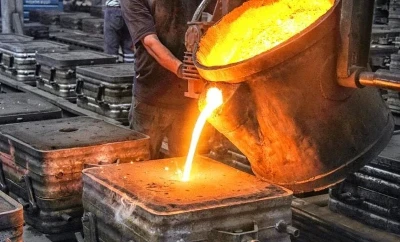
Process optimization is a key guarantee. During the mold shell preparation process, the type and proportion of the binder should be reasonably controlled, prioritizing low-reactivity binders to reduce the probability of reaction between the mold shell and the molten metal. The mold shell firing process should be strictly controlled, using high-temperature firing to remove organic matter, moisture, and volatile impurities from the mold shell, improving its density and chemical stability. In addition, during the pouring process, the pouring temperature and speed should be controlled to avoid chemical reactions caused by excessively high temperatures or strong molten metal flow.
Comprehensive quality control is indispensable. A material incoming inspection mechanism should be established to ensure that raw materials meet the chemical inertness requirements; the performance of the mold shell should be regularly sampled during the production process to monitor the composition and structural stability of the mold shell after firing; and the mold shell material formula should be adjusted specifically for different types of molten metals (such as steel, aluminum, titanium alloys, etc.) to achieve precise matching. In summary, through scientific material selection, process optimization, and strict control, the chemical inertness of the mold shell can be effectively ensured, laying the foundation for the production of high-quality castings.
