


In precision investment casting, mold shell permeability plays a critical role in determining casting quality. Proper permeability allows gases generated during pouring and solidification to escape smoothly, preventing defects such as gas porosity, blowholes, misruns, and surface blemishes. Especially for silica sol investment casting, ensuring optimal shell permeability requires careful control throughout the entire shell-making and pouring process.
Selection of Shell Materials
The foundation of good mold shell permeability begins with the selection of refractory materials. High-quality zircon sand, fused silica, or alumina-based sands with controlled particle size distribution are commonly used. A balanced grain size is essential: overly fine particles can block gas channels, while excessively coarse particles may weaken shell strength. In practice, a graded sand system is often adopted to achieve both sufficient strength and proper gas passage.
The binder system also affects permeability. Silica sol binders are widely used due to their environmental friendliness and dimensional stability. Maintaining a stable binder concentration helps avoid excessive coating density, which could reduce gas escape paths within the shell structure.
Control of Shell Layer Structure
The number and thickness of shell layers have a direct influence on permeability. Too few layers may result in insufficient shell strength, while too many layers can significantly reduce gas permeability. Typically, a reasonable balance is achieved by applying a denser face coat for surface quality and slightly coarser backup layers to improve ventilation.
Uniform coating during dipping and stuccoing is equally important. Uneven shell thickness can lead to localized gas accumulation, increasing the risk of internal porosity during metal pouring.
Drying and Curing Conditions
Proper drying and curing are critical for forming interconnected pores inside the shell. Insufficient drying may trap moisture within the shell, causing steam generation and gas pressure during pouring. On the other hand, excessively rapid drying can lead to shell cracking.
Controlled temperature, humidity, and airflow during drying help ensure consistent pore formation. Adequate curing time allows the binder to fully bond the refractory materials while maintaining internal porosity.
Wax Removal and Shell Firing
Effective dewaxing is essential to maintain clear gas channels. Incomplete wax removal may block pores and reduce permeability. Autoclave dewaxing or controlled flash fire methods are commonly used to ensure clean wax elimination.
After dewaxing, shell firing further improves permeability by removing residual organic materials and strengthening the ceramic structure. Proper firing temperature and duration help stabilize the shell while preserving its porous network.
Pouring Design and Venting Considerations
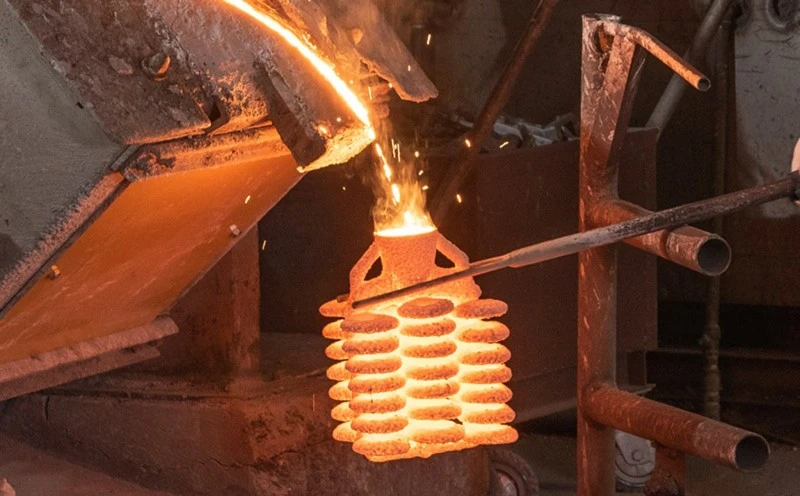
Even with a well-prepared shell, improper pouring design can compromise gas release. Reasonable gating and riser design ensures smooth metal flow and reduces turbulence, minimizing gas entrapment. In some cases, auxiliary vents may be added to assist gas evacuation from complex cavities.
Conclusion
Ensuring mold shell permeability during casting is a systematic process involving material selection, shell structure control, drying management, dewaxing, firing, and pouring design. By maintaining a balance between shell strength and gas permeability, foundries can significantly reduce casting defects and achieve consistent, high-quality results. For precision investment casting manufacturers, strict control of these factors is essential to meet the increasing quality demands of global customers.
