


Introduction
Sand casting is one of the most established and widely used metal casting methods in the world. Its versatility, cost-effectiveness, and ability to handle a wide range of alloys make it indispensable in industries like automotive, machinery, aerospace, and energy equipment manufacturing.
A critical factor in successful sand casting lies in the selection and preparation of the sand. Not all sands are equal - their composition, grain size, and bonding strength directly affect the dimensional accuracy, surface finish, and strength of the final cast product.
So, what kind of sand is used in sand casting, and what are the essential requirements it must meet? Let's explore.
Types of Sand Used in Sand Casting
The primary material used in sand casting is foundry sand, which must withstand the high temperatures of molten metal without breaking down. There are two main categories of sand commonly used:
1. Silica Sand
Silica sand (SiO₂) is the most widely used material in sand casting due to its high melting point, availability, and affordability. Its fine grains provide good surface finish and dimensional stability. However, it has limitations when casting metals with extremely high melting temperatures, as it can undergo thermal expansion and cause defects.
2. Zircon Sand
Zircon sand is known for its excellent refractoriness and low thermal expansion, making it suitable for casting high-temperature alloys such as steel and superalloys. It also offers superior surface smoothness but comes at a higher cost.
3. Chromite and Olivine Sand
Chromite and olivine sands are used for specialized applications where thermal conductivity and stability are critical. These sands can handle extreme temperature changes and resist metal penetration, ideal for large or high-precision castings.
4. Synthetic and Resin-Coated Sands
In modern foundries, synthetic or resin-coated sands are increasingly used to improve mold strength, surface finish, and dimensional consistency. They are particularly useful in automated production environments where uniformity is essential.
Requirements for Sand Casting
For high-quality casting, foundry sand must meet several technical and performance requirements:
• High Refractoriness: The sand must endure molten metal temperatures (up to 1700°C) without fusing or deforming.
• Good Permeability: Allows gases formed during pouring to escape, preventing defects like blowholes.
• Sufficient Strength: Must maintain the shape of the mold during metal pouring and solidification.
• Collapsibility: After solidification, the sand should break down easily for easy casting removal.
• Low Thermal Expansion: Prevents cracks and warping in the mold, maintaining dimensional precision.
• Reusability: Quality foundry sands can be reclaimed and reused multiple times, reducing production costs and environmental impact.
• Compatibility with Binders: The sand should effectively bond with clay, water, or resin binders to maintain mold integrity.
Meeting these requirements ensures not only a high-quality casting finish but also improved production efficiency and sustainability.
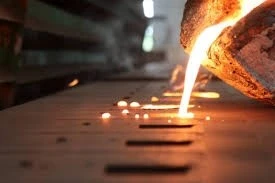
Wabon Precision Metal: Excellence in Precision Casting and Quality Control
As a professional manufacturer and exporter of precision castings, Wabon Precision Metal integrates mold manufacturing, CNC machining, and surface finishing into one comprehensive service system.
The company is supported by a strong management team and a comprehensive quality control system that ensures each casting meets strict international standards. Wabon's facility is equipped with advanced testing equipment, including dimensional inspection, chemical composition analysis, mechanical property testing, non-destructive testing, and metallographic examination - all designed to guarantee product reliability and consistency.
By combining traditional foundry techniques with modern engineering and material analysis, Wabon Precision Metal provides customers with high-performance casting solutions that meet the exacting demands of industries across the globe.
Conclusion
The success of sand casting depends largely on the quality and composition of the sand used in the mold. Selecting the right type - whether silica, zircon, or synthetic - and ensuring it meets critical performance standards is essential for producing durable, precise metal components.
With its advanced production technology and commitment to quality, Wabon Precision Metal continues to lead in the field of precision metal casting, delivering trusted solutions for complex industrial applications worldwide.
