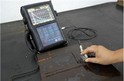

Hey there! As a supplier in the field of Magnetic Powder Inspection (MPI), I've seen my fair share of situations where things might not be as they seem. In this blog, I'm gonna dive into the signs of false indications in MPI, which is super important for getting accurate results and making sure our clients are making the right decisions based on inspection data.
What is Magnetic Powder Inspection?
First off, let me quickly go over what MPI is. It's a non - destructive testing method used to detect surface and near - surface discontinuities in ferromagnetic materials. We use a magnetic field and magnetic particles to highlight any flaws. When there's a crack or other discontinuity, the magnetic field is disrupted, and the magnetic particles collect around the area, forming a visible indication.
Why False Indications Matter
False indications in MPI can lead to some serious problems. They can cause unnecessary re - work, add to the inspection time and cost, and even result in parts being rejected that are actually in good condition. On the flip side, missing real flaws due to misinterpreting false indications can be dangerous, especially in critical applications like aerospace or automotive.
Common Signs of False Indications
1. Magnetic Particle Agglomeration
One of the most common signs is magnetic particle agglomeration. Sometimes, the magnetic particles clump together, forming what look like indications but aren't actually related to a real flaw. This can happen for a few reasons. If the magnetic particles are old or have been stored improperly, they're more likely to clump. Also, if the inspection fluid is contaminated or has the wrong viscosity, it can cause the particles to stick together.


2. Surface Roughness
Surface roughness can also create false indications. When the surface of the part is too rough, the magnetic field can be disrupted in a way that makes it look like there's a flaw. For example, if a part has been machined with a very coarse tool, it might leave ridges and grooves that attract the magnetic particles, giving the appearance of a crack. In these cases, it's important to clean and smooth the surface as much as possible before the inspection.
3. Magnetic Writing
Magnetic writing occurs when the magnetic field is applied in an improper way, leaving a pattern on the surface of the part that looks like a flaw. This can happen if the magnetizing current is too high or if the magnetic field is applied for too long. The key here is to make sure that the magnetizing parameters are set correctly according to the material and the size of the part being inspected.
4. Edge Effects
Edges of parts can often cause false indications. At the edges, the magnetic field changes, and magnetic particles can accumulate, making it look like there's a crack. This is especially true for sharp edges. To reduce edge effects, we can use techniques like beveling the edges or applying the magnetic field in a more controlled manner.
5. Residual Magnetism from Previous Processes
If a part has residual magnetism from previous manufacturing processes, it can also lead to false indications. For instance, if a part was magnetized during welding or heat treatment, and the residual magnetism isn't removed before MPI, it can disrupt the magnetic field and cause the magnetic particles to collect in abnormal patterns.
Distinguishing False Indications from Real Flaws
1. Visual Inspection
A simple visual inspection can often tell a lot. Real flaws usually have a well - defined shape and clear boundaries. False indications, on the other hand, may look more irregular or smeared. For example, a real crack will typically have a consistent width along its length, while a false indication due to particle agglomeration may look more like a blob.
2. Re - inspection
If you suspect a false indication, re - inspecting the part can be a good idea. Sometimes, simply cleaning the part and repeating the inspection can clear up any confusion. You can also try changing the magnetizing parameters slightly to see if the indication changes.
3. Comparison with Similar Parts
If you have other similar parts that have been inspected successfully, comparing the suspected part with them can be helpful. If the indication doesn't match what you've seen in other good parts, it's more likely to be a false one.
Other Non - Destructive Testing Methods for Verification
When you're still not sure if an indication is real or false, you can use other non - destructive testing methods for verification. For example, Dye Penetrant Inspection can be used to detect surface - opening flaws. It works by applying a colored dye to the surface, which seeps into any cracks. Then, a developer is applied to make the dye visible.
Ultrasonic Flaw Detection is another option. It uses high - frequency sound waves to detect internal flaws. The sound waves are sent into the part, and any reflections from flaws are detected and analyzed.
X Ray Inspection is great for detecting internal and hidden flaws. It works by passing X - rays through the part and creating an image of the internal structure.
Importance of Accurate Inspection for Our Clients
As a Magnetic Powder Inspection supplier, we understand how crucial accurate inspection results are for our clients. In industries like manufacturing, construction, and transportation, the integrity of parts can mean the difference between a safe and efficient operation and a potential disaster. False indications can disrupt production schedules, increase costs, and damage reputations. That's why we're committed to providing high - quality MPI services and helping our clients understand the results.
Let's Talk!
If you're in need of Magnetic Powder Inspection services or have any questions about false indications or MPI in general, don't hesitate to reach out. We're here to offer our expertise and ensure that you get the most accurate and reliable inspection results. Whether you're dealing with small - scale projects or large - scale industrial operations, we've got the knowledge and experience to meet your needs.
References
- ASNT (American Society for Nondestructive Testing) Handbook, Volume 3: Magnetic Particle Testing
- ASTM (American Society for Testing and Materials) Standards on Magnetic Particle Inspection
- Personal experience and case studies from our Magnetic Powder Inspection projects.