

Precision casting is a common method within the realm of industrial manufacturing. It imposes relatively few restrictions on the geometry of the final product, and the internal stresses within the finished parts are low. Consequently, production investment is relatively modest, and the process allows for the creation of large-scale components with excellent performance characteristics; however, the production cycle is typically longer, and subsequent mechanical machining is required after the initial molding phase. Currently, precision casting has evolved to encompass various derivative methods, including gravity pouring, insert casting, pressure casting, rotational casting, and centrifugal casting.
1. Prior to commencing the casting operation, personnel must thoroughly familiarize themselves with the technical process documentation for the specific casting component. Before pouring begins, it is essential to understand the designated pouring sequence, the required grade and weight of the molten steel, and the layout and distribution of the casting molds. Furthermore, checks must be conducted to verify the quantity of ladles available, the quality of ladle repairs, the adequacy of drying and preheating procedures, and the proper, safe operation of the overhead cranes.
2. Inspect the flask clamps and mold-locking bolts to ensure they are tight and securely fastened. Verify that the weight and positioning of the mold weights (dead weights) are appropriate, and confirm that risers, pouring cups, pouring plugs, and similar components are correctly positioned. Identify and eliminate any potential safety hazards within the pouring channels.
3. In strict accordance with the designated pouring sequence, technical process requirements, and the specific specifications of the casting component, ensure that all pouring plugs and related accessories are correctly installed and positioned.
4. Immediately upon the commencement of pouring, initiate the venting process; venting should proceed concurrently with the pouring of the molten metal. For large-scale castings, the ignition material positioned near the vent holes must be lit to facilitate the escape of gases. When casting large components, once the main pouring is complete, perform one or two "topping-up" pours into the risers; prior to these topping-up pours, the thin solidified crust that may have formed atop the risers must be broken open (pried away).
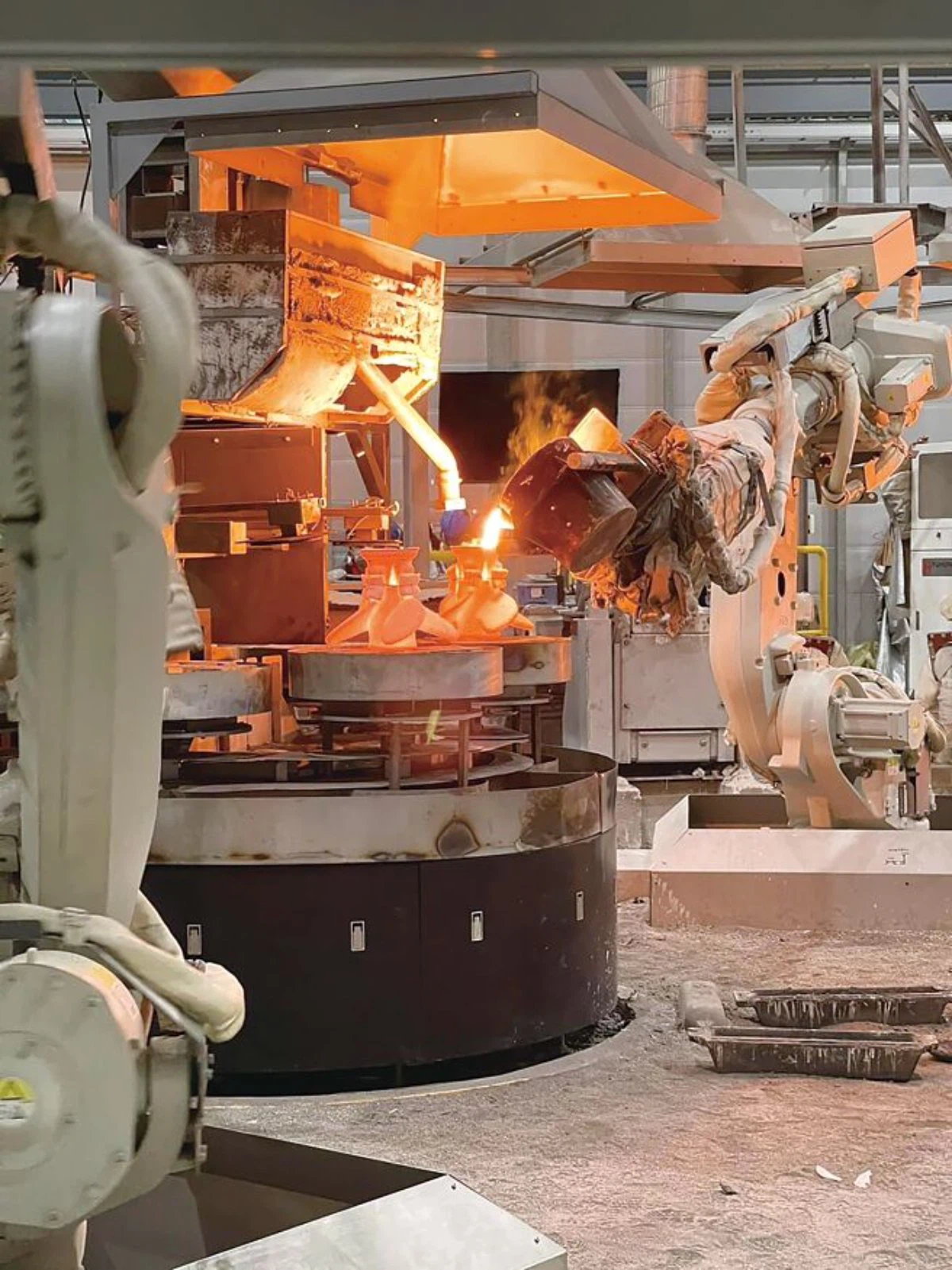
5. When the level of the molten steel reaches one-third of the riser's height, add the prescribed quantity of exothermic or insulating material as specified in the process plan. Immediately after pouring is complete, use a shovel to remove any molten steel that has overflowed from the pouring sprue or risers, and remove the pouring cup to facilitate the subsequent sand removal process and to allow for the normal shrinkage of the casting as it cools.
6. The casting mold must not be moved until the molten steel has completely solidified. During the latter stages of the pouring process, closely monitor the remaining volume of molten steel in the ladle; for critical or high-importance castings, under-pouring-resulting in an incomplete fill-is strictly prohibited. Any remaining molten steel should be poured into designated scrap molds or residual metal troughs.
7. Any unused sand molds must have their pouring gates and risers properly covered to facilitate future scheduling. If the molds are stored for no more than 48 hours, they may be used for casting as usual; however, if the storage period exceeds 48 hours, the molds must be inspected to verify that they meet all requirements before a decision can be made regarding their suitability for casting.
Wabon Precision Metal Co., Ltd. is capable of designing and manufacturing products that meet-and exceed-customer expectations, in accordance with specific client requirements. We warmly welcome both new and returning customers to contact us with inquiries, offer guidance, or discuss potential business collaborations.