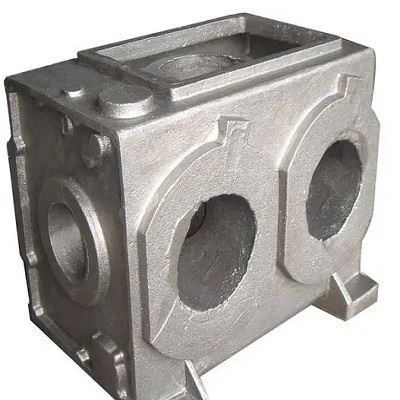


In Modern Manufacturing, Dimensional Accuracy And Metallurgical Integrity Are Non-Negotiable Imperatives. Our High Precision Casting Service Delivers Net-Shape And Near-Net-Shape Components Distinguished By Exceptional Repeatability, Extraordinarily Tight Tolerances, And Superior As-Cast Surface Finishes That Drastically Curtail Subsequent Machining Operations. Departing From Conventional Sand Or Die Casting, Our Investment Casting Process Harnesses Advanced Ceramic Shell Technologies And Vacuum-Assisted Pouring Protocols To Systematically Mitigate Porosity, Oxidation, And Thermal Distortion. Consequently, Every Precision Cast Component-Whether Destined For Aerospace Actuation Systems, Medical Instrument Enclosures, Or Oilfield Valve Bodies-Consistently Satisfies The Most Exacting Engineering Criteria. By Fusing Decades Of Metallurgical Mastery With Real-Time Solidification Simulation, We Transform Intricate Geometries Into Robust, Lightweight, And Economically Efficient Metal Solutions, While Simultaneously Streamlining Your Supply Chain Lead Times And Ensuring Unbroken Material Traceability From Melt Through To Final Dispatch.
Product Characteristics
1.Tolerance Class: Achieves ISO 8062 CT4–CT6 on most geometries, with select surfaces held to CT3.
2.Surface Finish: Ra 1.6–3.2 μm as-cast; option to reach Ra 0.8 via tailored stucco layers.
3.Wall Thinning: Minimum live wall 0.8 mm, with controlled taper angles as low as 0.5°.
4.Complexity Index: Handles internal cores, undercuts, and serpentine cooling passages without weld lines.
5.Weight Range: 0.02 kg to 85 kg per piece, from micro-components to structural housings.
6.Lot-to-Lot Stability: SPC-controlled shrinkage compensation, adjusted per alloy and geometry.
Product Advantages
1. Shrinkage-Compensated Tooling Design
We employ 3D optical scanning paired with advanced solidification simulation software to precisely reverse-calculate thermal contraction behavior for each alloy grade. Rather than applying a uniform scale factor, our tooling incorporates zone-specific geometric offsets-compensating for heavy sections and slender ribs independently based on their unique cooling rates. This intelligent design approach dramatically accelerates first-article approval, moving from initial trial to production-ready validation in a fraction of the typical timeframe.
2. In-House Secondary Operations
We maintain complete control over the entire production chain by never outsourcing finishing processes. Our fully integrated facility encompasses vacuum heat treatment (including solution annealing, precipitation hardening, and aging), precision CNC trimming, coordinate measuring machine inspection, and a full suite of non-destructive testing methods-radiography, fluorescent penetrant, and ultrasonic examination. This unified, single-source model for high precision castings eliminates cross-vendor coordination bottlenecks and removes any ambiguity in quality accountability.
3. Adaptive Process Control
Every ceramic shell layer undergoes continuous monitoring of slurry viscosity, dip duration, and drying chamber humidity. When ambient production conditions fluctuate, our closed-loop control system automatically recalibrates stucco particle application to maintain consistent shell integrity. This data-driven, real-time adaptive strategy guarantees that your high precision casting from the initial pilot run exhibits identical dimensional and metallurgical characteristics to those produced in full-scale campaigns-a critical assurance for heavily regulated sectors such as aerospace and medical device manufacturing.
4. Cost-Efficient Low Volumes
We have engineered quick-change tooling fixtures and standardized gating system architectures specifically to accommodate smaller production runs economically. For prototype development or pilot-scale trials, we offer soft tooling solutions using additively manufactured wax patterns, which substantially lower upfront capital expenditure compared to conventional hard tooling-all while preserving the identical tight tolerances expected from our high precision casting process. This makes validation-stage engineering feasible without overcommitting budget.
5. Metallurgical Integrity
Our vacuum induction melting technology, combined with argon-shielded pouring streams, effectively minimizes gas entrapment and micro-inclusion formation from the very start of the melt cycle. Rigorous microstructural examination consistently reveals refined, uniform grain structures across stainless and superalloy grades, with complete absence of detrimental carbide networking along grain boundaries. The resulting castings demonstrate significantly superior resistance to cyclic fatigue and thermal stress, translating into extended in-service component life and reduced maintenance intervals for end users.
FAQ
Q: How do you ensure dimensional accuracy across different alloys?
A: Each alloy has a unique solidification shrinkage. Our high precision casting process uses alloy-specific tooling compensation and simulates solidification patterns. We also perform 100% dimensional inspection on critical features using CMM or optical scanners.
Q: Can you cast undercuts or internal threads?
A: Yes-using soluble wax cores or ceramic cores, we form internal passages and undercuts directly during the high precision casting stage. However, we recommend discussing thread geometries; we often cast a pilot hole and finish-tap it post-casting for thread class 6H accuracy.
Q: What certifications do your facilities hold?
A: Our foundry is ISO 9001:2015, IATF 16949 (automotive), AS9100D (aerospace), and PED 2014/68/EU approved. We also maintain Nadcap approval for NDT and heat treatment-verified annually by prime aerospace auditors.
Q: Do you provide material test certificates?
A: Absolutely. Every heat is accompanied by a mill test certificate (MTC) and, upon request, an independent third-party test report covering chemical composition, mechanical properties (tensile, yield, elongation, hardness), and non-destructive test results.
Q: What surface treatments do you offer post-casting?
A: We provide passivation, electropolishing, anodizing (for aluminum), micro-arc oxidation, Teflon coating, zinc/nickel plating, and ceramic thermal barrier coatings-all applied in-house under controlled conditions.