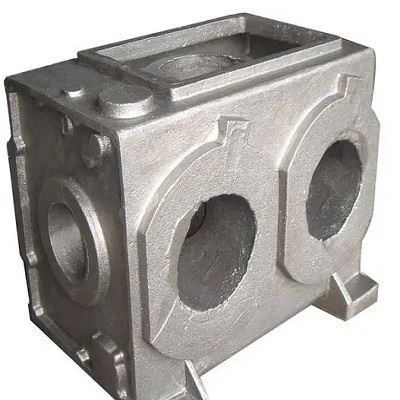


Product of investment casting
Quality inspection results of precision casting parts:
Qualified product refers to the cast precision parts whose appearance quality and internal quality meet the relevant standards or the technical conditions of delivery acceptance; The repaired products refer to the castings whose appearance quality and internal quality do not fully meet the standards and acceptance conditions, but which are allowed to be repaired and can meet the requirements of the standards and the technical conditions of casting delivery acceptance after repair; Waste refers to the castings that are unqualified in both appearance and internal quality and cannot be repaired or still cannot meet the requirements of the standard and the technical conditions of casting delivery acceptance after repair. Waste is divided into internal waste and external waste two kinds. Internal waste refers to the waste castings found in the foundry or foundry; External waste refers to the waste found after the delivery of castings, which causes much greater economic loss than the internal waste.
Due to the influence of many factors, there are often holes, pinholes, slag inclusion, cracks, pits and other defects. Commonly used repair equipment is argon arc welding machine, resistance welding machine, cold welding machine, etc. Casting defects with low quality and appearance requirements can be repaired by welding machines with high heat and high speed such as argon arc welding machines. However, in the field of precision casting defect repair, due to the great influence of argon welding heat, casting deformation, hardness reduction, sand hole, local annealing, cracking, pinhole, wear, scratch, edge bite, or insufficient bonding force and internal stress damage and other secondary defects will be caused during repair.
Cold welding machine just overcome the above shortcomings, its advantages are mainly reflected in the small heat affected area, casting without preheating, cold welding repair at room temperature, so there is no deformation, edge bite and residual stress, no local annealing, do not change the metal structure of the casting. Therefore, cold welder is suitable for repairing surface defects of precision castings. The welding repair range of cold welding is the process of repeated melting and accumulation of φ1.5-1.2 mm welding repair points. In the process of repairing large area defects, the repair efficiency is the factor restricting its widespread application.