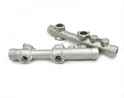

In the casting process, the gating system is often considered a conduit for molten metal, yet its design and performance have a profound impact on the quality of the shell mold and, ultimately, the finished casting. A gating system consists of sprues, runners, and gates that control the flow, pressure, and distribution of molten metal into the mold cavity. The way molten metal interacts with the shell determines surface finish, structural integrity, and defect rates.
1. Influence on Flow-Induced Stresses
The velocity and direction of molten metal entering the shell mold directly affect the stress distribution within the mold. Excessive flow speed or turbulence can erode or crack the shell, particularly in areas where the shell wall is thin or delicate. Smooth, controlled flow reduces mechanical stress on the mold, maintaining dimensional accuracy and minimizing micro-cracks that could compromise the casting. Proper gating design ensures that metal enters at a rate compatible with the shell's strength.
2. Thermal Impact on Shell Structure
Molten metal introduces high thermal energy into the mold. If the gating system channels metal unevenly or too quickly, localized overheating can occur, causing shell softening or distortion. Conversely, controlled gating ensures gradual heat transfer, allowing the shell to withstand thermal shock without losing structural integrity. Shell thickness and coating materials must be coordinated with gating geometry to resist thermal expansion and maintain consistency.
3. Minimizing Defects
The gating system plays a key role in preventing common casting defects related to shell quality, such as:
Erosion and washout: Caused by high-velocity metal stripping the shell surface.
Cold shuts and misruns: Resulting from insufficient metal reaching parts of the cavity.
Gas-related porosity: Induced by turbulence that traps air or volatiles from shell binders.
Well-designed sprues and runners reduce turbulence, allow for smooth filling, and maintain a protective metal "front" that prevents the shell from being scoured.

4. Effect on Shell Reproducibility
In batch production, consistent gating systems contribute to reproducible shell quality. Variations in sprue diameter, gate placement, or runner layout can create inconsistent flow patterns, leading to variable mold wear and uneven surface finishes. Standardized gating ensures that each shell experiences similar thermal and mechanical conditions, improving repeatability across multiple castings.
5. Integration with Mold Material and Coatings
The choice of shell material, thickness, and coatings must be considered alongside gating design. A mold with a highly refractory coating may tolerate higher flow rates, whereas thinner or less resistant shells require more controlled metal delivery. Adjusting gating to match shell properties ensures optimal mold performance, reduces damage during pouring, and extends shell life.
Conclusion
The gating system is more than a metal delivery pathway; it is a critical factor influencing shell mold quality. By controlling flow velocity, minimizing turbulence, and ensuring uniform thermal distribution, a properly designed gating system helps prevent erosion, cracking, and porosity while supporting consistent mold performance. In modern foundry operations, integrating gating design with shell material selection and coating technology is essential for producing defect-free castings, improving process reliability, and achieving high-precision results.