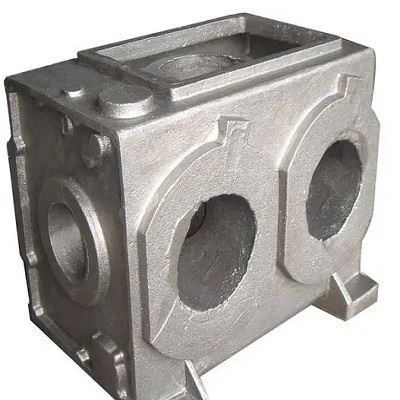


Stainless investment casting is a proven manufacturing method for producing high-precision metal parts with complex geometries, smooth surface finishes, and reliable mechanical properties. Compared with traditional machining processes, investment casting provides greater freedom in part design while reducing material waste and secondary processing requirements.
By creating accurate wax patterns and using high-quality stainless steel alloys, manufacturers can produce components with fine details, thin walls, and complicated structures that are difficult to achieve through conventional manufacturing methods.
In practical production, this process is widely used for industries that require stable quality and long-term reliability. From automotive components and industrial machinery parts to food processing equipment and marine applications, investment casting provides a flexible solution for customized metal components.
Our focus is not only on producing qualified castings but also on helping customers improve product design, shorten development cycles, and achieve better cost control during mass production.
Product Advantages
Complex Design Capability and Dimensional Accuracy
One of the main advantages of investment casting is its ability to manufacture complicated structures while maintaining consistent dimensional accuracy.
For many precision casting projects, dimensional tolerances can typically reach around ±0.1 mm to ±0.3 mm depending on part size, material, and design requirements. This helps reduce machining allowance and simplifies later processing steps.
For components with irregular shapes, internal channels, or detailed surface features, investment casting often provides better production efficiency than machining from solid metal blocks.
This means less material removal, shorter production time, and lower overall manufacturing costs.
Smooth Surface Finish and Better Appearance
Surface quality is another important reason why customers choose stainless investment casting.
The casting process can achieve relatively smooth surfaces directly after production. Depending on the alloy and finishing method, surface roughness can generally reach around Ra 3.2–6.3 μm after casting, and further polishing can improve the appearance for applications requiring a cleaner finish
This is especially valuable for industries where appearance and hygiene matter, such as food processing equipment, medical devices, and precision machinery.
A well-controlled casting process helps reduce defects such as surface cracks, shrinkage marks, and uneven areas, improving both appearance and product reliability.
Flexible Customization for Different Applications
Every project has different requirements. A component used in an automotive system may focus more on strength and vibration resistance, while a food equipment part may require better corrosion resistance and easier cleaning.
Stainless investment casting allows customization in:
Part structure
Wall thickness
Material selection
Surface treatment
Mechanical requirements
Production quantity
Our engineering team supports customers throughout the whole process, including drawing review, prototype development, process adjustment, and final production.
In many cases, small design changes during the early stage can significantly improve casting performance and reduce production costs later.
Strong Durability in Harsh Environments
Stainless steel is widely selected for investment casting because of its excellent balance between strength and corrosion resistance.
Depending on the material grade, stainless steel castings can maintain stable performance under high temperature, moisture, chemical exposure, and outdoor conditions.
For example, 316 stainless steel contains molybdenum, which improves resistance to chloride corrosion. This makes it suitable for marine environments, chemical equipment, and applications exposed to aggressive media.
With proper material selection and quality control, stainless investment casting components can provide years of reliable service.
Material Description
We mainly work with stainless steel grades that offer a combination of strength, corrosion resistance, and good casting performance.
Common materials include 304 stainless steel and 316 stainless steel, while other stainless alloys can also be customized according to customer requirements.
Stainless Steel 304
304 stainless steel is one of the most commonly used stainless steel grades.
It provides good corrosion resistance, stable mechanical properties, and excellent processing performance. The typical tensile strength is around 515 MPa, with good ductility and toughness.
It is widely used for:
Industrial equipment components
Structural parts
Pump and valve components
Food processing machinery
General engineering applications
For normal working environments, 304 stainless steel provides a cost-effective solution.
Stainless Steel 316
316 stainless steel is designed for more demanding environments.
Because of its molybdenum content, it offers improved resistance against saltwater, chemicals, and corrosion compared with 304 stainless steel.
Tensile strength is typically around 515 MPa, while corrosion resistance is significantly improved.
It is commonly used in:
Marine equipment
Chemical processing systems
Pharmaceutical equipment
High-corrosion industrial applications
Choosing the correct material grade at the beginning of a project can greatly affect the service life and maintenance cost of the final product.
Through strict incoming material inspection and production control, each batch is checked for chemical composition, mechanical performance, and casting consistency to ensure stable quality.
Technical Parameters
| Item | Specification |
|---|---|
| Product Type | Precision stainless steel investment casting components |
| Manufacturing Process | Lost wax investment casting |
| Material Options | Stainless steel 304, 316, and customized alloys |
| Casting Weight Range | From small precision parts to medium-sized components |
| Dimensional Tolerance | Approximately ±0.1 mm to ±0.3 mm depending on design |
| Surface Finish | Casting finish, polishing, grinding, sand blasting, customized finish |
| Surface Roughness | Around Ra 3.2–6.3 μm after standard casting |
| Production Capacity | Prototype samples to mass production |
| Application Areas | Automotive, machinery, marine, medical, food equipment |
| Service Type | OEM and ODM customization |
Quality Control and After-Sales Service
Stable quality is the foundation of long-term cooperation.
During production, each component goes through multiple inspection procedures, including raw material verification, wax pattern inspection, casting process monitoring, dimensional measurement, surface inspection, and final quality checking before shipment.
For precision components, small differences can affect final assembly performance. Therefore, we pay attention to details that are often overlooked, such as casting shrinkage control, machining allowance, and surface treatment consistency.
Our technical team provides support from the beginning of the project. Customers can receive assistance with drawing analysis, material selection, production optimization, and manufacturing suggestions.
After delivery, we continue to provide technical communication and quality feedback support. If improvement is needed, we work with customers to identify the cause and develop practical solutions.
With years of experience in stainless investment casting, flexible production capabilities, and strict quality management, we help customers create durable and reliable metal components for different industries.
Our goal is not simply to supply castings. It is to become a manufacturing partner that helps customers improve product performance, control costs, and achieve long-term development.